




- Shopify SEO Guide: How to Improve Shopify SEO?
- Optimizing for Mobile-First Indexing
- Focusing on Relevant and High-Quality Content
- Using Structured Data
- Optimizing for Voice Search
- Boosting Website Speed
- Improving On-Page SEO
- Leveraging Shopify SEO Apps
- Building Quality Backlinks
- Monitor and Analyze Performance
- Focusing on User Experience or UX
- Shopify SEO Guide: Do’s and Don’ts
- Future of Shopify SEO (2026 Trends)
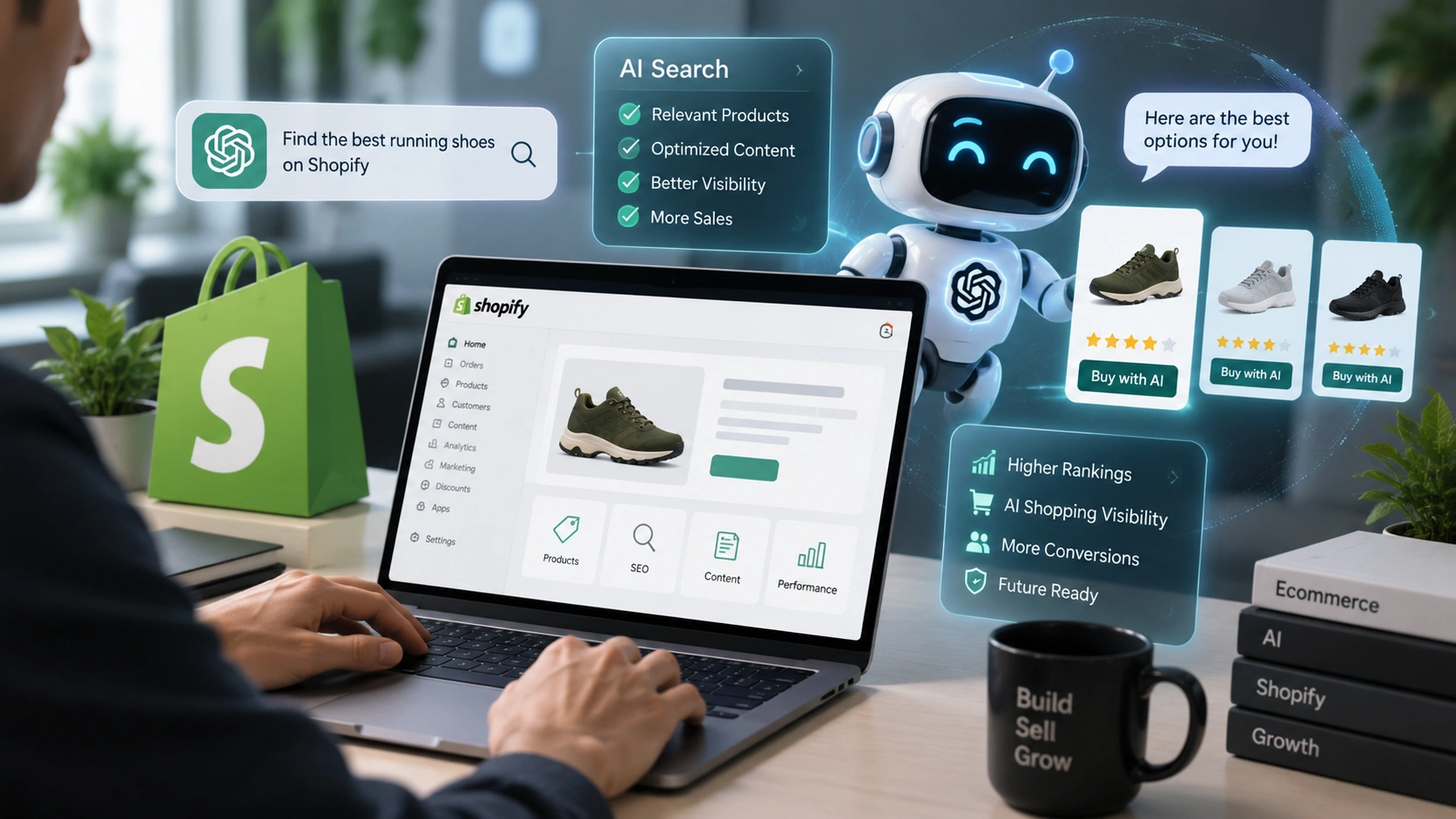
- AI-Driven Search Optimization
- Search Intent Over Keywords
- Voice and Conversational Search
- Core Web Vitals and Page Experience
- Visual Search Growth
- First-Party Data and Personalization
- Wrapping Up
- FAQs
- What is Shopify SEO?
- How long does it take to see results from Shopify SEO?
- Is Shopify good for SEO?
- How can I improve my Shopify store ranking?
- Do Shopify apps help with SEO?
- What is the most important SEO factor for Shopify stores?
- Should I hire a Shopify SEO expert?
- How often should I update my Shopify SEO strategy?
Quick Answer
To improve Shopify SEO, optimise your product and collection pages with unique titles, descriptions, and image alt text, add product schema, make the store fast and mobile friendly, build internal links and quality backlinks, and publish content that answers buyer questions. Shopify handles the basics like clean URLs and sitemaps, so the real wins come from on page optimisation, speed, and content. The steps below cover each one.
Running a Shopify store in 2026 is highly competitive, and great products alone do not guarantee sales. If your store is not visible on search engines, your potential customers will not find you, which directly impacts your growth.
Shopify powers nearly 29 percent of all ecommerce websites, which means millions of stores are competing for search visibility, making it essential to stand out in search results.
This is where search engine optimization plays a key role, as it drives consistent, high-intent traffic to your store without relying only on paid ads. It improves visibility, increases clicks, and attracts customers who are already searching for your products.
In this guide, you will learn practical strategies that help improve rankings, drive organic traffic, and support long-term sales growth in 2026. If you are looking for expert help, our Shopify SEO Services are designed to deliver measurable results for your store.

This guide walks through the Shopify SEO tactics that actually move rankings in 2026, step by step. Let us get started.
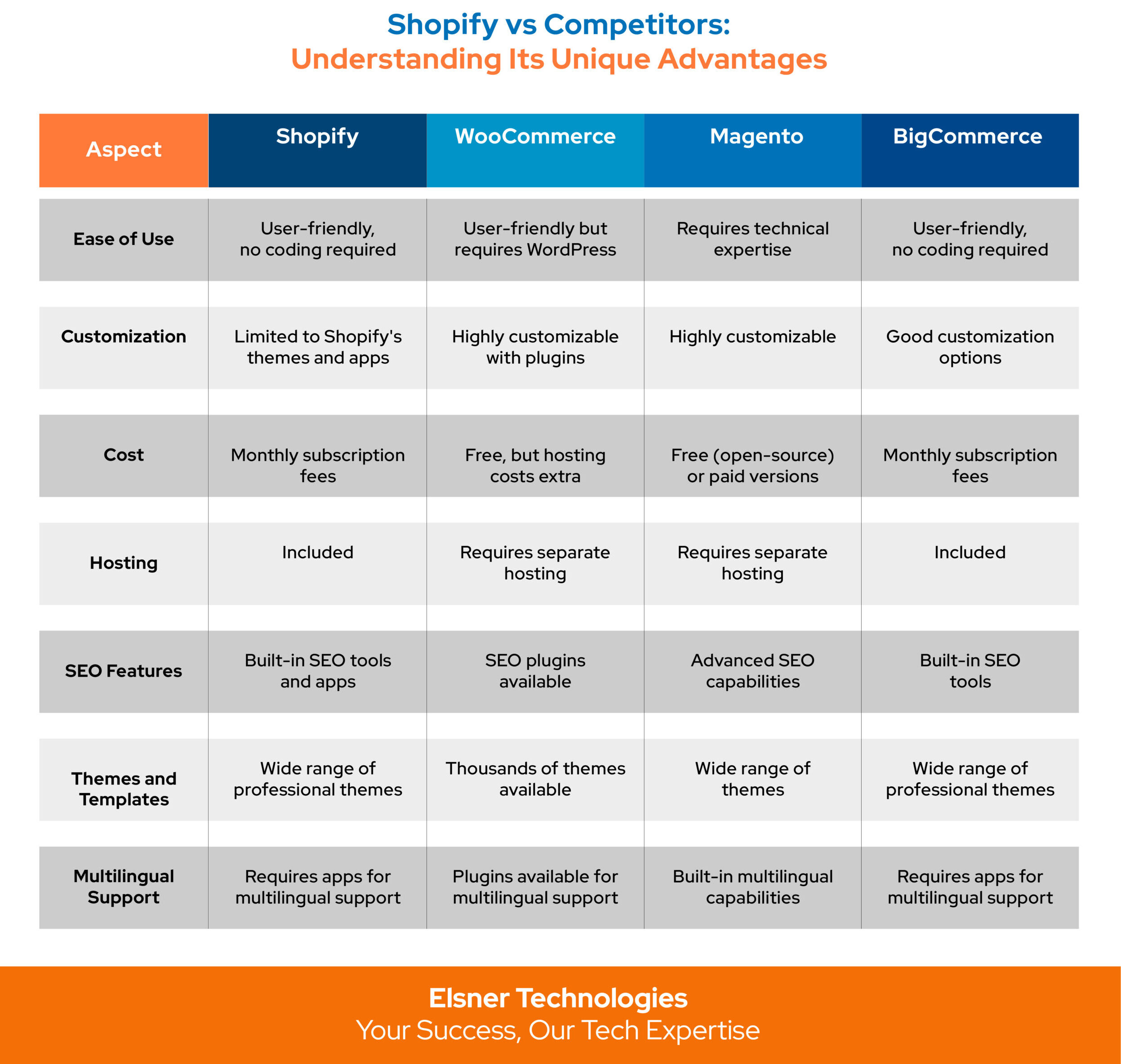
Shopify SEO Guide: How to Improve Shopify SEO?
If you are looking forward to boosting the SEO score of your Shopify store and improving its visibility, then there are certain strategies that you need to follow. Let’s find out some of the notable ones before you choose the best Shopify development services:
Optimizing for Mobile-First Indexing
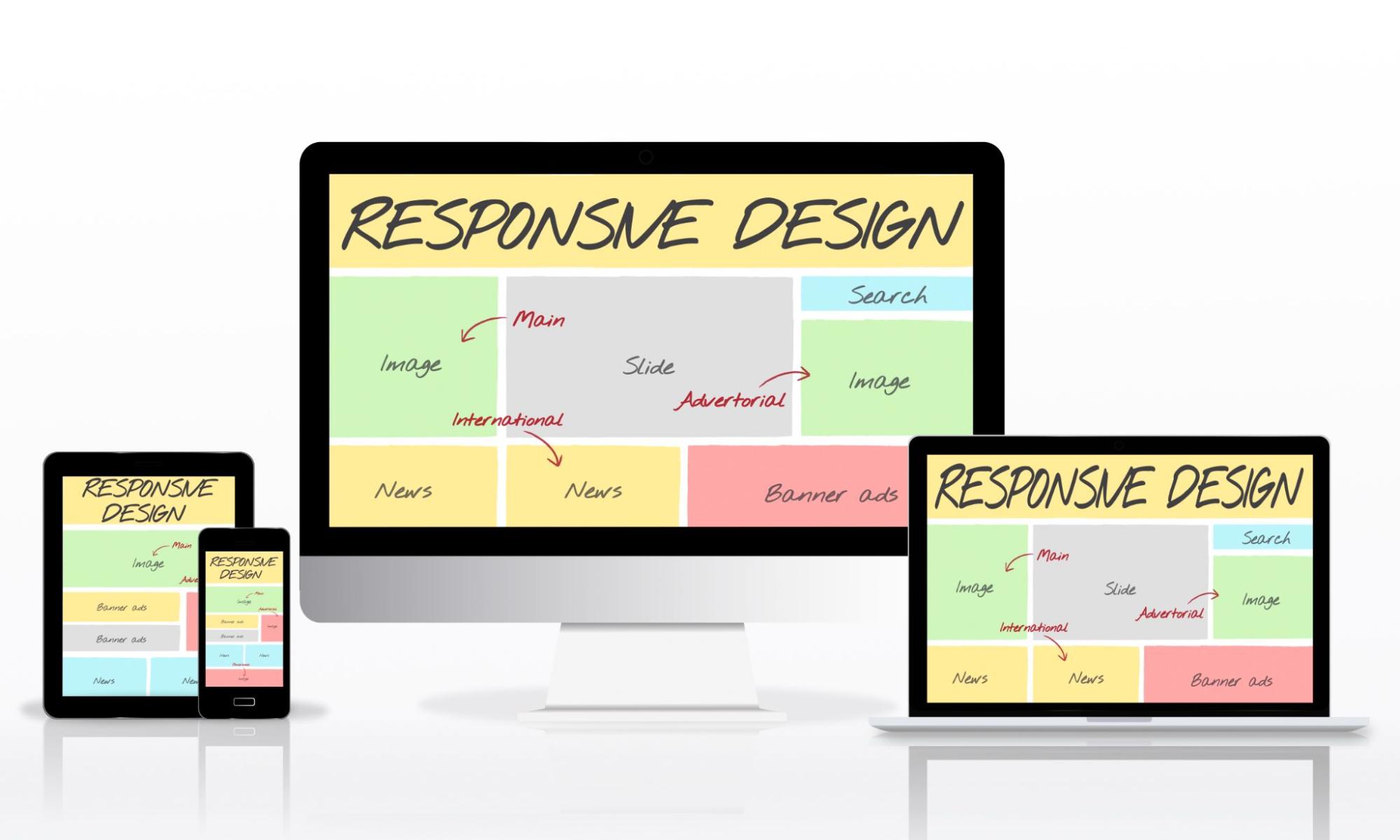
Mobile first indexing matters more than ever, so make sure your Shopify store is fully optimised for mobile devices. To get related aid, you can consider hiring Shopify SEO experts. However, there are certain strategies that you can adopt which help ensure this. It includes the following:
| Strategy |
Description |
|
Responsive Design |
Choose a responsive Shopify theme that adjusts seamlessly across devices. |
|
Mobile Page Speed |
Use tools like Google PageSpeed Insights to identify and fix mobile speed issues. |
|
User Experience |
Simplify navigation and ensure clickable elements are accessible on smaller screens. |
Although the modern Shopify themes are already responsive, you can check its CSS to ensure this. Here is its code:
margin: 0;
padding: 0;
box-sizing: border-box;
}.container {
width: 100%;
padding: 0 15px;
margin: 0 auto;
}@media (min-width: 768px) {
.container {
max-width: 750px;
}
}@media (min-width: 992px) {
.container {
max-width: 970px;
}
}@media (min-width: 1200px) {
.container {
max-width: 1170px;
}
}
▲
Focusing on Relevant and High-Quality Content

Content plays a key role in SEO. So, you should prioritize publishing high-quality content on your site to improve your search rankings. One of the effective strategies to adopt involves publishing blog posts on a frequent intervals. In this regard, you can hire a Shopify SEO expert or adopt certain strategies which are as follows:
|
Strategy |
Description |
|
Blogging |
Publish regular blog posts addressing common questions and providing valuable insights. |
|
Product Descriptions |
Write unique, detailed descriptions highlighting product benefits and features. |
|
User-Generated Content |
Encourage customer reviews and ratings to build trust and provide fresh content. |
Using Structured Data

Structured data is something with which search engines can better comprehend your content. These even play a key role in deciding how your website reflects in search results. In this regard, you should note that Shopify supports structured data for product info, reviews, and other elements. You can make use of rich snippets and JSON-LD for structured data. To get related aid, you can opt for professional Shopify web development services.
|
Strategy |
Description |
|
Rich Snippets |
Implement schema markup to enhance search listings with rich snippets. |
|
JSON-LD |
Use JSON-LD for structured data to improve search engine understanding. |
Code: Product Schema Markup (Liquid Template)
Add this JSON-LD script to your product template file (product. liquid).
<script type=”application/ld+json”>
{
“@context”: “http://schema.org/”,
“@type”: “Product”,
“name”: “{{ product.title | escape }}”,
“image”: [
{% for image in product.images %}
“{{ image.src | img_url: ‘large’ }}”{% unless forloop.last %},{% endunless %}
{% endfor %}
],
“description”: “{{ product.description | strip_html | escape }}”,
“sku”: “{{ product.sku }}”,
“mpn”: “{{ product.variants.first.barcode }}”,
“brand”: {
“@type”: “Brand”,
“name”: “{{ product.vendor | escape }}”
},
“offers”: {
“@type”: “Offer”,
“url”: “{{ shop.url }}{{ product.url }}”,
“priceCurrency”: “{{ shop.currency }}”,
“price”: “{{ product.price | money_without_currency }}”,
“priceValidUntil”: “{{ ‘now’ | date: ‘%Y-%m-%d’ }}”,
“itemCondition”: “http://schema.org/NewCondition”,
“availability”: “http://schema.org/{% if product.available %}InStock{% else %}OutOfStock{% endif %}”
}
}
</script>
▲
Optimizing for Voice Search

Another important Shopify SEO strategy that you should focus on employing is to optimize for voice search. With the rise of voice assistants and smart speakers, it has become mandatory to optimize your website for voice search. You can focus on adding conversational keywords in your content. You should also aim to have your content featured in the Position 0 or featured snippet.
|
Strategy |
Description |
|
Conversational Keywords |
Use natural, conversational phrases in your content for voice search optimization. |
|
Featured Snippets |
Aim to have content featured in Google’s snippets for better voice search results. |
Boosting Website Speed

As a part of your Shopify SEO efforts, you should adopt strategies that help in boosting your website speed. It, being a major ranking factor tends to have a direct impact on the UX or user experience. Some of the most effective approaches to follow are optimizing images, apps, etc. Make sure to get in touch with a reputed Shopify app development company for related assistance.
|
Strategy |
Description |
|
Image Optimization |
Compress images without compromising quality using apps like Crush.pics. |
|
Lazy Loading |
Implement lazy loading for images and videos to improve initial page load times. |
|
App Optimization |
Regularly review and remove unnecessary Shopify apps that slow down the site. |
Code: Lazy Loading (JavaScript)
Add this JavaScript to your theme’s JavaScript file (theme.js or similar).
var lazyloadImages = document.querySelectorAll(“img.lazy”);
var lazyloadThrottleTimeout;function lazyload () {
if(lazyloadThrottleTimeout) {
clearTimeout(lazyloadThrottleTimeout);
}
lazyloadThrottleTimeout = setTimeout(function() {
var scrollTop = window.pageYOffset;
lazyloadImages.forEach(function(img) {
if(img.offsetTop < (window.innerHeight + scrollTop)) {
img.src = img.dataset.src;
img.classList.remove(‘lazy’);
}
});
if(lazyloadImages.length == 0) {
document.removeEventListener(“scroll”, lazyload);
window.removeEventListener(“resize”, lazyload);
window.removeEventListener(“orientationChange”, lazyload);
}
}, 20);
}document.addEventListener(“scroll”, lazyload);
window.addEventListener(“resize”, lazyload);
window.addEventListener(“orientationChange”, lazyload);
});
▲
Improving On-Page SEO
On-page SEO can be termed as the foundation of your SEO endeavors. So, as a Shopify store owner, you should essentially ensure that the on-page SEO of your website is up-to-the-mark. It is possible by focusing on the header tags, title tags and meta descriptions. To learn further, you can choose the best Shopify Ecommerce development services.
|
Strategy |
Description |
|
Title Tags |
Craft compelling, keyword-rich title tags for each page. |
|
Meta Descriptions |
Write unique, persuasive meta descriptions to encourage clicks from search results. |
|
Header Tags |
Use header tags (H1, H2, H3) to structure content and include keywords naturally. |
Leveraging Shopify SEO Apps
Shopify comes with many different apps that are typically designed in a manner for improving your SEO endeavors. For more info, you can reach out to thebest Shopify developers. Some of the notable ones that you can try installing on your website are mentioned below:
|
Apps |
Description |
|
SEO Manager |
Use SEO Manager for managing meta tags, sitemaps, and more. |
|
Plug in SEO |
Employ Plug in SEO for detailed SEO analysis and recommendations. |
|
Image Alt Text Optimizer |
Automatically add optimized alt text to images for improved SEO. |
Building Quality Backlinks
When you have backlinks on your website, especially from authoritative sites, the search engines will get signals that your site is both valuable and reliable. Some of the best ways in which you can acquire backlinks is through guest blogging, promoting content, and establishing partnerships with influencers.
|
Strategy |
Description |
|
Guest Blogging |
Write guest posts for reputable blogs to earn high-quality backlinks. |
|
Influencer Partnerships |
Collaborate with influencers for backlinks from their websites or social media profiles. |
|
Content Promotion |
Promote content on social media, forums, and other platforms to attract natural backlinks. |
Monitor and Analyze Performance
Regular monitoring of your
overall SEO performance becomes extremely important as it helps you to get an idea about what is working well. Also, you can know what typically necessitates an enhancement. In this regard, you can conduct SEO audits and also employ specific tools such as Google Search Console, Google Analytics, etc. For more information, you can get in touch with an agency that is inclined towards offering the best Shopify Ecommerce development services.
| Strategy | Description |
| Google Analytics | Use Google Analytics to track traffic, user behavior, and conversion rates. |
| Google Search Console | Monitor search performance and identify issues with Google Search Console. |
| SEO Audits | Conduct regular SEO audits with tools like SEMrush or Ahrefs. |
Focusing on User Experience or UX
A great user experience can indirectly boost your SEO by increasing engagement and reducing bounce rates. Below are mentioned the most important strategies to follow for improving the UX of your site. You should essentially know this before you choose professional Shopify development services.
| Strategy | Description |
| Easy Navigation | Ensure the site is easy to navigate with a clear, logical menu structure. |
| Clean Design | Use a clean, professional design that is visually appealing and user-friendly. |
| Customer Support | Provide excellent customer support through live chat, email, and phone. |
Shopify SEO Guide: Do’s and Don’ts
Now, let’s have a look at the do’s and don’ts of Shopify SEO which are as follows: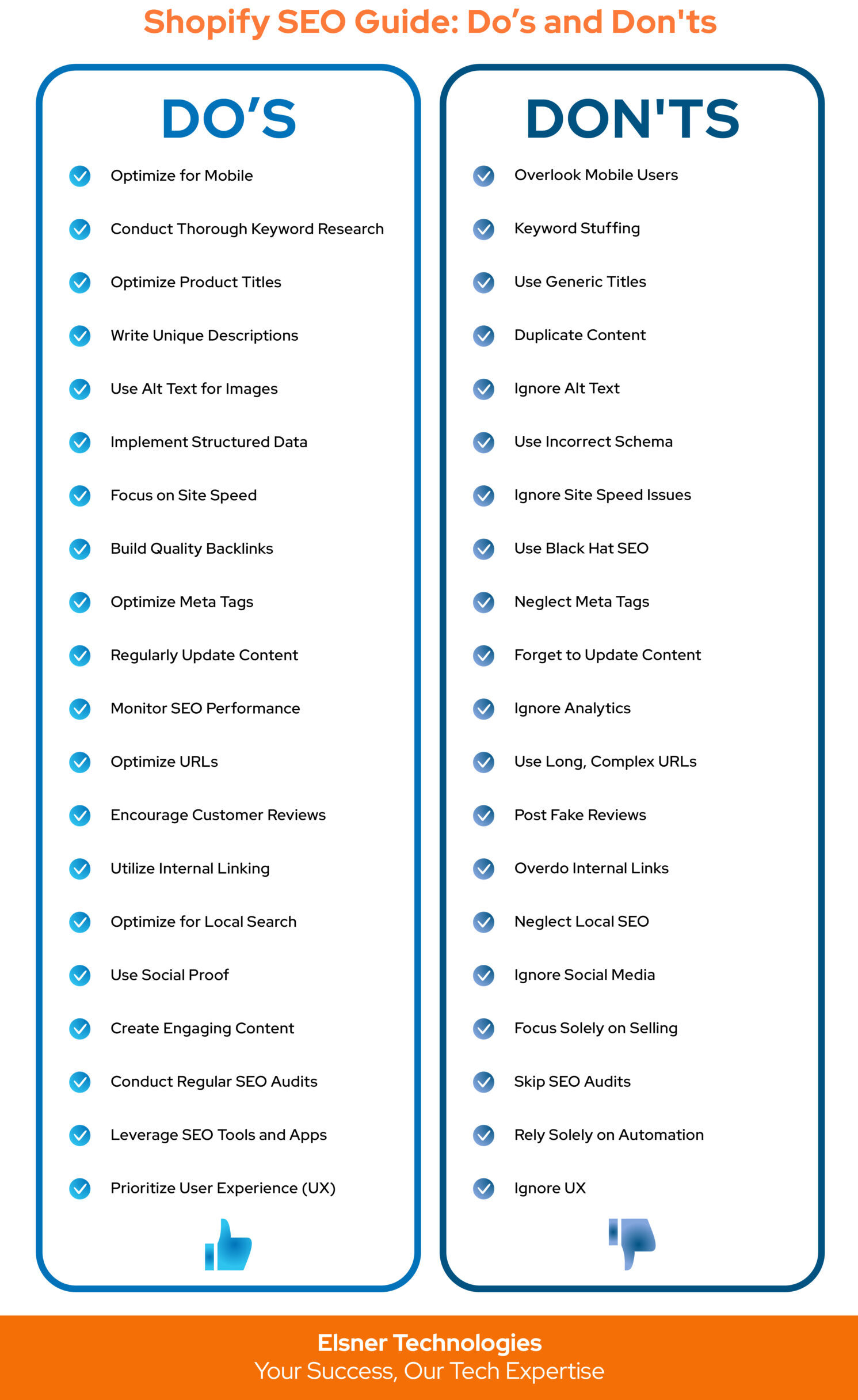
Future of Shopify SEO (2026 Trends)
Shopify SEO is evolving quickly, and what worked a few years ago is no longer enough. Search engines are becoming smarter, and user expectations are higher than ever. To stay ahead, businesses need to adapt to the latest SEO trends.
Here are some key Shopify SEO trends shaping 2026:
AI-Driven Search Optimization
Search engines are using AI to better understand user intent. This means content should focus more on solving real problems rather than just targeting keywords.
Search Intent Over Keywords
Ranking is no longer about stuffing keywords. It’s about matching what users are actually looking for. Product pages and blogs must answer specific questions clearly.
Voice and Conversational Search
More users are searching using voice assistants. This makes long-tail and conversational keywords more important than ever.
Core Web Vitals and Page Experience
Google continues to prioritize fast-loading, stable, and responsive websites. Shopify store speed and performance will directly impact rankings.
Visual Search Growth
Customers are increasingly using images to search for products. Optimizing product images with proper alt text and structured data will become essential.
First-Party Data and Personalization
With privacy changes, relying on your own customer data is key. Personalized content and product recommendations can improve both SEO and conversions.
Businesses that adapt to these trends early will have a strong advantage in search rankings and customer acquisition.
Wrapping Up
Thus, you need to follow a comprehensive approach for seeing a considerable boost in your search rankings. By implementing the above mentioned Shopify SEO best practices, you would be able to improve the visibility of your Ecommerce store, attract more organic visitors, etc. Ultimately, it helps in driving more sales.
FAQs
What is Shopify SEO?
Shopify SEO is the process of optimizing your Shopify store to improve its visibility on search engines like Google. It includes optimizing content, technical structure, and user experience.
How long does it take to see results from Shopify SEO?
SEO is a long-term strategy. Most stores start seeing noticeable improvements within 3 to 6 months, depending on competition and optimization efforts.
Is Shopify good for SEO?
Yes, Shopify is SEO-friendly and offers built-in features like clean URLs, mobile responsiveness, and easy content management. However, proper optimization is still required to rank well.
How can I improve my Shopify store ranking?
You can improve rankings by optimizing product pages, improving site speed, using structured data, building backlinks, and publishing high-quality content.
Do Shopify apps help with SEO?
Yes, many Shopify SEO apps help with tasks like optimizing meta tags, improving site structure, and analyzing performance. However, strategy matters more than tools.
What is the most important SEO factor for Shopify stores?
Content quality and user experience are the most important factors. Fast loading speed, relevant content, and mobile optimization all play a major role.
Should I hire a Shopify SEO expert?
If you want faster and more structured results, hiring an expert can help. They can identify issues, implement advanced strategies, and improve your overall SEO performance.
How often should I update my Shopify SEO strategy?
You should review your SEO strategy every 3 to 6 months to stay aligned with search engine updates and changing customer behavior.