



- Why Consider BigCommerce for Dropshipping
- Setting Up A BigCommerce Dropshipping Store
- Best Apps and Integrations
- The Margin Reality
- Automation and Fulfillment
- Where BigCommerce Dropshipping Breaks Down
- Tax, Compliance, and Customer Expectations
- Common Mistakes Worth Avoiding
- Frequently Asked Questions
- Is BigCommerce good for dropshipping?
- Does BigCommerce charge transaction fees on dropshipping sales?
- What are the best dropshipping apps for BigCommerce?
- What margins can I realistically expect?
- BigCommerce or Shopify for dropshipping?
- Final Thoughts
- Ready to Build a BigCommerce Dropshipping Store That Actually Works?
If you’re considering BigCommerce for a dropshipping business, you probably have one question: will this actually work, or is it just another platform promising easy money? Fair question. This guide covers the setup, the apps you’ll actually need, and honestly, the margin math that most articles conveniently skip over.
We’ll also get into where BigCommerce dropshipping actually works, and where it doesn’t. No hype, no “start earning passive income today” nonsense. Just what growing with this platform looks like.
Why Consider BigCommerce for Dropshipping
For most dropshipping advice, the default answer comes straight down to Shopify. There’s a reason for that. It has a bigger ecosystem with more apps built specifically for the model. But BigCommerce also has a few things that don’t get talked about enough.
|
1
|
No Automatic Platform Transaction FeeIt doesn’t automatically charge you a platform transaction fee on top of your payment processing. That used to be a flat, simple advantage over Shopify. As of June 2026, it’s become a little complicated. But it’s still relevant to your margins. We will read more about it below. |
|
2
|
More Built-In FeaturesBigCommerce comes with more built-in features. Things like coupons, gift cards, multi-currency support, and real-time shipping quotes come by default. You do not have to stack up five paid BigCommerce dropshipping apps just to get a functional store running. For a dropshipper trying to keep monthly overhead low while margins are already thin, that matters more than it sounds. |
|
3
|
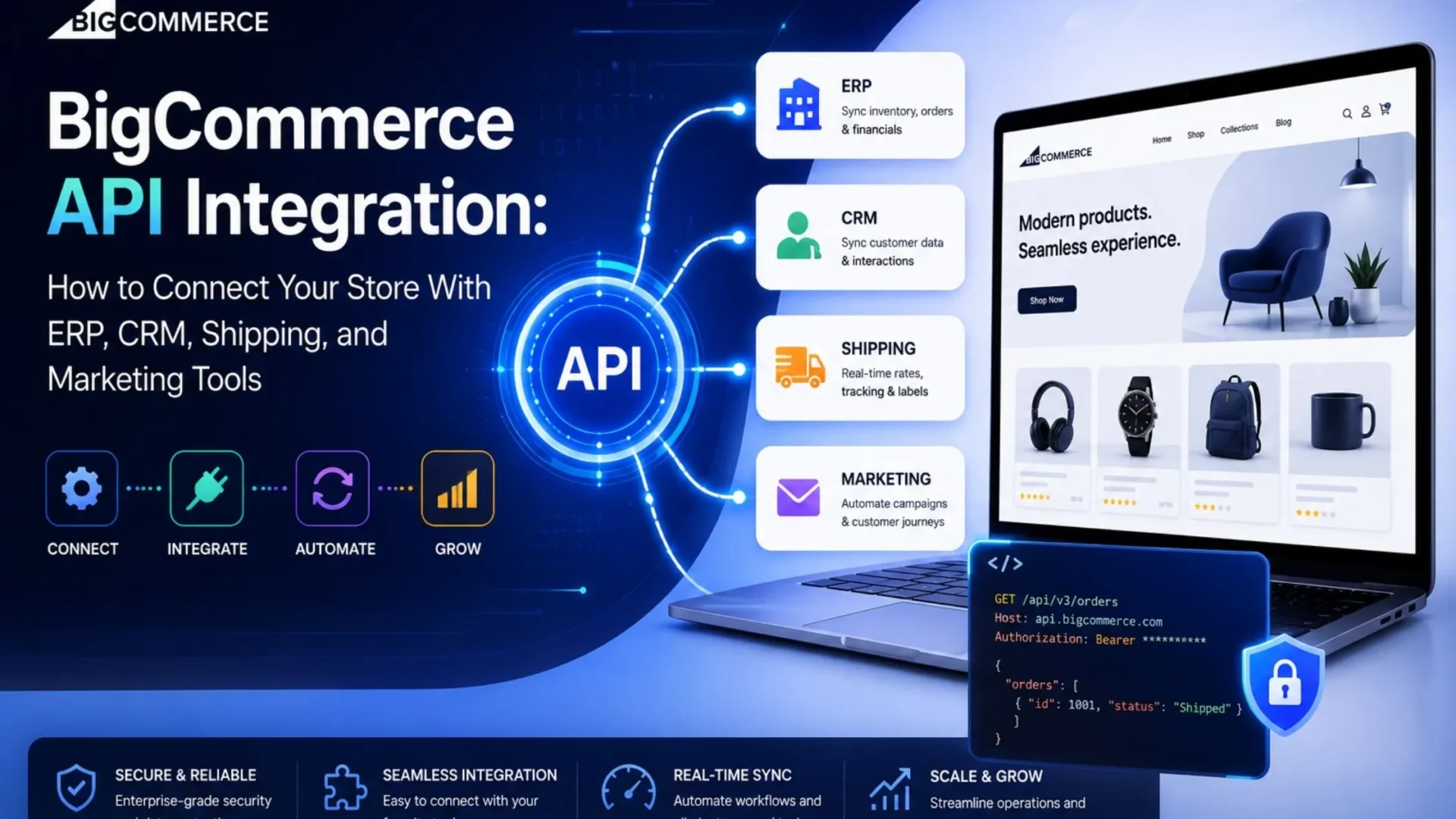
Genuinely Strong APIIts API is genuinely strong. If you eventually want a supplier for BigCommerce dropship integration or an automation workflow that off-the-shelf apps don’t cover, it gives developers more room to build a custom BigCommerce store, without fighting the platform. |
Here’s a quick, fair side-by-side:
Something worth flagging: BigCommerce quietly changed its pricing structure in mid 2026. If a chunk of your dropshipping orders run through a payment gateway not on BigCommerce’s approved list, you’ll now see a small fee on those orders. It’s not the end of the world, and for most stores using a mainstream processor it won’t affect you at all, but it does mean “zero transaction fees” isn’t the blanket pitch it used to be. Check BigCommerce’s current pricing page before you commit, since these numbers change.
Setting Up A BigCommerce Dropshipping Store
Let’s get into the actual build for your BigCommerce dropshipping store.
Start with your niche, and actually validate it before you build anything. Look at search demand, check if there’s real competition (a little competition is healthy; none at all is usually a warning sign), and see if BigCommerce dropshipping suppliers exist who can reliably ship the product you’re picturing.
From there:
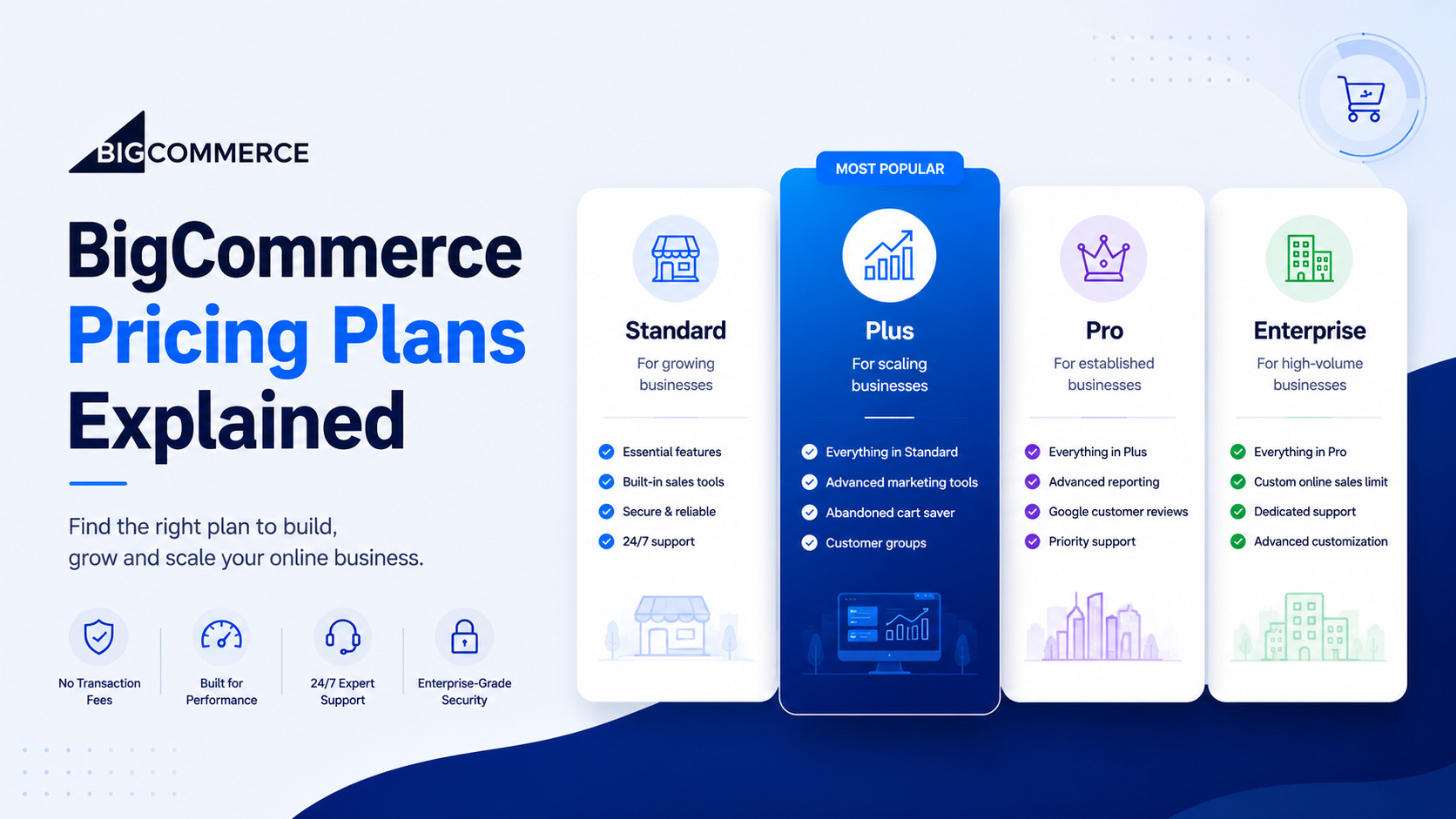
- Pick a plan based on your actual sales volume, not where you hope to be in year two. You can upgrade later.
- Set up your store basics: theme, navigation that makes sense, core pages like About and Shipping Policy, and trust elements like reviews or security badges.
- Connect your supplier source, whether that’s a marketplace integration or a manual product import to start.
- Configure shipping rules and tax settings honestly. This is the part people rush, and it’s the part that comes back to bite them in customer complaints.
- Set up your payment gateway and, this is important, run a full test order yourself before you launch. Every step, from cart to confirmation email.
That last one sounds obvious, but a surprising number of new stores go live without ever completing a real order themselves. Don’t be that store.
If you’re building your first store, our guide on how to build a high-performing BigCommerce store covers the setup side in more depth.
Best Apps and Integrations
BigCommerce’s app marketplace isn’t as vast as Shopify’s. But it covers the categories that matter for dropship on BigCommerce. Broadly, you’re looking at:
Supplier and marketplace connectors, these pull products and inventory data from suppliers into your store. Print-on-demand tools, if your model is custom merch rather than pre-made inventory. And order automation or routing apps, which handle sending orders to the right supplier without you manually copying details every time someone checks out.
A quick note: app names, pricing, and features shift constantly. An app with a five-star rating today, might get acquired, change its pricing tier, or quietly drop a feature next quarter. Take a look at the BigCommerce marketplace, check current reviews and confirm the pricing, before committing to any app.
Few things matter when you are actually evaluating an app: how recent and how many reviews, whether support responds on time, what the real pricing looks like once you’re past the free tier, and how often it gets updated. An app that hasn’t been touched in over a year is a risk, even if the reviews look fine.
The Margin Reality
This is, honestly, the part that matters most and gets skipped the most. Everyone loves to talk about retail price minus supplier cost like that’s your margin. It isn’t. Not even close.
Here’s what an actual sale looks like once everything’s accounted for. These numbers are illustrative, not a promise, not an average, just a worked example so you can see where the money actually goes:
Look at that middle section for a second. Ad cost alone can eat more of your margin than your supplier does. That’s the part new dropshippers underestimate every single time, they budget for product cost and completely forget that customer acquisition is often the biggest line item on the sheet.
Your actual numbers will move depending on your niche, your supplier’s pricing, and how efficient your ads are. A well-optimized store with strong retention can push that net margin meaningfully higher. A store leaning entirely on paid ads with no repeat customers can watch that number shrink fast. This is exactly why ad efficiency and customer retention aren’t optional extras, they’re the difference between a profitable store and one that just looks busy.
Automation and Fulfillment
Once your store is live, the operational side is where dropshipping either becomes sustainable or becomes a second full-time job you didn’t sign up for.
Order routing to your supplier can happen automatically with the right ecommerce automation strategies. It saves you from manually forwarding every order. Tracking sync keeps customers updated without you chasing down shipment numbers by hand. Inventory sync stops you from selling something your supplier is actually out of, which, if you’ve ever had to send that apology email, you know is one of the worst parts of this business.
Having said that, don’t expect full hands-off automation. Even well-integrated stores have manual touchpoints. Supplier communication when something’s backordered, handling a return that doesn’t fit the standard flow, or catching a data sync error before it becomes ten angry emails. Automation just reduces the workload. It doesn’t eliminate it.
Where BigCommerce Dropshipping Breaks Down
To be fair to you, and honestly to ourselves, here’s where this platform isn’t the obvious choice.
The app ecosystem, while capable, is smaller than Shopify’s, so if you need a very specific niche supplier connector, you might not find one, or you’ll find one that’s less mature. Supplier reliability and shipping times are outside your control regardless of platform, but they hit harder on thin dropshipping margins where a bad review can undo weeks of ad spend. As your catalog or order volume grows, you’ll likely hit limits with individual apps that force you to either stack more tools or start looking at a custom build.
That’s the tipping point worth knowing early: stacking three or four apps to patch together a workflow can cost more, in money and in reliability, than building a proper custom integration. If you’re growing fast, talk to a developer before a broken checkout forces the decision for you.
Tax, Compliance, and Customer Expectations
A few things that quietly sink new dropshippers, not because they’re complicated, but because they get ignored until they’re a problem.
Sales tax needs actual attention, not a “I’ll figure it out later” approach. Rules vary by state and by product category, and getting it wrong is expensive to unwind. Shipping time communication matters more in dropshipping than almost any other ecommerce model, since your supplier’s fulfillment speed is often slower than what customers expect from same-day delivery culture. Be upfront about it on the product page, not buried in a policy nobody reads.
Returns with third-party suppliers are messier than a standard warehouse return. Know your supplier’s actual return policy before you promise your customers something you can’t deliver on. And basic product claims and liability, don’t say something about a product that isn’t verified, especially in categories like health, beauty, or electronics where the stakes are higher.
Common Mistakes Worth Avoiding
A handful of patterns show up again and again with new dropshipping stores, on any platform really, but worth naming here specifically.
Chasing the cheapest supplier instead of the most reliable one is probably the single most common mistake. A slightly pricier supplier who ships on time and doesn’t send damaged goods is worth more to your business than a few extra dollars of margin. Ignoring real ad cost per order when planning margins, going back to that table above, is another. Overstacking apps until your store feels sluggish and your monthly costs quietly balloon past what you’re even making. And treating dropshipping as a hands-off business. It genuinely isn’t, at least not at the start. The stores that survive past year one are the ones where someone’s actually paying attention.
Frequently Asked Questions
Is BigCommerce good for dropshipping?
It’s a solid option, especially if you want strong built-in features and don’t want to rely on a huge app stack. It’s a fair fit for merchants who value flexibility and API access over having the single largest app marketplace available.
Does BigCommerce charge transaction fees on dropshipping sales?
Not automatically, if you use an approved payment provider. As of June 2026, orders processed through gateways outside BigCommerce’s approved list carry a small fee, somewhere between 0.6% and 2% depending on your plan. Worth checking your specific setup against BigCommerce’s current pricing page.
What are the best dropshipping apps for BigCommerce?
It depends on your product category and supplier relationships. Further, the marketplace changes are such that naming specific apps here would go stale fast. Check the current BigCommerce app marketplace directly and read recent reviews before committing.
What margins can I realistically expect?
There’s no universal answer, it depends heavily on your niche, supplier costs, and ad efficiency. The worked example above shows how a $100 sale can net around $25.80 after all real costs, but treat that as a way to think through your own numbers, not a benchmark to expect.
BigCommerce or Shopify for dropshipping?
Shopify generally wins on app ecosystem size and dropshipping-specific tools. BigCommerce wins on built-in features and, for many merchants, lower fees. It usually comes down to whether you’d rather have more apps available or fewer apps needed.
Final Thoughts
BigCommerce isn’t the best choice for dropshipping, but it’s a legitimate one, particularly if you want a platform that gives you more out of the box and doesn’t force you into a dozen paid apps before you’ve made your first sale. It suits merchants who value flexibility and control over having access to the absolute largest app marketplace out there.
Where it gets genuinely tricky is at scale, when app limits start showing up and stacking more tools stops being the efficient answer. That’s usually the point where a custom integration makes more sense than another workaround.
Ready to Build a BigCommerce Dropshipping Store That Actually Works?
If you’re at the point where app limits are costing you more than a proper build would, it’s worth a conversation. You can hire a BigCommerce developer and skip the trial and error part most stores go through the hard way.