





Looking for the eCommerce platform for online store development?
The market right now is at its toughest point, you can’t always rely on the traditional tactics to grow your business.
With eCommerce sales at a global scale predicted to exceed 8 trillion dollars, the competition is more intense than ever. Your platform selection will determine scalability, site responsiveness, total cost of ownership, customer experience, and long-term revenue. Shopify is still the easiest to use and scale; WooCommerce is the most content-driven store; Magenta (now Adobe Commerce) is the most complex, enterprise-oriented solution; BigCommerce is the most native, with free transaction fees; and OpenCart is the best, with open-source flexibility and lower merchant fees.
The 2026 trends include increased site speed (Shopify and BigCommerce are leading), AI-based personalization, headless commerce systems, increased privacy compliance, and decreased total cost of ownership of scaling the brand. Sites that are easy to use, perform well, and do not depend on applications are winning.
However, having an online store is not a cup of tea, the very first option is to select the best eCommerce platform to have a feasible business model. Among plenty of online stores development platforms, it can be overwhelming to select the right one.
So here in this article, we have compared 5 most popular eCommerce platforms for online stores. You will find the pros and cons of these platforms, along with its USP (Unique Selling Point). So without much delay let’s get to the work.
Shopify
| Aspect | Shopify | Magento (Adobe Commerce) | WooCommerce | BigCommerce | OpenCart |
| Ease of Use | Excellent (No coding) | Moderate (Coding needed) | Moderate (WP knowledge) | Very Good | Good |
| Scalability | High (Shopify Plus) | Very High | High (with optimization) | High | Moderate |
| Pricing (Starting) | $39/mo | Free (but high TCO) | Free (+ hosting) | $39/mo | Free |
| Speed (2026 Avg) | 2.6s LCP (Top managed) | 3.6s+ (variable) | Variable | 2.9s LCP | Moderate |
| Best For | Beginners to Enterprise | Complex Enterprise | Content + Commerce | Scaling without fees | Budget Open-Source |
Magento
| Aspect | Magento (Adobe) | Shopify | WooCommerce | BigCommerce | OpenCart |
| Customization | Excellent (Full code control) | Moderate (App-based) | Excellent (Open source) | Moderate-High | Good |
| TCO (Mid-Size) | High ($22K–$60K+/yr) | Medium ($5K–$20K) | Medium (Hosting + Dev) | Medium | Low |
| Best For | Complex Enterprise | Fast Scaling | SEO + Blogging | Native B2B Features | Low-budget custom |
| Maintenance | High (Self-managed) | Zero (Managed SaaS) | Moderate | Zero (Managed SaaS) | Moderate |
WooCommerce
| Aspect | WooCommerce | Shopify | Magento | BigCommerce | OpenCart |
| SEO Strength | Excellent (WP native) | Good | Good (with effort) | Very Good | Moderate |
| Cost Model | Free + Hosting/Plugins | Subscription | Free + High Dev | Subscription (No fees) | Free |
| Ideal For | Content-heavy stores | Quick setup | Enterprise | Mid-market scaling | Simple custom stores |
BigCommerce
| Aspect | BigCommerce | Shopify | Magento (Adobe) | WooCommerce | OpenCart |
| Transaction Fees | None | 0.6% – 2% (Waived if using Shopify Payments) | None | Depends on Gateway (0%) | None |
| Speed (2026 Avg) | 2.9s LCP | 2.6s LCP | Variable (Server-dependent) | Variable (1.8s – 3.5s LCP) | Moderate |
| Maintenance | Zero (Managed) | Zero (Managed) | High (Self-managed) | Moderate | Moderate |
| B2B Features | Native / Extensive | Plus only | Excellent (Native) | Plugin-dependent | Limited |
| Scalability | High (No bloat) | Very High (Plus) | Unlimited | High (with optimization) | Moderate |
| Best For | Scaling without fees | All-in-one ease | Deep customization | Blog + Store | Budget flexibility |
OpenCart
| Aspect | OpenCart | Shopify | Magento (Adobe) | WooCommerce | BigCommerce |
| Cost | Free (Hosting + Security extra) | Subscription ($39+/mo) | Free + High Dev Cost | Free + Hosting/Plugins | Subscription ($39+/mo) |
| Customization | Good (Open-source) | Moderate (App-driven) | Excellent (Code-level) | Excellent (WP Ecosystem) | Moderate |
| Maintenance | High (Manual patches) | Zero (Managed) | Very High | Moderate | Zero (Managed) |
| SEO Strength | Moderate | Good | Very Good | Excellent (Native WP) | Very Good |
| Best For | Small budgets / Tech-savvy | Beginners to Enterprise | Complex Enterprise | Content + Commerce | Mid-market growth |
Shopify is an eCommerce Online Store development platform founded in the year 2004 by
Tobias Lutke, Daniel Weinand, and Scott Lake. It’s been 16 years since the Shopify is in the business, from 2004 to till date 2020, it has been continuously updating itself.
It has 800,000 merchants in 175 countries enjoying its benefits. With the help of Shopify eCommerce development, you can make a website, and use the platform’s facilities to sell, ship, and manage products. It is most popular among the small as well as large business models.
How does Shopify Work and Ease of Use
Shopify is a SaaS (Software as a Service) shopping cart solution, and a hosting platform too. Hence it knows all the struggles a website may go through to reach the final stage. Keeping all these things in mind, Shopify provides everything, from hosting to SSL certificate (for security purpose).
Ease of use should be at 95% when you are choosing an eCommerce platform. Even if you are a beginner you will be able to locate the features on the screen and use it effectively. Through the admin panel access, you will be able to store data, products, and process orders.
Case Study: Project 615
Main Features:
- Abandoned cart recovery.
- Sell on advanced selling channels like Facebook, Amazon, and Pinterest.
- Digital Marketing and SEO.
- Multiple payment gateways are available.
- The Shopify app store has unlimited useful add-ons.
 Shopify: Pros
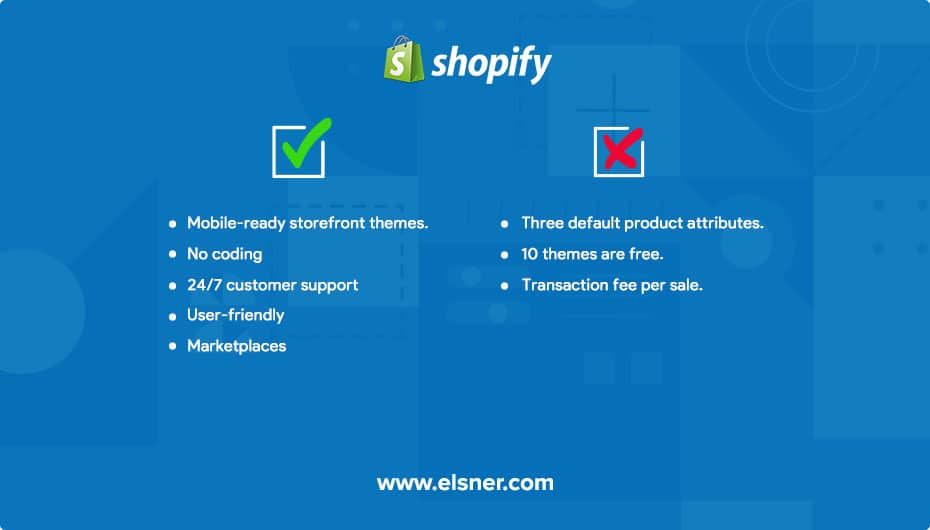
- Shopify has 100+ mobile-ready storefront themes, each easy to navigate.
- No coding required for creating a website.
- It has 24/7 customer support via, phone, email, or live chat.
- User-friendly admin area.
- Connect your website to the marketplaces of other social media platforms.
Shopify: Cons
- Only three default product attributes.
- Among 100+ themes, only 10 themes are free.
- Charges transaction fee per sale.
Ratings Based on Features
[wptb id=18415]
Shopify Update 2020: Shopify Reunite 2020 Releases and Updates.
Magento
Magento was first available for use in March 2008 and was developed by Varien Inc., which was later sold to eBay, Permira and it is in the hold of Adobe Inc. It’s been 12 years since the Magento is in this field and serving millions of businesses to grow.
Magento is an open-source eCommerce platform that had the latest update of Magento 2 in 2015 and after that, it has kept modernizing itself and eliminating cons hindering the growth of businesses. Among products sold through online stores, $155 billion were from Magento-based stores in the year 2019.
How does Magento Work and Ease of Use
Magento is written in PHP and uses multiple frameworks like Laminas and Symfony. If you don’t know the handful of information about coding, you will find Magento less user-friendly, but if that’s not the case, leverage the vast collection of its features.
Magento is a perfect eCommerce platform for smaller as well as a larger business. Start your business with 10 products and you can add up to 10,000 products in the future, that too without much hassle. In short, with Magento, you can grow your online business without shifting other platforms.
Case Study: Print Dollar
Main Features
- Inventory and Coupons Management
- Responsive Layout for Mobiles and Tablets (Uses HTML5 for the same)
- Built-in Search Engine Optimization
- Email Marketing Reminder
- Site Management
Magento: Pros
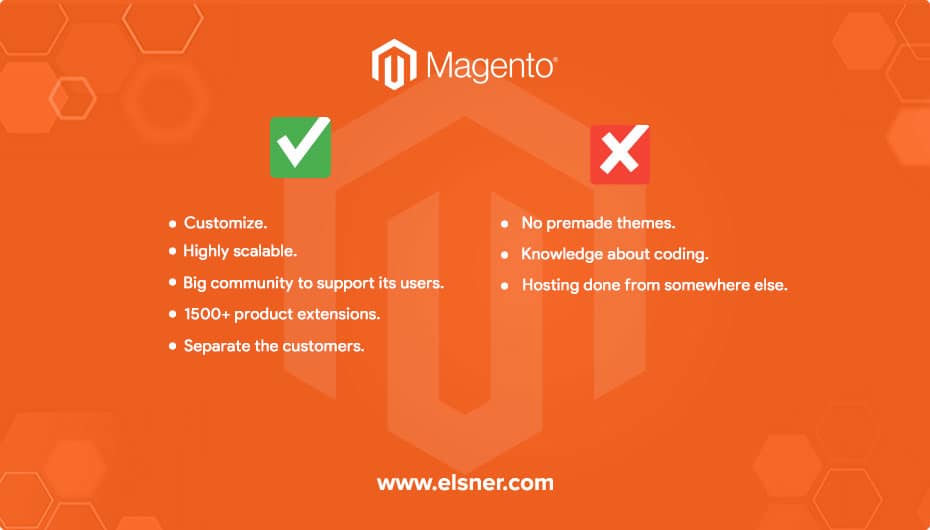
- Customize the way you want, no limits to stop you.
- The highly scalable platform, which will allow your online store to grow without any barrier.
- It has a big community to support its users, you will get a solution to anything.
- It has 1500+ product Magento extensions.
- You can separate the customers based on their purchase history, wishlist, and shopping cart.
Magento: Cons
- There are no premade themes, you will have to make one or go for the ones from third-party developers.
- You will need to have knowledge about coding to get a grip on the Magento platform.
- It is a free source, but you will need to get the website hosting done from somewhere else.
Ratings Based on Features
[wptb id=18419]
Magento Update 2020: Important Highlights Of Magento 2.3.5
WooCommerce
Unlike its competitors, WooCommerce is an open-source WordPress Plugin. WordPress is a blogging website platform, and WooCommerce is its plugin that allows the business to have the benefits of eCommerce stores along with the blogging website.
WordPress theme developer WooTheme developed this plugin in the year 2011. After its launch, 26% of websites among the online stores are being handled through WooCommerce. WooCommerce has a 6.8% share among the top 1 million websites and currently ranks at No.1 among eCommerce platforms in the market share.
How does WooCommerce Work and Ease of Use
As said, it is a WordPress plugin and works best for its websites. Install and Activate the WooCommerce plugin, then add products, shopping cart, and check out option – you are good to go! If you know how to use WP, you will get the grip of this platform in no time.
As long as ease of use is concerned, it might take you some time in learning how to operate the WooCommerce plugin. However, a tip for you: Navigating things are easy as the changes and operations are to be done from the dashboard only.
Case Study: Galleriast
Main Features
- Built-in blogging feature.
- Multiple and pre-installed payment gateways.
- Automatic tax configuration.
- Control on the checkout process.
- Offers free or flat rate shipping options.
 WooCommerce: Pros
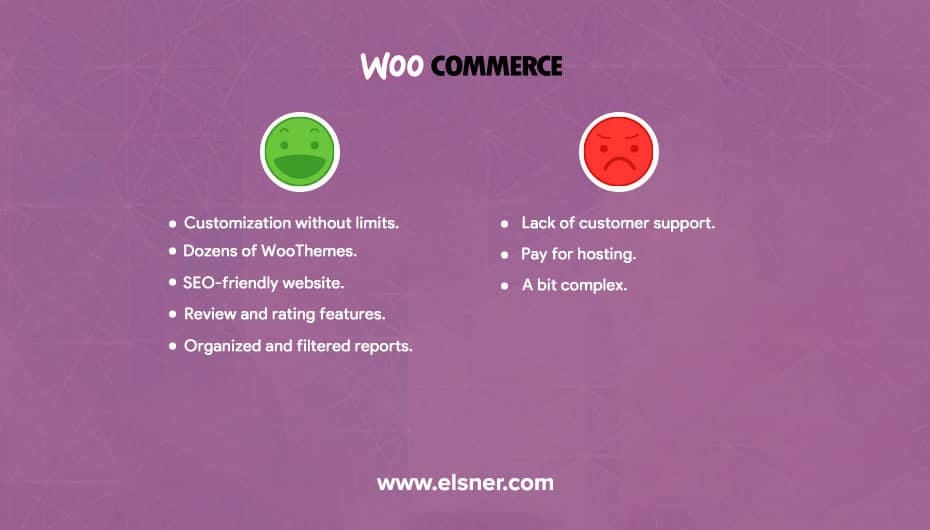
- Customization without limits. You can create a personalized store with its own identity.
- Dozens of WooThemes, specially created for WooCommerce websites.
- SEO-friendly website, which will allow you to edit your store’s metadata.
- Pre-installed review and rating features for stores and their products.
- Organized and filtered reports according to their category
WooCommerce: Cons
- Lack of customer support.
- Creating a website on WordPress is free, but you will have to pay for hosting.
- It is easy to use for WordPress websites but if you don’t have then setting it up from scratch is a bit complex.
Ratings Based on Features
[wptb id=18421]
BigCommerce
BigCommerce is known to be one of the easiest shopping cart platforms to build a website. It was founded by two Australians Eddie Machaalani and Mitchell Harper in the year 2009. Since then it is growing like anything, it has more than 100,000 online stores in 65 countries.
BigCommerce is a SaaS eCommerce platform providing all the required tools and features to create an eCommerce store. It lets you set up your online store, add products, shopping carts, and check out methods. However, this doesn’t end here, it also allows you to market your brand with its SEO feature.
How does WooCommerce Work and Ease of Use
As BigCommerce is a SaaS platform, it is free for use after paying its monthly fees. Setting up an online store using this platform is so easy, even a non-technical person can do it. Its dashboard is user-friendly and things are easy to navigate.
The ease of use is at 99% in the case of BigCommerce development, whether you own a start-up or well-groomed business, creating an online store is reliable for both. You will never outgrow or doubt BigCommerce’s features.
Main Features
- Mobile-friendly themes
- Advanced SEO features
- More than 40 Pre-integrated payment methods
- Various design options (themes, point-and-click tools, customizable CSS/HTML)
- Product reviews
 BigCommerce: Pros
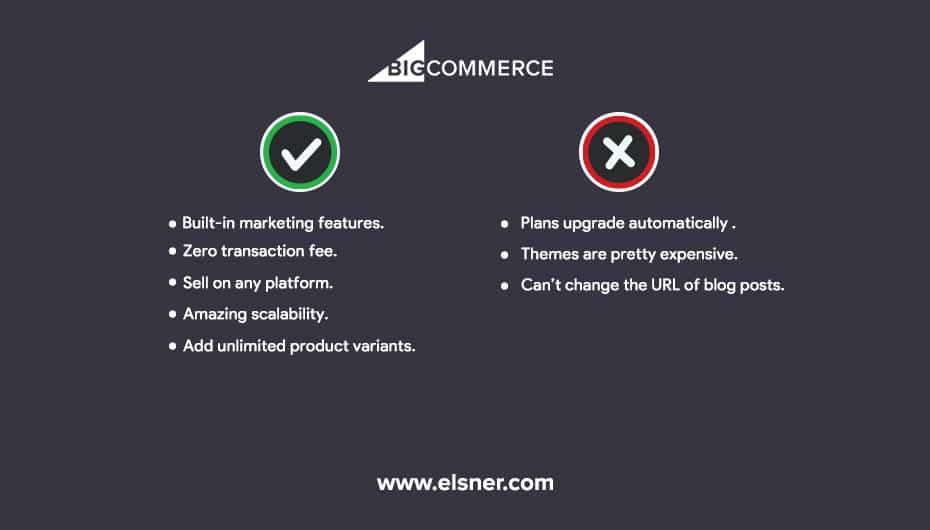
- BigCommerce has built-in marketing features, which will help your business to grow.
- It has a zero transaction fee feature.
- You can sell on any platform, Facebook, Amazon, eBay, etc.
- It has amazing scalability, will never let you feel regret, even if your store grows from 10 products to 100,000 products.
- Allows you to add unlimited product variants.
BigCommerce: Cons
- Plans upgrade automatically based on your yearly sales threshold.
- Some of the themes are pretty expensive.
- You can’t change the URL of blog posts.
Ratings Based on Features
[wptb id=18423]
OpenCart
OpenCart’s initial presence as an eCommerce platform was in 2009 by Daniel Kerr. Before that, it was developed in 1999 by Christopher G. Mann for developing the online stores. After its release in 2009, it has gained a grip on helping businesses to grow online. In 2015, it had a contribution of around 6.42% of global eCommerce stores.
OpenCart is an open-source platform that supports different languages and currencies. As it is an open-source eCommerce platform you don’t have to pay monthly fees to use it. It is highly customizable. It has 334,689 live eCommerce websites in the world.
How does OpenCart Work and Ease of Use
OpenCart Development is flexible in terms of use as it is open-source. It has many benefits that benefit the start-up online stores and advanced features which helps large scale business. It can be somewhere near pocket-friendly to pretty expensive as you start growing your website.
Despite being a free platform, if you need customer support you will have to pay for the services. The platform is better for the beginners, the UI is great and easily navigable. There are a few things that you need to be careful of, like third-party apps.
Main Features
- You can add unlimited products and manage them.
- Supports multiple currencies.
- It has more than 20 payment gateways.
- Multiple themes are available.
- Product reviews and ratings.
OpenCart: Pros
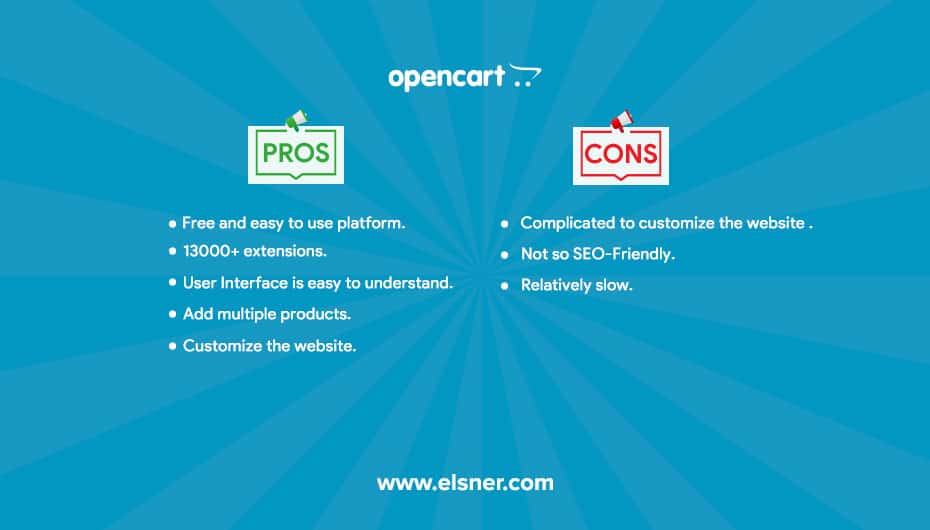
- It is a free and easy to use platform.
- There are around 13000+ extensions available.
- The administration panel’s User Interface is easy to understand and shows valuable stats.
- You can add multiple products without hindrance.
- Customize the website as you want.
OpenCart: Cons
- It gets complicated to customize the website. You will need a website developer.
- Not so SEO-Friendly. You will need to install add-ons for the same.
- It is relatively slow when it comes to the checkout process.
Ratings Based on Features
[wptb id=18415]
OpenCart Update 2020: OpenCart module Updates 2020
Conclusion
There is no one best platform in 2026 – the correct platform will be determined by your position in the business, your technical capabilities, your budget, and your business development strategies. Shopify remains the most suitable platform for most merchants due to a combination of simplicity, speed, an integrated ecosystem, and scalability that allows rapid launches and easy growth. WooCommerce is ideal for use on high-traffic, high-SEO, and fully owned websites.
BigCommerce fits well with new businesses seeking powerful native applications and no transaction costs. The Magento (Adobe Commerce) enterprise solution can be highly customized, whereas OpenCart is a powerful open-source option for simpler needs.
Assess your priorities: If speed-to-market and low maintenance are among your top priorities, choose Shopify. Select WooCommerce if you need total control and content integration. Use BigCommerce for high-volume or B2B sites that do not include features.
To ensure maximum enterprise-level flexibility, select Magento. And as a low-cost bespoke solution, OpenCart can do it as well.
Still hesitant? Get an experienced team of developers to help you define your requirements and avoid costly future replatforms. The site you choose today will make you successful tomorrow.
FAQ’s
Which is the best eCommerce platform in 2026: Shopify, Magento, WooCommerce, BigCommerce, or OpenCart?
It depends on your needs. Shopify is the simplest and fastest; WooCommerce is SEO/content; BigCommerce is free-scale, no fees; Magento is enterprise customization; and OpenCart is cheap open-source.
Will Shopify remain the most beginner-friendly in 2026?
Yes, it is simple to use, fast to install, and offers great support, which is why it suits start-ups and small-to-medium businesses.
WooCommerce or Shopify: Which has better SEO in 2026?
Yes, WooCommerce (WordPress) offers more on-page SEO options and content editing, but Shopify has an advantage in technical speed and organized information.
What platform does not charge a transaction fee in 2026?
BigCommerce and open-source platforms, including WooCommerce, Magento, and OpenCart, do not charge an in-built transaction fee (though payment gateways may). Shopify charges unless you are using Shopify Payments.
Is it possible to switch platforms in case I grow out of my decision later?
Sure, migrations are costly and time-intensive. Select on the basis of the growth prospects of 2-3 years to reduce changes in the future.