




- Opencart vs Magento:
- What are the benefits of OpenCart and Magento?
- OpenCart
- Benefits of investing in OpenCart:
- Magento
- Benefits of investing in Magento:
- What are the mistakes in migrating from OpenCart to Magento?
- SEO Checklist while moving from Opencart to Magento
- 1. Update with SEO-friendly theme and structure:
- 2. 301 URL redirects:
- 3. Custom 404 page:
- 4. Juice from 404 links:
- 5. Minimize on-page changes:
- 6. Avoid Duplicating the Content:
- 7. Check that the XML site is configured correctly:
- Planning to Migrate from OpenCart to Magento?
- FAQs
- Is OpenCart to Magento migration essential for your business?
- What are the biggest challenges during Magento migration?
- Will I lose my SEO rankings after migration?
- How can I avoid downtime during migration?
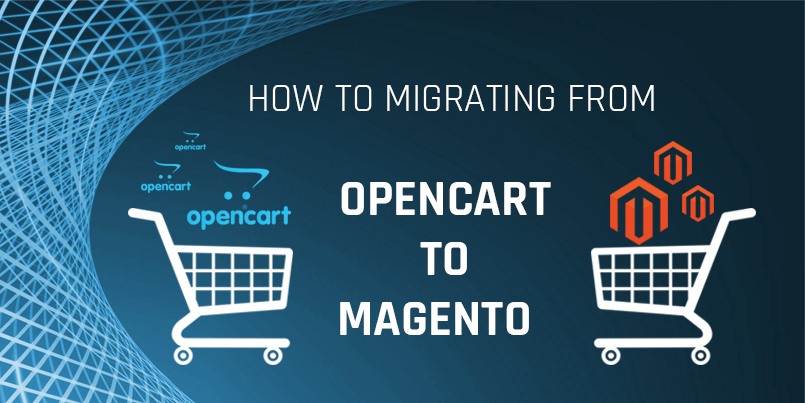
There may come a time when you feel that OpenCart is not meeting your business expectations and plan to look for other tools.
OpenCart and Magento are open-source software built in PHP that fulfill business requirements. Custom-made extensions have their special pros and cons, depending on market demands.
Businesses are seeking Magento development services when they need feature-rich, powerful tools to handle tasks efficiently and scale their ecommerce operations. OpenCart provides simple-to-use systems and effortless integrations for small businesses. Magento has a user-friendly UI that demands no technical expertise and scales your business with ease.
Opencart vs Magento:
|
Features |
OpenCart |
Magento |
|
Cost |
Open-Source |
Open-Source |
|
Ease of Usage |
Simple Installation |
Quicker & User-Friendly |
|
Theme |
500 free & Paid Themes |
2100+ Free & 30,000 Paid |
|
Support |
OpenCart Forum |
Large & Active Community |
|
Security |
Does not ensure high-end security |
Releases security patches regularly |
|
Site Performance |
936 Milliseconds (Quanta) |
568 Milliseconds (Quanta) |
Both OpenCart and Magento offer user-friendly interfaces and strong features. For example, Magento regularly releases security patches to help protect your store from vulnerabilities, whereas OpenCart’s security relies more on community updates and may require additional measures.
What are the benefits of OpenCart and Magento?
OpenCart
OpenCart is a seamless ecommerce platform that provides complete control over your online store with ease of customisation options. Developed on PHP and MVC architecture which integrates with PostgreSQL and MySQL databases easily. However, as businesses grow and require advanced features, many eventually switch to Magento Enterprise Development for better scalability and performance.
Benefits of investing in OpenCart:
- Easier to Operate: No requirement of technical expertise, which makes it accessible to users with minimal technical knowledge.
- Infinite Products: There are no limitations on the number of products, this ecommerce platform allows you to have countless products and unlimited categories.
- Multi-Store Support: This helps business owners set up and manage multiple online stores and sell different brands with ease of customization.
Magento
Magento is an ecommerce platform built in PHP that helps multiple stores manage their stores seamlessly and support easy growth. To fully leverage its capabilities, many businesses prefer to hire Magento expert for better customization, performance optimization, and scalability. With a wide range of extensions and development tools, it has a strong technical background.
Benefits of investing in Magento:
- Deep Customization: Magento empowers business owners to customize their online store from visual design to branding with strong backend functionalities.
- Easier to Grow: Magento’s architecture supports business growth while handling website traffic, product catalogs, and higher transaction volumes.
- Ecommerce Capabilities: This helps address the complex demands of sales with a specialized feature set that includes multiple buyer roles, custom catalogs, and pricing per client.
What are the mistakes in migrating from OpenCart to Magento?
OpenCart to Magento migration is not just a technical shift but a strategic growth. While the focus is on the improvements, many businesses encounter some setbacks due to lack of proper roadmap. Some of the mistakes to avoid during the migration:
- Clear Migration Strategy: Many business start without a defined roadmap that includes scope, timelines, and goals. Your migration must align with business objectives while avoiding becoming directionless and resulting in inefficient outcomes.
- Cost & Time: Magento migration is more complicated than OpenCart. It is important to consider the effort required for custom features, testing, and integration to avoid repetitive runs.
Poor Hosting: If you have inadequate hosting it can affect the performance. Without implementing proper infrastructure and scalable services, the platform may struggle even after migration. Optimizing performance is crucial, especially for Magento stores, and following best practices from Magento ecommerce website performance optimization can significantly improve speed and user experience.
SEO Checklist while moving from Opencart to Magento
There is no one-size-fits-all SEO services and strategy while moving from Opencart to Magento. None of the eCommerce business owners should move ahead with the migration without reviewing the site structure, current performance, and long-term goals. One can not put the SEO at risk while replatforming.
Search engines regularly go through the sites, and page index and record bounce rates, traffic, performance, and every factor behind the ranking.
One must follow the SEO checklist while migrating.
1. Update with SEO-friendly theme and structure:
While migrating ensure that the theme you choose is SEO friendly and has a maximum of one h1 tag on the webpage. H2, h3, and h4 are available for subheadings. If some pages of the website are accessible with more than one URL, notify the search engines using the canonical tags.
The optimized title and the meta description tags should also be migrated.
2. 301 URL redirects:
Consider 301 redirects to retain organic traffic. While dealing with the simple URL(example: example.com/magento-2) and complex-pattern based URL(example: example.com/magento-shopping?page=2), do not worry about all variations of sources URL, they will be handled automatically with redirection and canonicals URLS.
3. Custom 404 page:
Make the best use of the 404 error page to boost your SEO. You can include branded design and website navigation to retain the customer.
4. Juice from 404 links:
Any important 404 URL that has backlinks should be acknowledged using the Google Search console.
5. Minimize on-page changes:
Do not change the content and the design dramatically while changing the platform. This change is constantly being noticed by the search engines which may end up with a dip in the organic traffic and reindexing.
6. Avoid Duplicating the Content:
Since SEO revolves around the content, concentrate on creating content that attracts and converts buyers. One should use canonical URLs to direct the search engines to the original content.
7. Check that the XML site is configured correctly:
One should avoid including dynamic and low-quality pages in the XML sitemap. Try to exclude any other unwanted pages from the sitemap.
Seize the opportunity of migrating from Opencart to Magento to improve the SEO.
Planning to Migrate from OpenCart to Magento?
Upgrade your store with a powerful, scalable Magento solution. From seamless migration to performance optimization, our experts ensure zero data loss, better speed, and long-term growth for your ecommerce business.
FAQs
Is OpenCart to Magento migration essential for your business?
OpenCart to Magento migration is a great investment when you need to grow, enterprise-level features, and custom solutions. But, for small stores with limited budgets, OpenCart can be the correct choice.
What are the biggest challenges during Magento migration?
The biggest challenges can include complex data migration, higher pricing, performance optimization, and maintaining SEO rankings. Businesses might face some complexities in handling Magento’s architecture.
Will I lose my SEO rankings after migration?
SEO rankings might temporarily drop after Magento migration. If the URL structure changes or redirects are not implemented. However, with the right 301 redirects, technical setup, and metadata migration, the rankings can be preserved.
How can I avoid downtime during migration?
Downtime can be reduced by using a staging environment, performing parallel development, and switching to the new store only after all tests are complete.