



- Understanding Odoo Implementation
- Key Advantages of Implementing Odoo
- Comprehensive Business Solution
- Tailored Customization
- Growth Scalability
- Improved Decision-Making
- Intuitive User Experience
- Improved Team Collaboration
- Frequent Updates and Enhancements
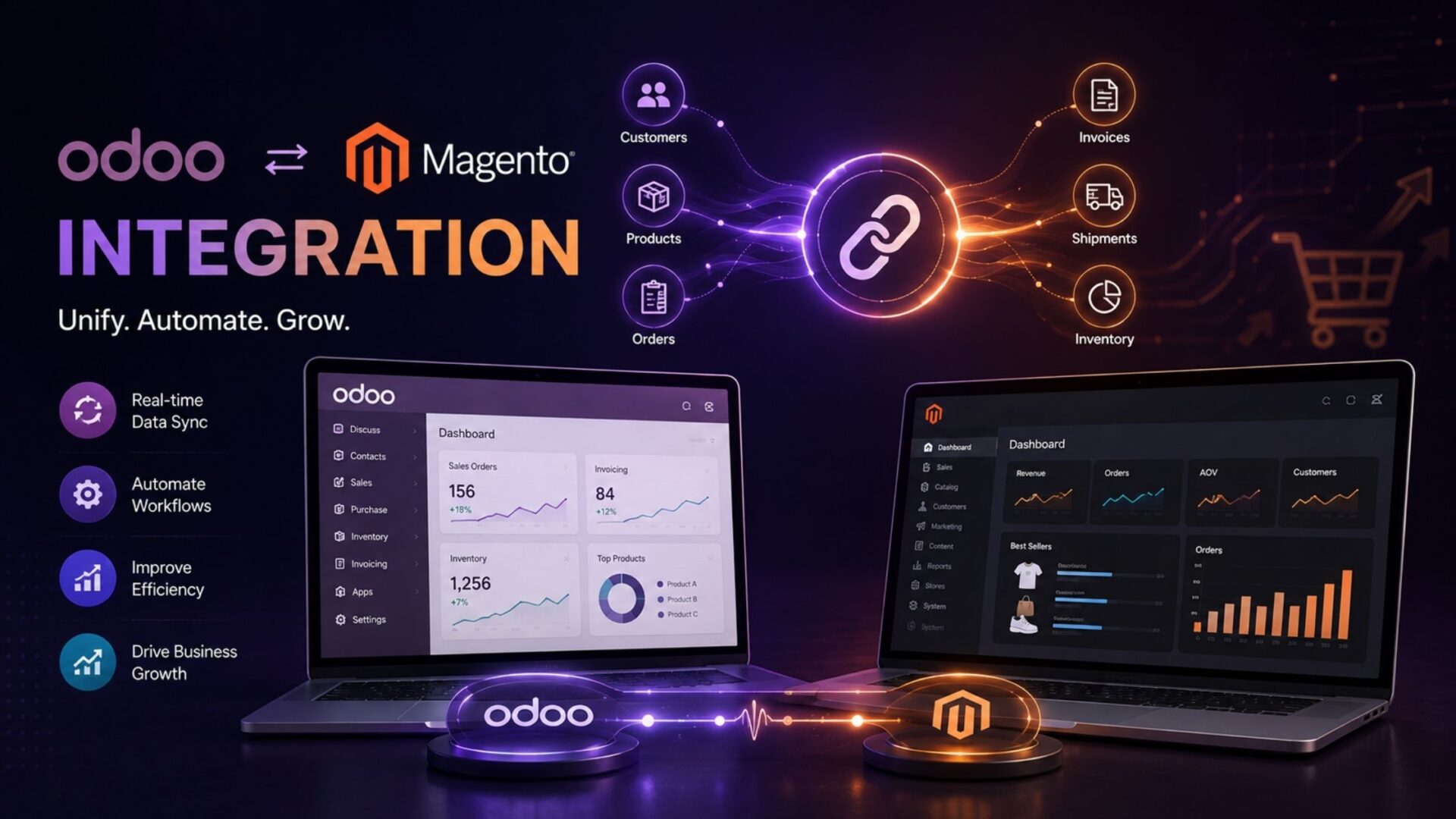
- Integration Capabilities
- Step-by-Step Guide to Odoo Implementation
- Analyzing Business Requirements
- Planning the Project
- Setting Up Odoo
- Migrating Data
- Training Employees
- Conducting User Acceptance Testing (UAT)
- Launching Odoo
- Providing Ongoing Support
- Applications of Odoo Implementation in Industries
- Common Challenges in Odoo Implementation
- Frequently Asked Questions
- What is Odoo, and how would it help my business?
- How long does it typically take to implement Odoo?
- How much does it cost to implement Odoo?
- Can Odoo be customized to fit my specific business needs?
- What after-service support is typically provided?
- Can Odoo support ecommerce operations?
- What makes Odoo stand out compared to other ERPs?
- How should I select the right implementation partner?
- Which industries can Odoo ERP be implemented in?
- Is it possible to migrate from my current system to Odoo?
- Wrapping Up
Quick Answer
A successful Odoo implementation follows a clear process: analyse your business requirements, plan the project, set up and configure Odoo, migrate your data, train employees, run user acceptance testing, go live, and provide ongoing support. The biggest risks are poor planning, messy data migration, and low user adoption, all of which a phased rollout with an experienced partner manages. The full steps are below.
Implementing an ERP the right way can transform how a business runs. But many companies jump into ERP implementation without a solid plan and end up with a costly, messy rollout.
Companies that implement ERP systems typically see a 20 to 30 percent improvement in operational efficiency.
If you want to avoid turning your ERP plans into a costly mistake, this guide walks through exactly how to implement Odoo the right way.
With Odoo’s workflow automation and integrated modules, your business can run more smoothly across departments. This guide covers every step and obstacle in Odoo implementation, from initial planning through go-live.
Understanding Odoo Implementation
Odoo implementation is the process of integrating Odoo ERP software into your business operations. Whether you are a small business or a large enterprise, Odoo is built to offer a scalable, tailored, and cost-effective solution. Let’s look at the key benefits.
Key Advantages of Implementing Odoo
|
1
|
Comprehensive Business SolutionOdoo offers a complete suite of applications, from CRM and accounting to inventory management. Integrated modules ensure smooth communication between departments. |
|
2
|
Tailored CustomizationEvery business has different requirements. Working with an experienced Odoo development team lets you customize modules to match your specific workflow, so you only pay for what you actually use. |
|
3
|
Growth ScalabilityAs your business expands, Odoo scales with you. Start with essential modules and add more as your company grows. |
|
4
|
Improved Decision-MakingWith real-time analytics and reporting, businesses gain insights that improve strategic planning, replacing guesswork with data. |
|
5
|
Intuitive User ExperienceA clean and simple interface makes Odoo easy to navigate, which helps drive real day-to-day adoption. |
|
6
|
Improved Team CollaborationWorkflow automation lets teams collaborate with centralized data and automated processes instead of scattered spreadsheets. |
|
7
|
Frequent Updates and EnhancementsOdoo releases regular updates, so businesses stay current without relying on outdated legacy systems. |
|
8
|
Integration CapabilitiesOdoo integrates with several third-party apps, making it a versatile solution for diverse business requirements. |
Step-by-Step Guide to Odoo Implementation
|
1
|
Analyzing Business RequirementsBefore diving into implementation, conduct a thorough analysis of your business needs. Identify pain points and determine which modules are actually essential. |
|
2
|
Planning the ProjectA well-defined roadmap is critical. Work with an experienced Odoo partner to outline objectives, timelines, and resource allocation. |
|
3
|
Setting Up OdooOnce the plan is ready, set up Odoo on cloud or on-premise. Configurations should align closely with actual business goals, not generic defaults. |
|
4
|
Migrating DataData migration is often a challenge. Working with experienced developers, including options to hire an Odoo developer, helps ensure a clean data transfer with minimal downtime. |
|
5
|
Training EmployeesA system is only as good as its users. Run workshops and training sessions to help employees adapt to the new tool, since a single email update rarely works. |
|
6
|
Conducting User Acceptance Testing (UAT)Before going live, test the system extensively. Identify and fix any issues to ensure smooth functionality, this is your dress rehearsal before launch. |
|
7
|
Launching OdooOnce testing is successful, deploy Odoo across your organization. Monitor performance closely in the initial phase to catch issues early. |
|
8
|
Providing Ongoing SupportPost-implementation support is crucial. Partner with an experienced team for maintenance and updates, since a live ERP needs regular attention. |
Odoo Development: Expertise You Can Trust
We specialize in developing custom Odoo solutions that meet your unique business needs.
Applications of Odoo Implementation in Industries
- Retail: Streamlined inventory and sales tracking, no more mystery stock shortages.
- Manufacturing: Efficient production management with automated workflows.
- Healthcare: Patient management and billing integration in one system.
- Ecommerce: Seamless integration with online stores, reducing friction that leads to abandoned carts.
Common Challenges in Odoo Implementation
Initial investment costs. Although Odoo is cost-effective long term, the upfront investment can be a concern for small businesses. It’s worth viewing as an investment rather than a pure expense.
Managing change. Resistance from employees is natural. Proper training and communication help ease the transition.
Data migration challenges. Ensuring accurate data transfer is crucial. Work with experienced teams to avoid costly mistakes.
Customization complexity. Customizing Odoo requires expertise. Partnering with an experienced team simplifies the process considerably.
Integrating with existing systems. Odoo’s flexibility allows third-party integration, but it requires careful execution to get right.
Training and adoption issues. User resistance can slow down implementation. Continuous training sessions mitigate this over time.
Frequently Asked Questions
What is Odoo, and how would it help my business?
Odoo is all in one management software that covers everything from accounting and inventory to sales and CRM. With its integrated modules and workflow automation, it replaces scattered tools and manual work with one connected system.
How long does it typically take to implement Odoo?
It depends on the scope. Implementation for small businesses can take as little as a few weeks. Larger enterprises may need a few months to get everything running smoothly. Partnering with an experienced Odoo team helps keep the timeline realistic.
How much does it cost to implement Odoo?
Cost depends on factors such as the size of your business and the level of customization needed. Odoo is generally cost-effective compared to enterprise alternatives, but final cost varies by scope.
Can Odoo be customized to fit my specific business needs?
Yes. Odoo can be tailored closely to your business, from custom reports to integrations with your existing tools, with the right development partner.
What after-service support is typically provided?
Ongoing support is usually part of the package, covering training, maintenance, and troubleshooting as your business and needs evolve.
Can Odoo support ecommerce operations?
Yes. With Odoo’s integrated modules, you can manage everything from inventory to customer interactions in one place, alongside Odoo’s website and ecommerce tools.
What makes Odoo stand out compared to other ERPs?
Flexibility and affordability. Odoo’s workflow automation and integrated modules let you manage multiple business functions from one platform, without the enterprise-level overhead of some alternatives.
How should I select the right implementation partner?
Look at experience, reviews, and the range of services offered. A team with a proven track record in Odoo ERP implementation makes for a smoother, more predictable rollout.
Which industries can Odoo ERP be implemented in?
Nearly all of them, including retail, manufacturing, healthcare, and education. Any business with processes worth streamlining can benefit from Odoo.
Is it possible to migrate from my current system to Odoo?
Yes. Migration is much smoother with experienced developers handling it. A skilled team can manage data migration carefully to ensure a clean, low-risk transition.
Wrapping Up
Investing in Odoo ERP implementation can be a genuine turning point for a business. With Odoo’s integrated modules, your business gains efficiency, scalability, and automation. The journey has its challenges, but with the right strategy and an experienced partner, a smooth rollout is very achievable.
If you’re ready to take your business operations to the next level, now is a good time to start planning your Odoo implementation.