




- 67% Still Run Comp on Spreadsheets
- What Is Enterprise Compensation Management
- Why “Enterprise” Changes Everything
- Who Owns Compensation Inside a Large Organization
- How It Differs from Traditional Payroll Management
- Why Enterprise Compensation Management Matters More Than Ever in 2026
- Pay Transparency Laws Are Spreading Across the US
- Talent Markets Have Become More Competitive
- Executive Compensation Faces Heavier Scrutiny
- Global Workforce Complexity Has Grown
- Pay Equity Is a Data Problem Now
- Core Components of an Enterprise Compensation Management Program
- 1. Base Salary Structure
- 2. Variable Pay and Performance Bonuses
- 3. Long Term Incentives and Equity Compensation
- 4. Benefits and Perks
- 5. Recognition and Spot Awards
- 6. Executive Compensation
- Best Practices for Enterprise Compensation Management
- Anchor Decisions in Real Market Data
- Define a Clear Compensation Philosophy
- Run Continuous Pay Equity Analysis
- Build Transparent Salary Ranges
- Tie Variable Pay to Outcomes That Actually Matter
- Standardize Approval Workflows
- Forecast Labor Costs With Real Modeling
- Communicate Total Rewards Clearly
- Train Managers as Compensation Stewards
- Review and Evolve the Program Annually
- Common Challenges Enterprises Face in Compensation Management
- Fragmented Tools and Disconnected Data
- Compliance Across Multiple Jurisdictions
- Manager Inconsistency
- Slow Annual Compensation Cycles
- Lack of Forward Looking Analytics
- What to Look For in Enterprise Compensation Management Software
- Centralized Compensation Dashboard
- Salary Planning and Budget Modeling
- Variable Pay and Commission Management
- Equity and Long Term Incentive Tracking
- Pay Equity Analytics
- Multi Country Compliance Engine
- Manager Self Service Portal
- Approval Workflows and Audit Trails
- Deep Integrations
- AI Powered Insights
- Top Enterprise Compensation Management Software in 2026
- How to Choose Between SaaS and Custom Built Solutions
- When SaaS Works Better
- When Custom Built Makes Sense
- The Hybrid Path
- Want a Tailored Compensation Management Strategy?
- How AI Is Reshaping Enterprise Compensation Management
- Predictive Retention Modeling
- Automated Pay Equity Detection
- Market Benchmarking at Speed
- Natural Language Reporting
- Implementation Roadmap for Enterprise Compensation Management
- Cost Considerations for Enterprise Compensation Management
- Frequently Asked Questions
- Final Thoughts on Enterprise Compensation Management
- Treat Compensation as Strategic Infrastructure
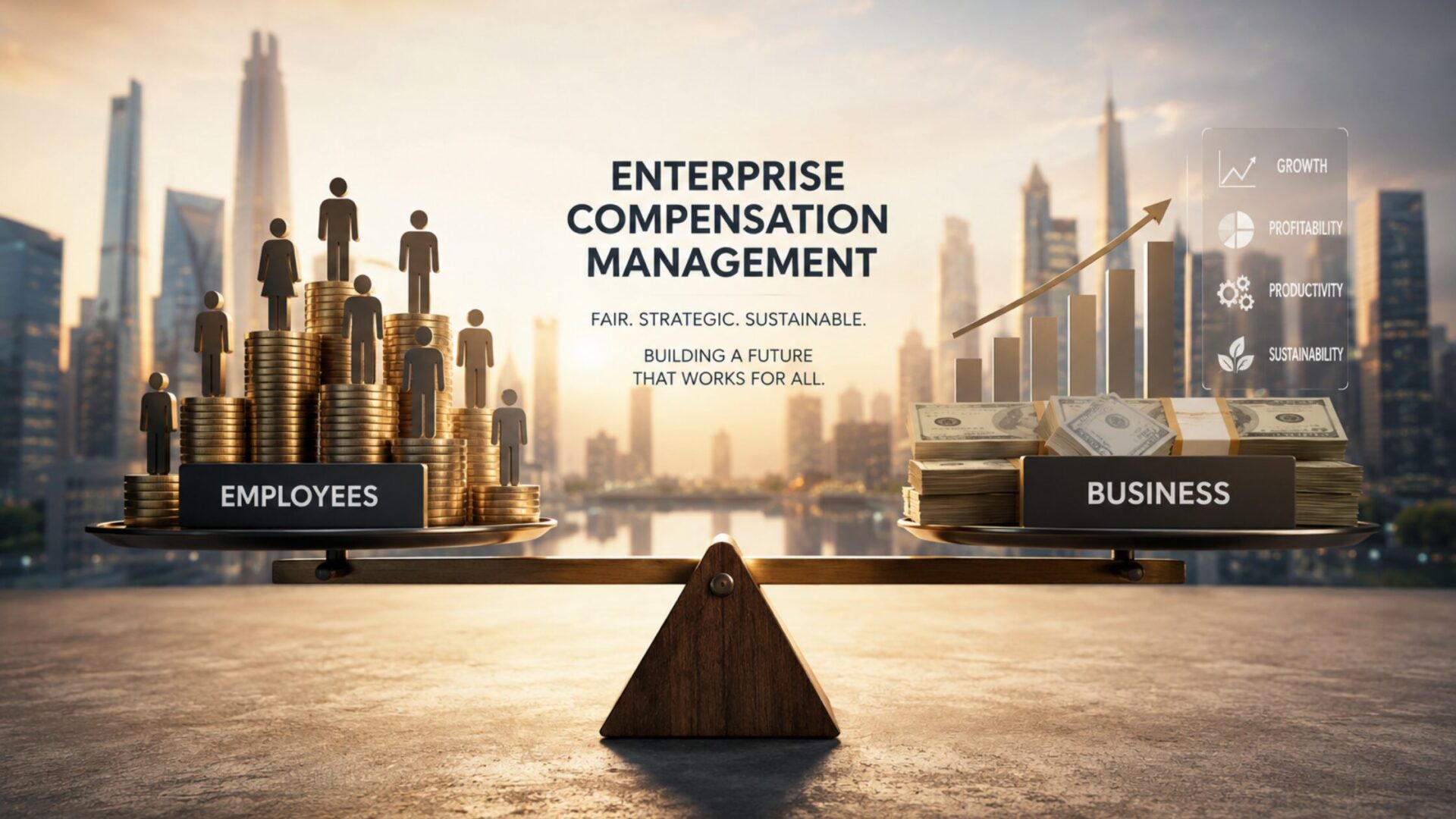
Enterprise compensation management is no longer just an HR function. It’s a strategic discipline that touches every part of a large organization, from board level decisions on executive pay to the quarterly bonus a sales rep in Texas is waiting on. When it works, employees feel valued, regulators stay satisfied, and finance leaders can actually forecast labor costs. When it doesn’t, companies lose talent, fail audits, and watch their best people walk to competitors who handle pay with more clarity.
For US enterprises managing thousands of employees across multiple states and often multiple countries, the stakes have never been higher. Pay transparency laws are spreading fast. Workers compare salaries openly on Levels.fyi and Blind. Boards demand cleaner reporting on executive compensation. And the spreadsheets that used to run the annual merit cycle simply can’t keep up with the complexity.
67% Still Run Comp on Spreadsheets
According to Mercer’s 2024 Global Talent Trends study, two-thirds of large enterprises still rely on spreadsheets for compensation planning. Companies running dedicated compensation platforms report 40 to 60 percent fewer payroll errors and cycle times shorter by half.
This guide walks through what enterprise compensation management actually involves, the core components every program needs, the best practices that separate strong programs from weak ones, and the technology decisions that shape execution. Whether you’re refining an existing program or starting from scratch, the framework here helps you build something that actually works at scale.
What Is Enterprise Compensation Management
Enterprise compensation management is the strategic process of designing, administering, and governing how a large organization pays its workforce. That includes base salary, variable pay like bonuses and commissions, long term incentives such as equity grants, benefits, and the policies that hold everything together. It’s not one task. It’s an ongoing discipline that connects HR strategy, finance planning, legal compliance, and business performance.
Why “Enterprise” Changes Everything
A 200 person company can run compensation through a shared spreadsheet and survive. A 15,000 person enterprise cannot. Scale introduces problems that smaller organizations never face. Multi state and multi country payroll. Equity vesting across grant cycles. Sales commission plans with quarterly true ups. Pay equity reporting by job family. Executive compensation that needs board approval and SEC disclosure.
Enterprise compensation management exists because complexity at that scale demands a structured approach. Without it, errors compound, decisions become inconsistent, and the company loses the ability to manage one of its largest cost categories with any precision.
Who Owns Compensation Inside a Large Organization
Usually it’s a shared responsibility. Chief Human Resources Officers set strategy. Compensation analysts handle market benchmarking and pay equity audits. Finance partners forecast costs. Business unit leaders propose increases within budget guidelines. Legal teams review compliance. And the CEO and board approve executive pay packages.
No single person owns compensation end to end at most enterprises. That’s actually a feature, not a bug. The checks and balances prevent the kinds of errors that single-owner systems often produce.
How It Differs from Traditional Payroll Management
Payroll pays people. Compensation management decides how much they should be paid in the first place, why, and what mix of cash, equity, and benefits makes sense. Payroll is execution. Compensation is strategy. The two work together but solve fundamentally different problems.
Why Enterprise Compensation Management Matters More Than Ever in 2026
A few years ago, compensation was a back office function that surfaced once a year during merit cycles. That has changed. Compensation conversations now happen in boardrooms, on earnings calls, and in the press. Here’s why the discipline has become strategic.
Pay Transparency Laws Are Spreading Across the US
California, Colorado, Washington, New York, Illinois, Hawaii, and Maryland have all passed pay transparency legislation. New York City requires salary ranges in every job posting. Colorado requires it for any role visible to Colorado residents. The EU Pay Transparency Directive takes full effect in mid 2026 and will affect any US enterprise with European operations.
These laws force structured thinking about pay ranges, equity, and the rationale behind compensation decisions. Companies caught flat footed face lawsuits, regulatory penalties, and reputational damage.
Talent Markets Have Become More Competitive
The post pandemic talent shuffle is mostly behind us, but the expectations it created stuck. Workers research salaries before interviews. They benchmark offers against publicly shared compensation data. They walk away from employers who can’t articulate why their pay structure exists. A strong compensation program is a recruiting and retention asset. A weak one is a liability hiding in plain sight.
Executive Compensation Faces Heavier Scrutiny
SEC disclosure rules, say on pay votes, and activist investor pressure have all made executive compensation more visible. CEOs whose pay seems disconnected from company performance face shareholder revolts. Boards need defensible compensation structures backed by data, not gut feel.
Global Workforce Complexity Has Grown
Remote work made hiring across borders normal. An American company might now have employees in Mexico, Canada, the UK, Ireland, India, Brazil, and Singapore. Each location brings different tax rules, statutory benefits, mandatory bonuses, and labor regulations. Managing compensation consistently across that footprint requires systems and processes that scale.
Pay Equity Is a Data Problem Now
Detecting pay gaps used to involve manual audits run once a year. Modern enterprises run continuous pay equity analysis using machine learning models that flag outliers in real time. The companies doing this well catch problems before they become lawsuits. The ones who don’t usually find out the hard way.
Core Components of an Enterprise Compensation Management Program

Strong compensation programs share a common architecture. The mix and weighting differs by industry and company strategy, but the building blocks tend to look similar across enterprises that get this right.
1. Base Salary Structure
Base pay is the foundation. Most enterprises organize roles into job families, assign salary grades, and set ranges within each grade. The ranges should reflect external market data from sources like Mercer, Radford, Payscale, or Willis Towers Watson, plus internal equity considerations.
Salary grades typically include a minimum (the floor for the role), a midpoint (the market median), and a maximum (the ceiling, often 120 to 130 percent of midpoint). Where someone sits within their range depends on experience, performance, and tenure.
2. Variable Pay and Performance Bonuses
Variable pay rewards performance against specific targets. For sales teams, that’s usually commissions tied to revenue or quota attainment. For non sales roles, annual bonuses are common, typically a percentage of base salary that varies with individual and company performance.
Done well, variable pay aligns employee incentives with business outcomes. Done poorly, it creates perverse incentives or rewards luck instead of effort. The hard part isn’t designing the formula. It’s making sure the metrics actually measure what matters.
Quick observation: The single most common variable pay mistake we see at enterprise scale is letting plans accumulate complexity year over year. A bonus plan that started simple often ends up with seven exceptions, four kicker provisions, and three sunset clauses by year five. Annual simplification matters.
3. Long Term Incentives and Equity Compensation
Stock options, restricted stock units, performance shares, and other equity grants tie employees to long term company value. The standard vesting schedule in tech is four years with a one year cliff, though enterprises in other sectors use different structures.
Equity is the area where most enterprises lose track of their own decisions. Grants are made enthusiastically, then tracked in spreadsheets that nobody updates. Two years later, no one can answer how much equity is outstanding or who’s vesting when. A real system fixes that.
4. Benefits and Perks
Health insurance, retirement plans (401k matching), paid time off, parental leave, education stipends, wellness programs, and increasingly, mental health benefits. The dollar value of a strong benefits package easily reaches 25 to 40 percent of base salary at large enterprises.
Benefits often get treated as a separate category, but a real compensation program treats total rewards as one number. Employees do.
5. Recognition and Spot Awards
Small, frequent recognition often outperforms large annual bonuses in driving engagement. Spot awards, peer nominated recognition, and milestone bonuses keep the connection between contribution and reward visible throughout the year.
6. Executive Compensation
Executive pay packages need their own treatment. They typically include base salary, annual cash bonus tied to performance metrics, long term equity grants with performance and time vesting conditions, and various perquisites. Public companies must disclose executive compensation in proxy statements, and the design must withstand shareholder scrutiny.
Best Practices for Enterprise Compensation Management
The frameworks that separate strong compensation programs from weak ones aren’t secret. The execution is what’s hard. Here’s what enterprises doing this well actually do.
Anchor Decisions in Real Market Data
Salary surveys from Mercer, Radford, Willis Towers Watson, and Aon provide the benchmarking foundation. Update market data at least annually. For high demand roles in tech, refresh it quarterly. Decisions made on stale data create competitive vulnerabilities you won’t notice until your best people start leaving.
Define a Clear Compensation Philosophy
Are you paying at market median? At the 75th percentile? Below median for base with heavy equity upside? Every enterprise should be able to articulate its compensation philosophy in three sentences. If yours can’t, that’s the place to start. Without a clear philosophy, every decision becomes a one off negotiation.
Run Continuous Pay Equity Analysis
Don’t wait for an annual audit. Strong enterprises run pay equity analysis quarterly, looking at gaps by gender, race, role, tenure, and location. Outliers get flagged automatically and reviewed by HR before they become legal exposure. Pay equity is now table stakes, not a competitive advantage.
Build Transparent Salary Ranges
Pay transparency laws are forcing this conversation anyway. Get ahead of it. Define ranges for every role, communicate them internally, and explain how individuals move through the range. Transparency reduces friction, supports recruiting, and builds trust. Employees who understand the system stop guessing about whether they’re being treated fairly.
Tie Variable Pay to Outcomes That Actually Matter
Bonus metrics should reflect what the business actually wants to achieve. Sales teams chase revenue. Engineering teams ship product. Customer success teams retain accounts. Generic company wide bonus targets disconnect employees from their own impact. Specific, measurable, role appropriate metrics work better.
Standardize Approval Workflows
Every compensation decision should follow a defined approval path. Manager proposes. HR business partner reviews. Department head approves within budget. Executive comp goes to the board. Audit trails capture every step. This isn’t bureaucracy. It’s the basic infrastructure that prevents errors and protects the organization in compliance reviews.
Forecast Labor Costs With Real Modeling
Finance teams need to model compensation scenarios before merit cycles, not after. A 3 percent merit pool feels modest until you model the actual cost across 8,000 employees with varied performance ratings, location adjustments, and equity refreshes. Strong forecasting prevents budget surprises and supports better strategic decisions.
Communicate Total Rewards Clearly
Employees often underestimate their total compensation because they only see base salary on their pay stubs. Annual total rewards statements that show base, bonus, equity vesting, benefits value, and employer 401k contribution create real perceived value. Easy to do. Often skipped. Worth the effort.
Train Managers as Compensation Stewards
Managers make most pay decisions in the first place. If they don’t understand the company’s compensation philosophy, salary structure, or merit guidelines, decisions become inconsistent. Annual compensation training for managers isn’t optional at scale. It’s basic operational hygiene.
Review and Evolve the Program Annually
Compensation strategy isn’t set once. Markets shift. Laws change. Talent priorities evolve. The best enterprises treat compensation as a living program, with annual strategy reviews that ask whether the current approach still fits the business. Frozen programs slowly stop working without anyone noticing.
Common Challenges Enterprises Face in Compensation Management
Even the most disciplined organizations hit friction points. Knowing them upfront helps avoid them.
Fragmented Tools and Disconnected Data
Most enterprises run compensation across multiple tools that don’t talk to each other. HRIS holds employee data. Payroll runs paychecks. Spreadsheets manage merit cycles. Equity sits in Carta or Shareworks. Each system has its own truth, and reconciling them eats hours that should go to strategy.
Compliance Across Multiple Jurisdictions
A company with employees in 12 states and 5 countries deals with 17 different regulatory environments. Federal labor laws. State minimum wages. City pay transparency ordinances. Country specific statutory bonuses. Keeping up requires either dedicated compliance staff or software that handles it automatically. Most enterprises underinvest here until something goes wrong.
Manager Inconsistency
Two managers in the same department making different decisions about identical roles creates pay equity problems and erodes trust. Inconsistency usually comes from lack of training, unclear guidelines, or weak oversight from HR. Structured workflows and manager education fix most of it.
Slow Annual Compensation Cycles
The annual merit cycle is where most HR teams burn weeks of effort. Manual data gathering. Email approvals that get lost. Last minute exceptions that aren’t documented. Strong systems compress what used to take six weeks into two and reduce errors at the same time.
Lack of Forward Looking Analytics
Most compensation reporting looks backward. Total spend last year. Average increase last cycle. Strong programs look forward. Projected retention risk based on pay gaps. Modeled cost of a 4 percent merit pool versus 3 percent. Predicted attrition by role and tenure. Forward analytics turn compensation from a reporting function into a strategic one.
What to Look For in Enterprise Compensation Management Software
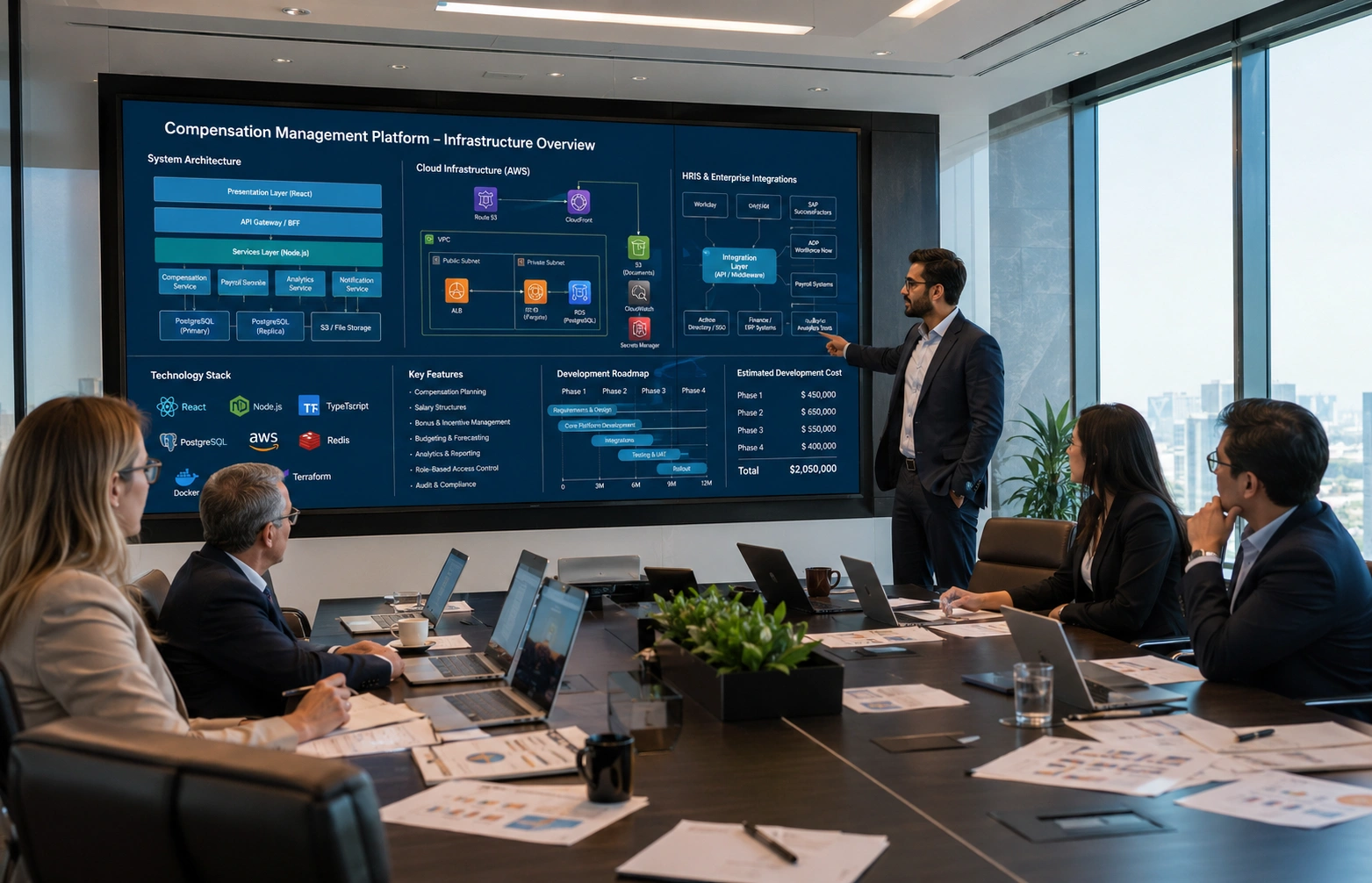
Technology is what turns compensation strategy into actual execution. The right platform handles the calculations, approvals, and reporting that would otherwise consume HR’s calendar.
Centralized Compensation Dashboard
One pane of glass showing total compensation across employees, departments, locations, and business units. Filters by tenure, role, geography, performance band, and equity status. HR leaders should be able to answer “what does our top 10 percent earn compared to market” in under 30 seconds.
Salary Planning and Budget Modeling
Multi scenario modeling for merit cycles. Distribute increases by performance bands. Forecast total impact. Run what if simulations before approvals start. The platform should let HR test compensation strategies cheaply before committing money to them.
Variable Pay and Commission Management
Sales commissions, performance bonuses, spot rewards, and incentive plans should all live in one system. The complexity isn’t calculating them. It’s handling exceptions. Reps with split territories. Bonuses tied to metrics that finance revised mid quarter. Spot awards that need retroactive approval. Real software handles edge cases gracefully.
Equity and Long Term Incentive Tracking
Stock options, RSUs, performance shares, and vesting schedules need their own dedicated logic. Cliff vesting. Graded vesting. Acceleration on change of control. Tax treatment by jurisdiction. Generic HR tools handle equity at a surface level. Real compensation platforms treat it as a first class object.
Pay Equity Analytics
Built in pay gap analysis by gender, race, role, tenure, and location. Continuous monitoring instead of annual audits. Automatic flagging of outliers. The reports regulators expect, generated without HR building them manually every quarter.
Multi Country Compliance Engine
Flexible rule engines that handle different tax treatments, statutory benefits, mandatory bonuses, and labor regulations across regions. The best platforms decouple compliance rules from core logic so updates happen through configuration, not code changes.
Manager Self Service Portal
Managers propose increases and recommend bonuses within approved budgets. They review their team’s compensation in context. HR stays in oversight rather than becoming a bottleneck for every decision.
Approval Workflows and Audit Trails
Multi level approvals with full logging of who proposed, who approved, who modified, and when. Non negotiable for SOX compliance, internal audits, and regulatory inquiries. Every change traceable to a person, timestamp, and reason.
Deep Integrations
Native connectors for major HRIS platforms like Workday and SAP SuccessFactors, payroll providers like ADP and Ceridian, ERP systems, and performance management tools. Shallow integrations create the same data silo problems the platform was supposed to fix.
AI Powered Insights
Smart merit increase suggestions based on performance and market data. Retention risk scoring that flags employees with high flight probability. Market benchmarking that updates as new data comes in. Our work in AI and machine learning development consistently shows that the most effective ML features in compensation tools are the ones that surface insights humans would miss, not the ones trying to automate decisions humans should make.
Top Enterprise Compensation Management Software in 2026
The market for enterprise compensation tools has matured significantly. Here’s how the leading options compare for US enterprises.
PEPM means per employee per month. For a 5,000 person enterprise paying $20 PEPM, annual cost lands at $1.2 million. That math is why custom builds make financial sense for larger enterprises, even with higher upfront costs.
How to Choose Between SaaS and Custom Built Solutions
The build versus buy decision depends on a few key factors. Here’s the practical framework most enterprises end up using.
When SaaS Works Better
Standard compensation structures. Under 3,000 employees. Limited internal tech capability. Quick implementation matters more than deep customization. The leading SaaS platforms cover 80 percent of needs out of the box, and that’s enough for most mid market enterprises.
When Custom Built Makes Sense
5,000 or more employees. Unique compensation structures that don’t fit standard SaaS models. Complex global compliance requirements. Deep existing HR tech stack that benefits from tight integration. Strategic reasons to own the platform IP. Long term cost optimization matters more than fast deployment. SaaS development options give you a starting framework, but the customization that scales over years often pushes enterprises toward owning the build.
The Hybrid Path
Some enterprises run a SaaS platform for core compensation and build custom modules for specific needs the SaaS can’t handle. Sales commission engines are a common candidate for custom because SaaS commission tools rarely match complex enterprise commission structures. The hybrid approach captures the speed of SaaS without sacrificing depth where it matters.
Want a Tailored Compensation Management Strategy?
Every enterprise faces unique compensation complexity. Our team helps US enterprises evaluate SaaS options, design custom solutions, and build the technology backbone for compensation programs that scale.
How AI Is Reshaping Enterprise Compensation Management

Artificial intelligence has moved from buzzword to practical tool in enterprise compensation. The applications that actually deliver value aren’t the ones that try to replace HR judgment. They’re the ones that surface patterns humans would miss.
Predictive Retention Modeling
ML models can analyze compensation, performance, tenure, and engagement signals to identify employees at elevated flight risk. The output isn’t a verdict. It’s a prioritized list for HR to investigate before the resignation letter arrives. Companies using predictive analytics well report meaningful improvements in voluntary attrition rates.
Automated Pay Equity Detection
Statistical models flag pay gaps that can’t be explained by legitimate factors like performance, tenure, or role. Continuous monitoring catches drift early. HR gets to investigate and correct before patterns become legal exposure.
Market Benchmarking at Speed
AI driven tools pull market data, normalize it against your roles, and flag where your compensation has fallen behind. What used to require quarterly consultant engagements now happens continuously.
Natural Language Reporting
Finance leaders can ask “what was total variable pay impact in Q3” without filing a report request. HR can ask “show me roles with the largest pay equity gaps” and get immediate answers. Modern business intelligence capabilities are making compensation analytics genuinely conversational.
Implementation Roadmap for Enterprise Compensation Management
For enterprises overhauling their compensation approach or deploying new technology, the rollout typically follows a phased pattern. Trying to do everything at once usually fails. Here’s what actually works.
|
1
|
Assess Current StateAudit existing compensation processes, tools, and data quality. Identify the biggest pain points across HR, finance, and managers. Document compliance gaps. This phase usually takes 4 to 6 weeks and shapes everything that follows. |
|
2
|
Define Compensation PhilosophyArticulate the company’s approach to pay positioning, total rewards mix, and pay for performance. This becomes the north star for every subsequent decision. Skip this step and the technology choices won’t have anything to anchor to. |
|
3
|
Design Pay Structures and BandsBuild job families, salary grades, and ranges anchored in current market data. Map every existing role to the new structure. Identify where current pay sits outside the new ranges and plan adjustments. |
|
4
|
Select or Build TechnologyEvaluate SaaS platforms, custom build options, or hybrid approaches. The decision should fit organizational scale, complexity, and long term strategy. Run pilots before committing to enterprise wide deployment. |
|
5
|
Integrate With Existing SystemsConnect compensation tools to HRIS, payroll, performance management, and finance systems. Integration depth determines how much manual reconciliation HR will still do after launch. Underinvest here at your peril. |
|
6
|
Train Managers and CommunicateA new system nobody understands creates more problems than the old one solved. Build training programs, write clear documentation, and communicate the philosophy behind the changes. Change management isn’t optional at enterprise scale. |
|
7
|
Measure, Refine, IterateTrack KPIs after launch. Cycle times. Error rates. Manager satisfaction. Employee perception of fairness. Use the feedback to refine the program annually. Compensation isn’t a one and done project. It’s an ongoing operational discipline. |
Total timeline from initial assessment to full deployment usually runs 9 to 14 months for enterprises starting from scratch. Faster is possible for organizations replacing existing tools with similar functionality. Longer happens when scope expands or change resistance derails early phases.
Cost Considerations for Enterprise Compensation Management
Budgeting for compensation management technology depends on which path you take. Here’s what enterprises actually spend.
For enterprises above 3,000 employees, custom builds often pay back within 18 to 30 months when compared to enterprise SaaS pricing. Below that threshold, SaaS economics usually win.
Frequently Asked Questions
What is enterprise compensation management?
Enterprise compensation management is the strategic process of designing, administering, and governing how a large organization pays its workforce. It covers base salary, variable pay, equity grants, benefits, and the policies that connect everything. The discipline combines HR strategy, finance planning, legal compliance, and business performance into one operational program.
Why is enterprise compensation management important?
It’s important because compensation is one of the largest expense categories at any large company, and how that money gets spent shapes talent retention, regulatory compliance, and organizational performance. Strong compensation management drives retention, supports pay equity, and gives finance leaders the forecasting they need. Weak compensation management produces audit failures, employee turnover, and budget surprises.
What are the main components of enterprise compensation management?
The main components include base salary structures with defined ranges, variable pay like bonuses and commissions, long term incentives such as equity grants, benefits programs, recognition and spot awards, and executive compensation. Together they form the total rewards package an employee receives.
Which is the best enterprise compensation management software?
The best option depends on the organization’s specific context. Workday Compensation and SAP SuccessFactors lead for enterprises already invested in those HCM ecosystems. HRSoft and Decusoft serve enterprises wanting compensation specialist tools. Payfactors works well for data heavy users. Custom built solutions make sense for enterprises with unique requirements or above 5,000 employees where SaaS economics start to break down.
How does enterprise compensation management differ from payroll?
Payroll handles the execution of paying employees, processing taxes, and distributing paychecks. Compensation management decides how much each person should be paid in the first place, why, and what mix of cash and equity makes sense. Payroll is execution. Compensation is strategy. They work together but solve different problems.
How long does it take to implement an enterprise compensation management program?
A full implementation from initial assessment to deployment typically runs 9 to 14 months for enterprises starting fresh. Replacing existing tools with similar functionality can happen faster, sometimes in 4 to 6 months. Custom built solutions usually take 7 to 12 months for enterprise grade complexity.
What is pay transparency and how does it affect compensation management?
Pay transparency refers to laws and practices that require employers to share salary ranges with employees and candidates. California, Colorado, Washington, New York, and several other US states have passed pay transparency legislation. The EU Pay Transparency Directive takes full effect in mid 2026. These rules force structured thinking about pay ranges and rationale, and they’re driving most enterprises to formalize their compensation programs faster than they otherwise would.
How does AI help with enterprise compensation management?
AI helps through predictive retention modeling that flags flight risks early, automated pay equity detection that catches gaps before they become legal exposure, market benchmarking that updates continuously instead of quarterly, and natural language reporting that lets HR and finance ask data questions conversationally. The goal is augmenting human judgment with patterns AI can detect, not replacing the human decisions.
What are common challenges in enterprise compensation management?
Common challenges include fragmented tools that don’t share data, compliance complexity across multiple jurisdictions, inconsistency between managers making similar decisions differently, slow annual merit cycles that consume HR for weeks, and a lack of forward looking analytics to guide strategy. Most can be addressed with better processes, better technology, or both.
Final Thoughts on Enterprise Compensation Management
Compensation has quietly become one of the most strategic functions inside large enterprises. It’s not just an HR cost center anymore. It’s a competitive lever for talent retention, a compliance frontier with rising regulatory stakes, and a data goldmine that informs decisions far beyond pay itself.
Treat Compensation as Strategic Infrastructure
The right strategy, supported by the right technology and disciplined execution, can transform how an enterprise manages one of its largest expense categories. The organizations pulling ahead are the ones treating enterprise compensation management as a strategic discipline deserving real investment, not as a side project.
The path forward depends on your organization’s specific scale, complexity, and priorities. Some enterprises succeed with SaaS platforms. Others need custom builds. Many run hybrid approaches. The decision matters less than committing fully to whichever direction fits and executing it with discipline.
If your enterprise is evaluating how to modernize its compensation management approach, whether through a new SaaS platform, a custom built solution, or a hybrid model, our team can help map out the right path for your specific scale and compliance needs. Get in touch for a consultation and we’ll walk through what a tailored approach would look like for your organization.