



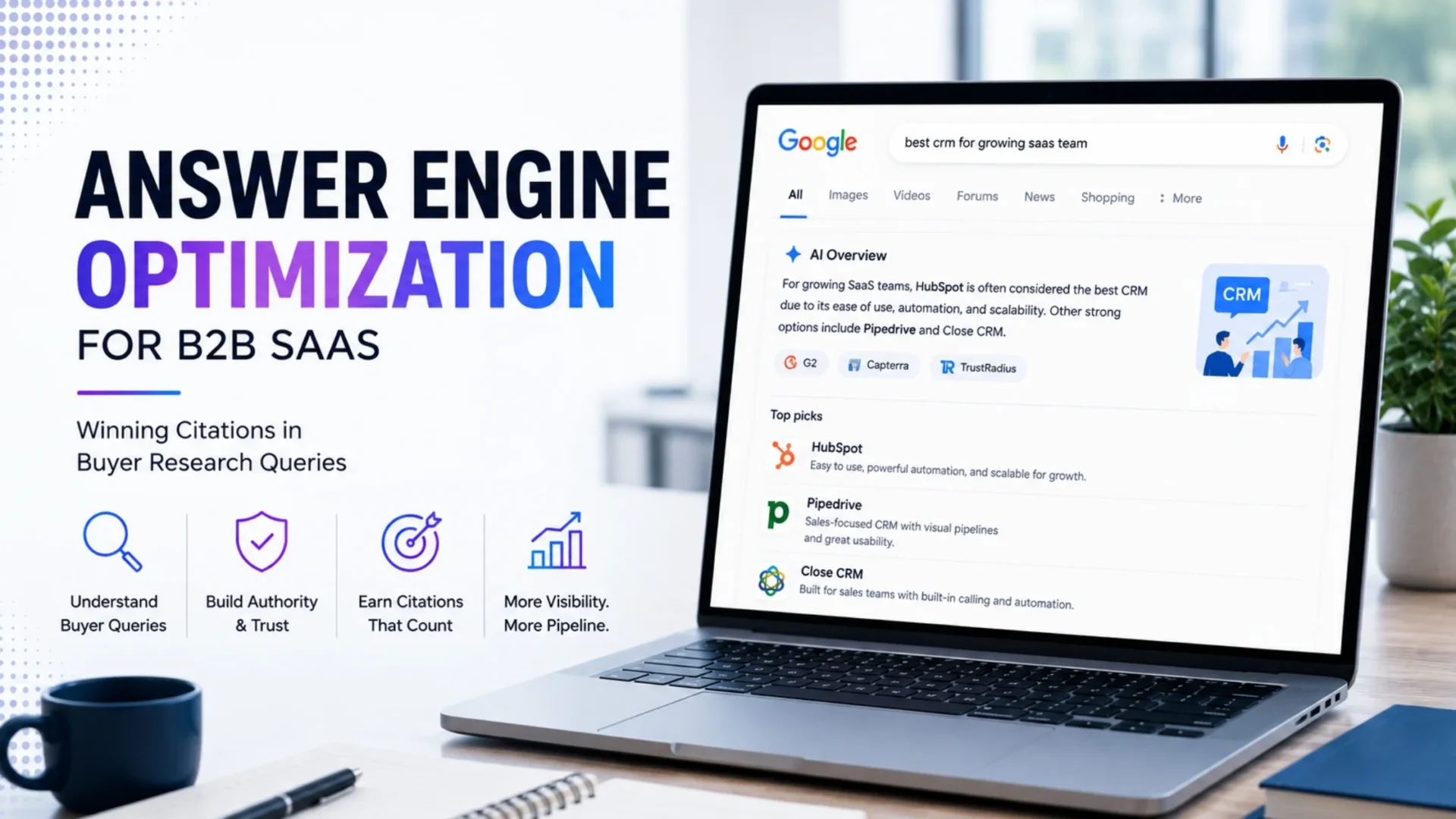
- How B2B SaaS Buying Has Shifted to AI Search
- The Queries Your Buyers Are Actually Asking AI Engines
- How AI Engines Decide Who to Cite
- The B2B SaaS AEO Playbook (5 Core Tactics)
- Platform-Specific Behavior
- How to Measure AEO Performance for B2B SaaS
- AEO Content Calendar for a B2B SaaS Team
- Common Mistakes B2B SaaS Brands Make with AEO
- How Elsner Helps B2B SaaS Brands Win in AI Search
- Conclusion
- Ready to Start Winning Citations in AI Search?
- Frequently Asked Questions
- What is answer engine optimization for B2B SaaS?
- How long does it take to see AEO results?
- Which AI engines matter most for B2B SaaS buyers?
- Do review sites like G2 and Capterra really influence AI citations?
- Can a small SaaS brand compete with category leaders in AI search?
- How is AEO different from traditional SEO?
Quick Answer: What is Answer Engine Optimization for B2B SaaS?
Answer Engine Optimization (AEO) for B2B SaaS is the practice of structuring content, reviews, and brand presence so AI engines like ChatGPT, Perplexity, and Gemini cite your product when buyers ask comparison, shortlist, or validation questions. Around 50% of B2B buyers now use AI tools early in their research process, which means brands not showing up in those AI-generated answers are quietly losing pipeline before a single website visit happens.
Something has quietly changed in how B2B software gets bought.
Buyers are not starting with search engines the way they used to. They are opening AI tools and asking direct questions. Things like, “What is the best CRM for a growing SaaS team?” or “Compare HubSpot and Pipedrive for B2B sales.”
And just like that, the shortlist is built, without your website ever being visited. If your brand shows up in those answers, you get considered. If it doesn’t, you don’t even enter the conversation. That’s the shift.
Traditional SEO still matters, yes. But it was never built for this kind of interaction. Ranking for keywords is one thing. Being cited in an AI-generated answer is something else entirely.
And honestly, most advice around answer engine optimization for SaaS is still too generic. It misses how B2B buyers actually research, compare, and validate tools.
This guide is different. By the end, you’ll understand how AEO for B2B SaaS really works, what drives AI citations, how to measure visibility, and what you should start doing this quarter.
How B2B SaaS Buying Has Shifted to AI Search
Let’s quickly step back.
The traditional journey looked something like this: Google search, click a few listicles, visit review platforms, check vendor websites, book demos.
Now, it’s more compressed. A buyer opens an AI tool and asks a question. The buyer then follows up with two or three more questions and finally ends up with a shortlist in minutes.
No endless tabs. No 10 blog posts. Just answers.
In fact, the recent Demand Gen Report shows that 50% of B2B buyers now use AI tools early in their research process. Not at the end. At the beginning.
That matters. Because AI tools often skip the “listicle browsing” phase entirely. They synthesize it. They summarize what already exists and present a filtered version.
So if your brand is not part of that source pool, it disappears from the buying journey. The takeaway is simple, but a bit uncomfortable.
AI search is no longer experimental. It’s already influencing your pipeline.
The Queries Your Buyers Are Actually Asking AI Engines
If you want to improve B2B SaaS AI visibility, you need to understand how people are prompting these tools. It’s not random. There are patterns. Let’s break them down.
|
1
|
Comparison Queries“Compare Asana vs Monday vs ClickUp for marketing teams” or “What’s the difference between Mixpanel and Amplitude?” These are head-to-head questions, and they prefer content that’s structured for direct comparison, which is neutral rather than sales pages. |
|
2
|
Shortlist Generation Queries“Best CRM for a 100-person B2B SaaS company” or “Top customer support tools for ecommerce SaaS.” Here, the AI engine is doing the work of narrowing a category down to a handful of names, and it needs sources that already group vendors that way. |
|
3
|
Use-Case Queries“Project management tools that integrate with Slack and Jira” or “Marketing automation platforms that handle ABM and email.” These are specific enough that generic homepage copy rarely answers them well. |
|
4
|
Validation Queries“Is HubSpot worth the cost for a Series A startup?” or “Reviews of Pendo for B2B onboarding.” This is the buyer checking their gut feeling against what other people actually experienced. |
|
5
|
Replacement Queries“Alternatives to Salesforce for mid-market companies” or “What to use instead of Intercom for support.” This one’s worth paying attention to even if you’re the incumbent, because it tells you exactly where competitors are trying to take your customers. |
Here’s a simple way to think about it:
Each query type favors different content. And brands that align their AEO strategy with these patterns tend to get cited more often.
How AI Engines Decide Who to Cite
This part is important. Maybe the most important. AI engines don’t just “rank” content. They evaluate it differently. Here are the key signals.
- Authority signals. If your brand is mentioned across trusted platforms, it builds credibility. Not just links. Mentions.
- Citation patterns. AI tools often rely on review platforms, forums, and high-authority blogs. Some sources get referenced more frequently than others.
- Recency. Fresh content wins. Outdated pages slowly disappear from AI responses.
- Clarity. Well-structured, easy-to-understand content is easier for AI to interpret and reuse.
- Structured data. Schema helps reduce ambiguity. It tells AI exactly what your page is about.
- Brand entity strength. This one is subtle. It’s about how clearly your brand exists across the web. Consistent descriptions, mentions, categories, all of it adds up.
One note that trips people up constantly: Strong SEO and strong AI visibility are correlated, but they’re not the same thing. You can rank on page one of Google for a term and still get left out of the AI answer for that same query, because the model is weighing a different mix of signals.
The B2B SaaS AEO Playbook (5 Core Tactics)
Alright. Let’s get practical.
|
1
|
Win on Review PlatformsThis is non-negotiable. Platforms like G2, Capterra, and TrustRadius show up constantly in AI-generated answers. Actively collect customer reviews, stay present in relevant categories, and aim for consistency, not spikes. Badges and rankings also help. They act like trust shortcuts. |
|
2
|
Get Into Listicles and Comparison ContentAI engines love summarizing “best tools” content. So if your brand is missing from those lists, it’s a problem. Start by identifying top-ranking listicles in your category and independent reviewers and bloggers. Then, reach out. Pitch. Build relationships. Yes, it takes effort. But it works. |
|
3
|
Build Your Own Comparison and Use-Case PagesYou can’t rely only on third-party content. Create brand vs competitor pages and use-case-specific landing pages. Keep them neutral. Structured. Honest. Overly biased content often gets ignored by AI engines. |
|
4
|
Strengthen Brand Mentions in CommunitiesNot everything has to be a backlink. Discussions on forums, Q&A platforms, and social threads matter. These unlinked mentions still contribute to AI visibility. Participate in industry discussions, share insights, not promotions, and be consistent. It’s slower, but it builds trust. |
|
5
|
Optimize Your Docs and Knowledge BaseThis is often overlooked. AI engines frequently pull from documentation. Make sure your help center is public, pages are indexed, and content is structured. FAQ-style content works especially well here. |
If you want a more structured approach to building this out, our generative engine optimization services are built around exactly this kind of multi-tactic playbook, rather than a single isolated fix.
Platform-Specific Behavior
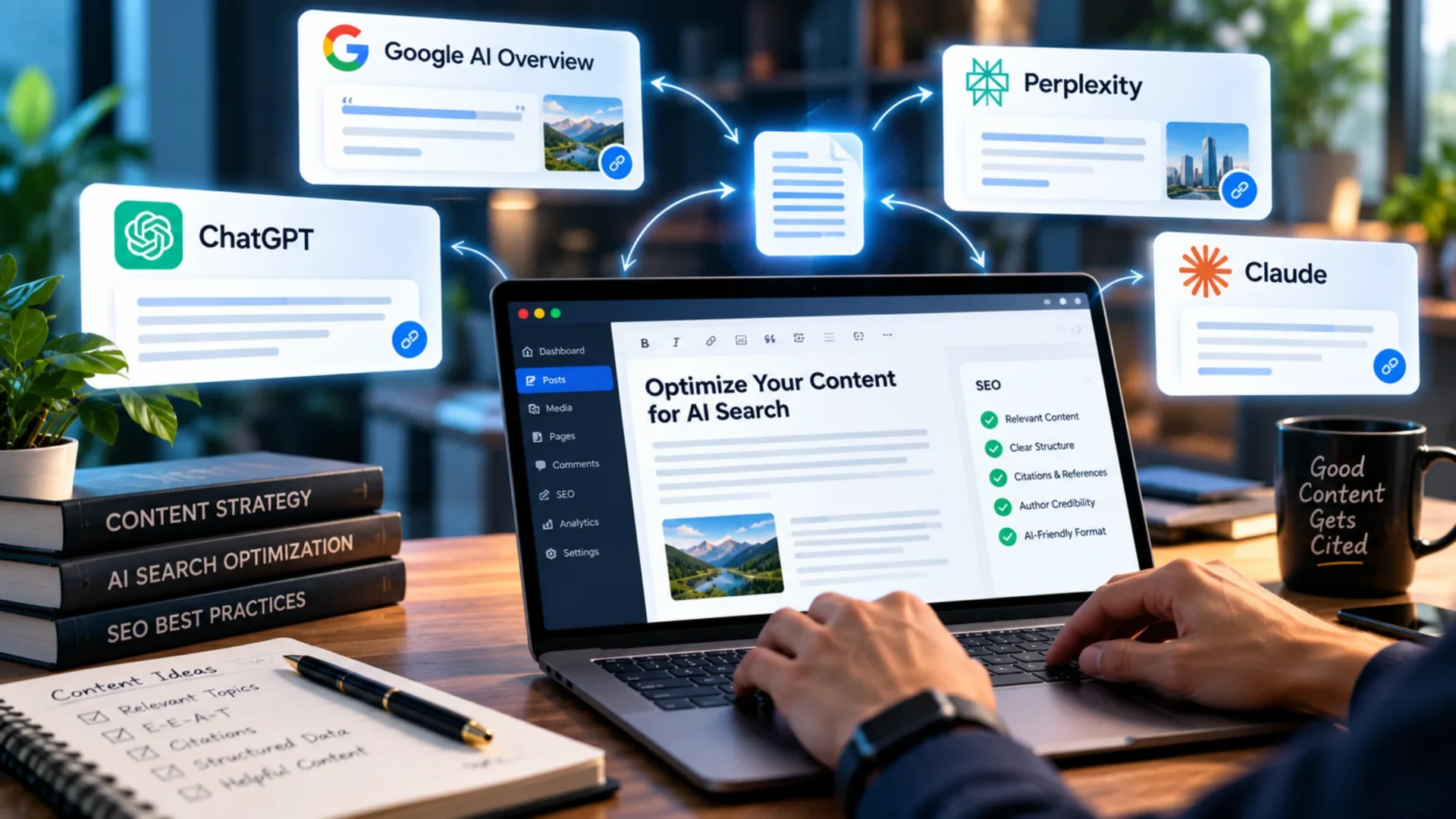
Each of these engines behaves a little differently when it comes to B2B SaaS queries, and it’s worth knowing the differences before you build a tracking strategy.
Brands that track citation share across all four engines, rather than picking just one, get a far more accurate picture of where they actually stand in AI search.
Tracking performance across all of them gives you a more complete picture.
Also Read: A Complete AI Comparison Guide, ChatGPT vs Claude vs Gemini for a deeper breakdown of each platform’s strengths.
How to Measure AEO Performance for B2B SaaS
This is where many teams get stuck. AEO is harder to measure than SEO. But not impossible. Here’s a simple framework.
- Track brand mentions in AI responses, using a mix of manual spot-checks and dedicated tools
- Consider platforms built specifically for this, like Profound, Athena HQ, Otterly, or Peec AI
- Define a core set of queries to monitor monthly across the comparison, shortlist, and use-case categories
- Measure your citation share against named competitors, not just your own mention count in isolation
- Connect AI visibility back to demo requests and pipeline through survey-based attribution, since direct tracking is still genuinely hard
- Set realistic KPIs around citation share, query coverage, and sentiment within the answers themselves
One small but practical tip: A lot of teams are now adding “AI tool (ChatGPT, Perplexity, etc.)” as an option on their “How did you hear about us” demo form field. It’s not perfect data, but it beats having no visibility at all.
AEO Content Calendar for a B2B SaaS Team
If you’re wondering what this actually looks like on a calendar, here’s a reasonable starting rhythm.
- Two to three comparison or “vs” pages per quarter
- One use-case page per quarter for each ICP segment you serve
- A monthly refresh of your category review profiles on G2, Capterra, and similar platforms
- One strong, original research piece per quarter, the kind other sites want to cite
- Ongoing community engagement and PR pitching, ideally monthly rather than in bursts
Be patient with this. AEO content typically takes somewhere between 60 and 120 days to start showing up consistently in AI engine citations. It’s not an instant-feedback channel, and teams that expect overnight results usually give up right before it starts working.
Common Mistakes B2B SaaS Brands Make with AEO
A handful of mistakes show up again and again, and most of them are easy to avoid once you know to look for them.
Treating AEO Like Copy-Paste SEO
This is the biggest one. The signals overlap, but they’re not identical, and a strategy built purely on keyword density will underperform here.
Ignoring Review Platforms Out of Star-Rating Anxiety
A brand with a 4.2 rating and an active review strategy will usually out-cite a brand with a 4.6 rating and three reviews from 2022.
Writing Comparison Pages That Bash Competitors
AI engines seem to deprioritize content that reads as biased or one-sided, which makes sense if you think about it from a trust standpoint.
Skipping Schema and Not Tracking Citation Share
Skipping structured data on key pages, not tracking citation share because the tools still feel unfamiliar, assuming organic traffic alone proves AEO is working, and leaving docs or knowledge bases unindexed behind a login wall round out the list. Any one of these alone won’t sink a strategy, but a few of them stacked together usually explain why a brand isn’t showing up where it expects to.
How Elsner Helps B2B SaaS Brands Win in AI Search
This is what we focus on at Elsner. Our generative engine optimization services are built particularly around how B2B SaaS buyers actually research today, not a generic AEO checklist applied to every industry.
It includes creating a comparison content strategy, along with active citation building, schema, and technical AEO implementation. For a broader technical and content framework, see our enterprise SaaS SEO guide. We also build long-term content programs mapped directly to the query patterns your buyers are actually typing into ChatGPT, Perplexity, and Gemini, rather than guessing at topics.
If you want a clear picture of where you currently stand, book an AEO audit with our team. We’ll show you exactly which queries you’re missing from, and how you can close that gap.
Conclusion
The B2B SaaS buying journey has already shifted. Buyers are using AI tools to research, compare, and validate software. And those tools are shaping decisions much earlier than most teams realize.
Traditional SEO is still important. But it’s not enough on its own anymore. If your brand is not showing up in AI-generated answers, you’re missing part of the funnel. Quietly, but consistently.
The companies that invest in AEO strategies now will build a strong position as AI search continues to grow over the next couple of years.
If you’re not sure where to start, begin with a simple audit. Understand where you stand. Then build from there.
Because once your competitors start showing up consistently, catching up gets harder.
Ready to Start Winning Citations in AI Search?
We help B2B SaaS brands build AEO strategies grounded in how buyers actually research today, not generic checklists. Let’s find out where you stand.
Frequently Asked Questions
What is answer engine optimization for B2B SaaS?
Answer engine optimization for B2B SaaS is the practice of structuring your content and online presence so AI engines like ChatGPT, Perplexity, or others cite your brand when buyers ask research questions. It goes beyond rankings and looks at how AI tools interpret, summarize, and recommend software during buyer research.
How long does it take to see AEO results?
Most SaaS companies start seeing early signals somewhere between 2 and 4 months, depending on how active their review platform presence and comparison content already are. Stronger visibility usually builds over time as content, mentions, and authority signals improve.
Which AI engines matter most for B2B SaaS buyers?
ChatGPT, Perplexity, Gemini, and Claude all matter, but for different reasons. Perplexity is easiest to track and favors structured content. Gemini overlaps heavily with traditional SEO. ChatGPT drives a lot of commercial citation volume. Claude is strongest for educational and definitional content right now.
Do review sites like G2 and Capterra really influence AI citations?
Yes. Review platforms are among the most frequently cited sources. Strong presence and consistent reviews significantly improve your chances of being mentioned.
Can a small SaaS brand compete with category leaders in AI search?
Yes. AI engines mostly prefer clarity, structure, and genuine trust signals over raw domain authority. So, a smaller brand with strong reviews and well-built comparison pages can still earn citations alongside much bigger competitors.
How is AEO different from traditional SEO?
SEO focuses on rankings and traffic. AEO focuses on being included in AI-generated answers. The signals might overlap. But things like authority and clarity still matter. AEO depends far more on review platform presence, structured comparison content, and brand mentions across trusted communities, instead of backlinks and keyword density alone.