 Zoho
Solutions
 Ecommerce
Development
 Web
Development
 AI
Solutions





- How Much Does It Cost to Redesign a WordPress Website?
- Should You Refresh, Redesign, or Rebuild Your WordPress Site?
- What Drives WordPress Website Redesign Pricing?
- Unique templates and their exceptions
- Existing content and page builder dependencies
- Plugins, forms, and external systems
- Search visibility and accessibility work
- Launch support, hosting, and software renewals
- A Real Redesign Brief Shows Why Scope Matters
- Compare Redesign Quotes Using the First-Year Total
- What Should an Agency Show You Before Launch?
- How to Get an Estimate You Can Use
- Frequently Asked Questions
- Is a refresh cheaper than a full WordPress rebuild?
- How much does a small-business WordPress redesign cost?
- Do I need to pay for redirects if I keep the same domain?
- What is often excluded from a WordPress redesign quote?
- Does a redesign require moving to a new host?
- What is the difference between redesign and maintenance costs?
- Can an agency estimate a redesign from page count alone?
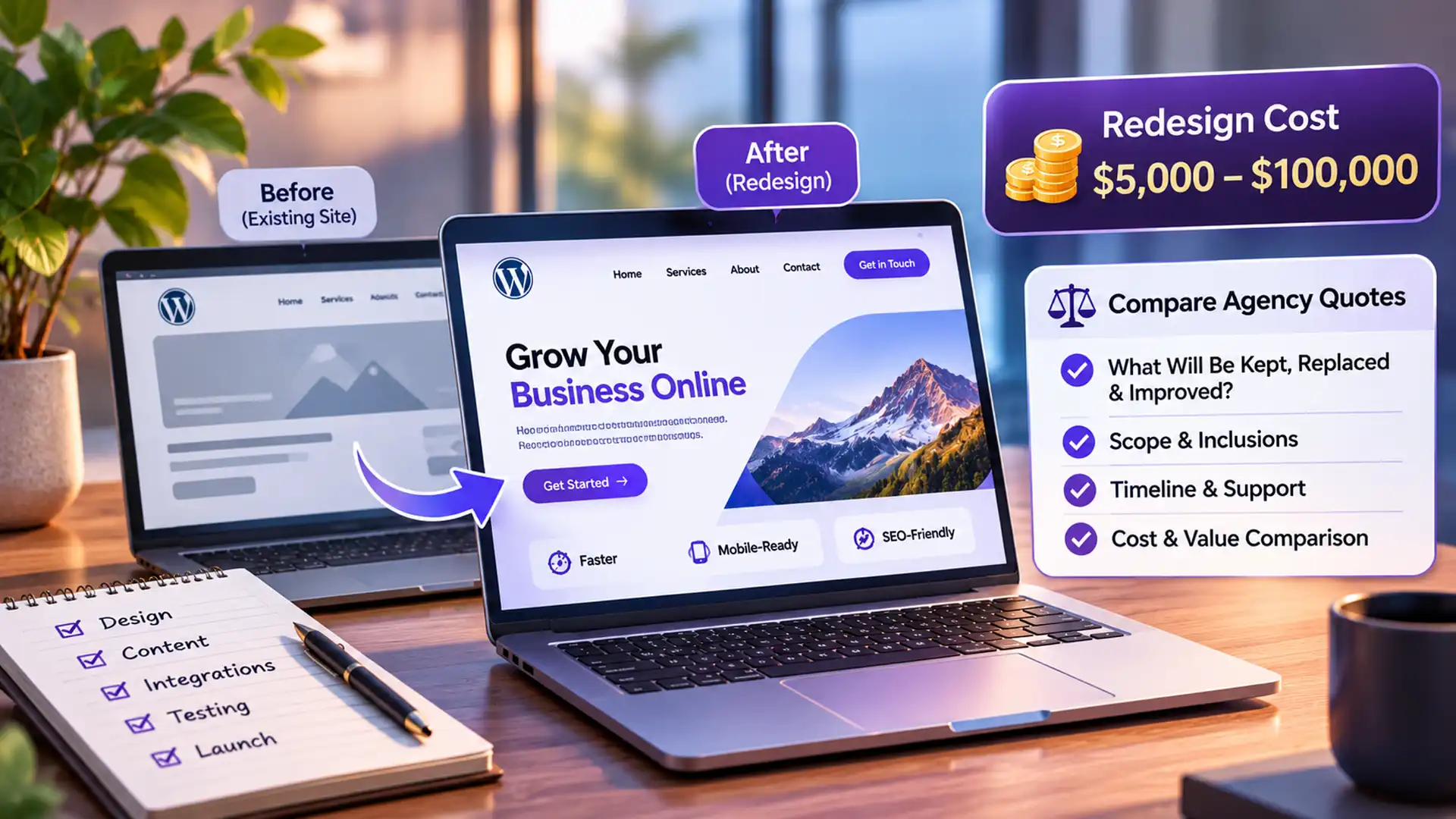
Suppose you already have leads coming from your WordPress site. Its service pages still rank, but you need a developer to edit them; the mobile layout is awkward, and no one wants to touch the form that sends inquiries to Sales. One agency wants $12,000 to redesign it. Another one quotes $18,000. Make sense of your WordPress website redesign cost by asking each agency what pieces of the current site they will keep, replace, move, and test.
How Much Does It Cost to Redesign a WordPress Website?
Quick answer. In its published US-dollar benchmarks, rtCamp puts a template refresh on an existing WordPress installation at $5,000 to $25,000 and a full single-site redesign at $25,000 to $100,000. LOW/CODE publishes $5,000 to $18,000 for a smaller site with supplied content and standard plugins. Your budget depends on the templates you need, the content and integrations you can reuse, and what the quote covers at launch.
| Published example | Budget in USD | Scope to compare against yours |
|---|---|---|
| LOW/CODE small-business redesign | $5,000 to $18,000 | Five to twelve pages, theme customization, supplied content, and standard plugins. Its example excludes custom integrations and post-launch monitoring. |
| rtCamp template refresh | $5,000 to $25,000 | Three to six reusable templates, block editing, basic training, and an accessibility pass. The published scope excludes migration. |
| rtCamp full single-site redesign | $25,000 to $100,000 | A design system, ten to twenty templates, content migration, integrations, redirect planning, and accessibility work. |
These are benchmarks published by individual providers, checked November 26, 2026. Their scope definitions explain part of the spread. Use the figures as planning references and ask for an estimate based on your site. LOW/CODE redesign cost guide · rtCamp redesign guide
This guide is for a website that already runs on WordPress. If you are starting with a new site, use our WordPress website development cost guide to plan the initial build.
Should You Refresh, Redesign, or Rebuild Your WordPress Site?
Start with a page that counts commercially. Get your team to edit its heading, push a new version to staging, and submit the main inquiry form from a phone. Then see if the lead gets to the team that handles it. The results help you see if the job is mostly visual, if page templates need to be replaced or if the site needs deeper work.
| Project scope | What the agency changes | When it fits |
|---|---|---|
| Visual refresh | Updates style, layout, imagery, and selected components on the current theme or design system. | The publishing workflow works, lead forms reach the right people, and key page templates can be reused. |
| Redesign on the current WordPress setup | Designs and builds a set of reusable templates, updates navigation or layouts, and adapts existing content and integrations. | Several page types need work, and the current content model and essential integrations can support the changes. |
| Full rebuild on WordPress | Replaces the theme or builder and may restructure templates, content types, plugins, and integrations. The team migrates or transforms content as needed. | The team cannot safely update the current setup, or the existing architecture cannot support the way the site needs to work. |
Imagine a services firm with 26 pages and 180 blog posts. Its new design changes the homepage, service templates, and contact page. If the 180 posts use the same content fields and URLs after the change, they may need template checks and sample-based QA. If key sections live in a page builder the firm plans to retire, each affected page may need content extraction, reconstruction, or manual review. Ask the agency to inspect representative pages before it estimates that work.
A full rebuild can stay on the same WordPress installation or move to a fresh one. Confirm which approach the agency has quoted and how it handles edits, inquiries, and other live data between staging and launch. If your team mainly needs a new theme, the custom WordPress theme development cost guide can help you scope that work.
What Drives WordPress Website Redesign Pricing?
Unique templates and their exceptions
A page is one URL. A template is the layout and rules that may power many URLs. Fifty service pages can share one template, while an eight-page site can have a different layout on every page. Ask the quote to list the templates the team will design and build. Count special states too, such as an empty search result, a resource listing without a filter match, or an inquiry form with an error.
Agree on how many design rounds are included and which layouts get mobile designs. If marketing needs to add new service pages without a developer, ask the team to show how editors will assemble a page with the block editor or your chosen builder. Put editor training and any custom blocks in the estimate.
Existing content and page builder dependencies
Count pages, posts, PDFs, images, custom fields, and content held in plugin-specific layouts. Label each group as keep, rewrite, migrate, or retire. A basic import may handle standard posts. Landing pages with custom fields, old shortcodes, or embedded scripts often require more review.
Ask who supplies final copy, alt text, and translated pages. Specify whether the agency will place approved text into templates or write and edit it. Those two scopes require different budgets. Also agree on a cut-off or sync plan so the live site does not lose content added after the first staging copy.
Plugins, forms, and external systems
List the plugins and external services that affect money or inquiries. For a typical service firm, that may include the forms plugin, spam protection, SMTP, CRM, booking calendar, consent manager, and analytics tags. Capture each renewal date and identify who owns the account.
Even if the integration is not done, a styled contact form can look complete. Price field mapping, routing rules, spam handling. If the proposal leaves them out, a successful test submission separately. If the CRM captures a lead source, agree on what source data should be captured and where sales will see it. If the site also processes payments, include checkout, confirmation emails, and refunds in the work to be estimated.
Search visibility and accessibility work
Start with a list of pages that bring in organic visits, earn backlinks, or produce inquiries. Keep those URLs where the new structure allows it. When URLs change, include a page-to-page redirect map and test important destinations. Google recommends permanent server-side redirects for permanent moves, such as 301 or 308, and updating internal links and sitemaps to the new URLs. Google Search Central site move guidance
Keeping the same domain still leaves work to test. Check that important templates render the right page title, headings, canonical URL, and internal links. Agree on which accessibility checks the agency will perform, including keyboard navigation, form labels, and error messages, and who fixes issues found later.
Launch support, hosting, and software renewals
Some proposals include a short launch support period. Ongoing plugin updates, backups, hosting, monitoring, and feature work usually need separate scope. Ask for the length of the included launch period, who handles urgent issues, and how hosting and software renewals are charged. The same site can cost different amounts to run based on its licenses and support agreement.
Request recurring costs even if you expect to keep your present host. List the services and licenses you will continue paying for and confirm whether the new proposal duplicates any of them. Our WordPress maintenance cost guide covers the operating costs to review after the rebuild.
A Real Redesign Brief Shows Why Scope Matters
In a November 2026 redesign request, The Friends of the Saint Paul Public Library asked for a WordPress build that could handle event listings, connect with Blackbaud and Mailchimp, review existing plugins, and preserve selected URLs through redirects. It also asked bidders to separate project fees from recurring hosting and support. You can use the same principle on a smaller site. Write down what the organization needs to keep doing on launch day, then ask the agency to price and verify those workflows. Saint Paul Public Library support organization RFP
Elsner’s Crane USA project shows how these lines can grow on a commerce site. The team implemented custom designs in WordPress, migrated customers, orders, products, categories, and CMS pages, and added a wholesale account request form. Payment and shipping integrations were part of the delivery. For a similar site, ask an agency to itemize storefront design, data migration, wholesale workflows, and integration tests. Crane USA project
Your list may be shorter. A professional services company might need two lead forms, one calendar integration, and a secure area for PDF downloads. A membership business might need logins, renewal notices, and access to past invoices. The quote should identify which workflows can be reused and who tests each one before go-live.
Compare Redesign Quotes Using the First-Year Total
Take the same 26-page services site with six reusable templates and two forms that route inquiries to a CRM. The business wants to preserve most URLs and verify its reporting after launch. Both proposals can meet that requirement once the missing work is priced. The prices below are hypothetical and use USD before taxes and change orders.
| Quote line item | Proposal A | Proposal B |
|---|---|---|
| Headline design and development fee | $12,000 | $18,000 |
| Prepare and move existing content | $3,000 extra | Included |
| Redirect mapping and SEO launch checks | $1,500 extra | Included |
| Form-to-CRM testing and analytics verification | $2,500 extra | Included |
| First 12 months of hosting, licenses, and support | $4,200 | $3,000 |
| Comparable first-year total | $23,200 | $21,000 |
Proposal B starts $6,000 higher and comes out $2,200 lower after both cover the same work. The difference is only meaningful if the two agencies agree to the same deliverables. For example, one quote may include moving page copy while the other includes reviewing old PDFs, form redirects, and linked images. Ask each agency to describe what its line items cover before you add them up.
For your own comparison, use the formula first-year budget = one-time project fees + required extras + the first 12 months of recurring services. Show applicable taxes or usage fees as separate lines. A free first year for a plugin or service can affect the renewal budget, so record the year-two amount separately. When a required item is unpriced, request a number or reserve a documented allowance before comparing totals.
What Should an Agency Show You Before Launch?
Include a few pass criteria in the proposal. They let you see what you are paying to verify and give the agency a clear definition of done. For example, ask for this test on a priority mobile service page once the redesigned site is on staging and repeat it on production during the agreed launch check.
- Tap the main CTA and submit a clearly tagged test inquiry through the form. Confirm that the visitor sees the expected success message or thank-you page.
- Check that the test record reaches the CRM once, has the expected fields, and reaches the right sales owner. Verify campaign or landing-page attribution if the scope includes it.
- Check that the agreed GA4 lead event fires once for a successful submission under the site’s consent configuration. Google documents generate_lead as the recommended event for a lead form or request. Keep personal details out of Analytics. GA4 recommended events
- Save a brief record of the test, its date, and who signed off. If any step fails in production, follow the agreed fix or rollback plan and retest before closing the launch.
Check one unsuccessful attempt as well. A validation error or a failed submission should show the visitor a useful message, and it should not be counted as a successful inquiry. Test the flow from the pages and devices your buyers actually use. For the first week, monitor key URLs, real form outcomes, and tagged test records. Continue watching organic landings and unusually quiet lead routes during the first month.
For the broader staging and SEO process, use our WordPress website redesign guide.
How to Get an Estimate You Can Use
Send the agency the current site URL, the reason for redesigning, the date you want to go live, and a list of the systems the site connects to. Call out two or three pages that matter to Sales and one workflow that needs to work on day one. Give the team a rough page and template count if you have it. If you do not, ask for a short discovery estimate with an explicit inventory deliverable.
Request one-time and recurring fees, included design revisions, responsibilities for content, and the included launch support period. Where the work is uncertain, ask whether the agency can review a sample first or give a range with clear assumptions. A proposal should show who handles redirects, lead delivery, and post-launch monitoring.
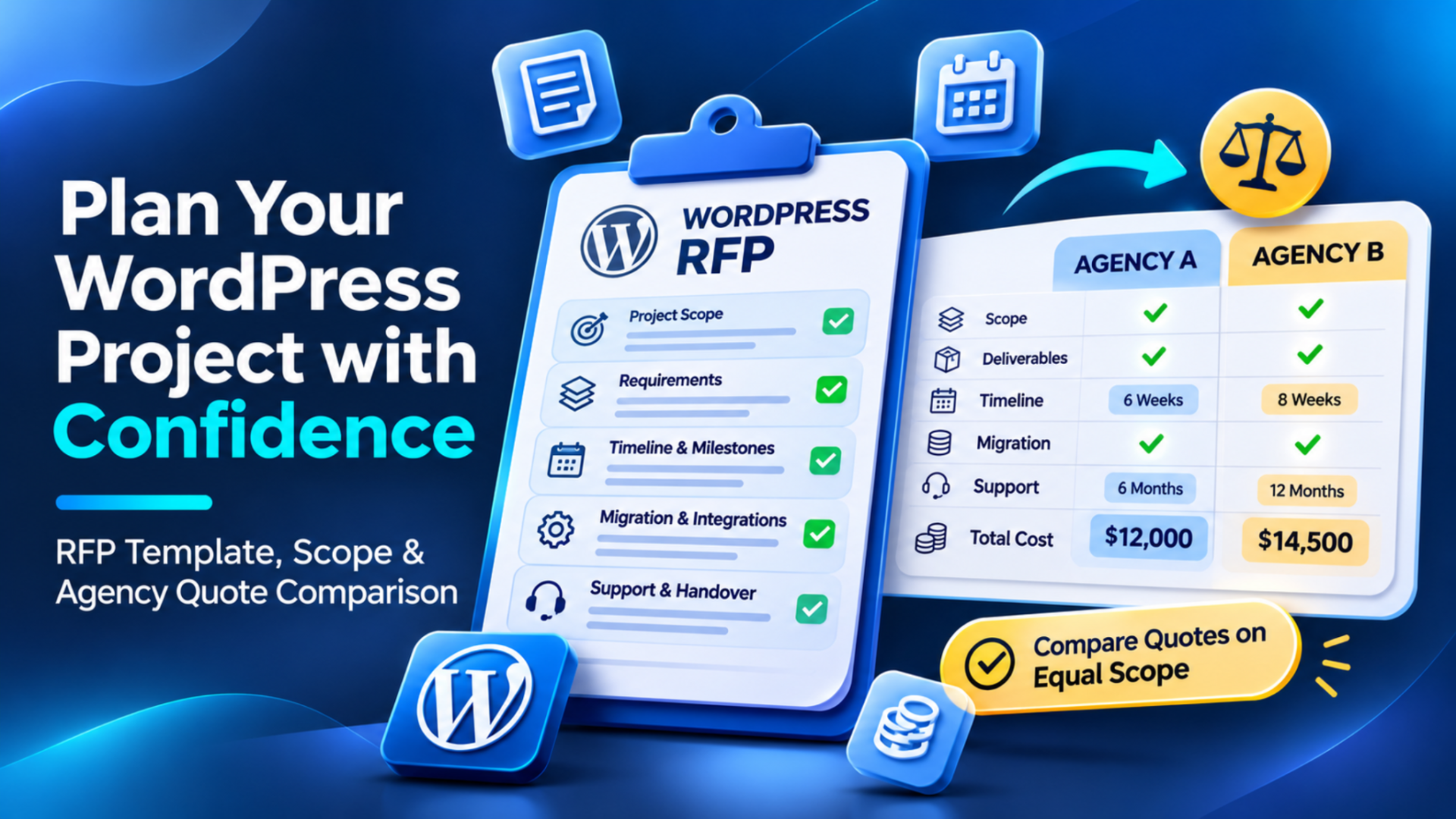
If budget is tight, price the homepage, core service templates, and inquiry flow as a first phase. Have the agency confirm what can launch independently, how it will handle navigation between old and new templates, and what later work depends on that phase. For a larger project with several bidders, our WordPress RFP template gives you a consistent set of requirements to send each agency.
Request a WordPress Redesign Estimate
Provide Elsner with your current site URL, the problem you want the redesign to address, and your planned launch date. Let us know if you have CRM, booking, or ecommerce workflows that should continue to work. Our WordPress development team will advise what to retain, what needs to be built, and, which launch-related verifications are included in the estimate.
Frequently Asked Questions
Is a refresh cheaper than a full WordPress rebuild?
A refresh usually costs less when the existing theme, publishing tools, content, and integrations can be reused. Ask the agency to check that the current setup can support the new design and that necessary security or compatibility work is included. A build on an unsupported theme or abandoned plugin may require changes beneath the visible layout.
How much does a small-business WordPress redesign cost?
LOW/CODE publishes $5,000 to $18,000 for its small-business scope, which covers a five- to twelve-page site with supplied content and standard plugins. A site with custom copywriting, many distinct layouts, ecommerce, or a CRM integration needs those items priced against its requirements. LOW/CODE pricing guide
Do I need to pay for redirects if I keep the same domain?
If a page retains the same URL, it generally needs no redirect for the redesign. Changed or merged URLs can still require redirects on the same domain. Include an inventory of important URLs and a check of their final status so you can confirm which URLs stay, move, or retire. Google Search Central site move guidance
What is often excluded from a WordPress redesign quote?
Look for exclusions around copywriting, photography, moving existing content, paid plugin renewals, CRM mapping, accessibility fixes, and support after launch. Ask for a price or an owner for every item you need. A short handover session and a year of ongoing support are different deliverables and should be priced accordingly.
Does a redesign require moving to a new host?
Many same-platform redesigns can stay on their current host. Confirm that the plan supports staging, backups, traffic needs, and the deployment approach. If moving hosts is included, ask for the cutover and rollback plan, ownership of hosting accounts, and separate pricing for migration and renewals.
What is the difference between redesign and maintenance costs?
Redesign costs cover changes such as design, development, migration, and launch testing. Maintenance costs cover ongoing work such as updates, backups, monitoring, and agreed fixes after handover. Ask when ongoing billing starts and make sure the proposal defines how launch defects will be handled.
Can an agency estimate a redesign from page count alone?
Page count gives an initial signal. The agency also needs the number of unique templates, how content is stored, which plugins are tied to the design, and which forms and integrations need testing. A few representative URLs help an agency measure those differences before giving a scoped estimate.