




- An Insight into Ecommerce Supply Chain Management
- Exploring the Necessity of Supply Chain Management
- Decoding the Inner Workings of Ecommerce Supply Chains
- Supply Chain Management Stats in Ecommerce
- What are the Benefits of SCM in Ecommerce?
- SCM Risks and Compliance in Ecommerce
- Frequently Asked Questions
- What is supply chain management in ecommerce?
- Why is SCM important for ecommerce?
- What are the biggest supply chain challenges in ecommerce?
- How does technology help ecommerce supply chains?
- Conclusion
- Looking to Streamline Your Ecommerce Supply Chain?
Quick Answer
Ecommerce supply chain management (SCM) is the coordination of every step that gets a product from supplier to customer, including sourcing, inventory, order processing, warehousing, shipping, and returns. Done well, it cuts costs, keeps stock accurate, speeds up delivery, and improves customer satisfaction. The sections below explain how each stage works and the benefits and risks to plan for.
Behind every smooth online order is a supply chain doing the work: sourcing, stocking, packing, shipping, and handling returns. Supply chain management (SCM) is how ecommerce businesses keep all of that running efficiently. This guide explains what SCM is, how each stage works, the benefits it delivers, and the risks to manage.
An Insight into Ecommerce Supply Chain Management
Before moving towards Supply Chain Management, first, we should know the supply chain. The supply chain involves the complete process required to bring a product from its raw material stage through production, distribution, and ultimately to the end customer. It includes sourcing materials, manufacturing, transportation, storage and delivery logistics, all to meet customer demand efficiently and effectively.
Supply Chain Management is also known as the backbone of Ecommerce. Supply Chain Management is the process of managing the flow of goods from suppliers to customers. SCM adequately ensures that the product is finished and delivered to the customer. It is the process of taking goods from one place to another.
Let’s say, supplying goods from the warehouse to customers. Supply Chain Management includes manufacturer, retailer, logistics, supplier, distributor and customer. It makes the processes of Ecommerce more efficient. SCM involves coordinating and integrating activities of different entities in the supply chain, some of them are suppliers, wholesalers, customers, and retailers to make sure that every process works smoothly.
Exploring the Necessity of Supply Chain Management
Supply Chain Management is important in Ecommerce as it encompasses the coordination of activities involved in producing and delivering products to the customers. It is responsible for managing every process from raw materials to distributing finished products. SCM provides efficiency in the following factors:
|
1
|
Cost ReductionThe efficiency in supply chain management could lead to cost savings. Its streamlined processes, optimized inventory levels and reduced waste helps in saving cost. |
|
2
|
Customer SatisfactionA well-managed system can provide quality products to the customers. SCM results in on-time delivery, reduced costs, good quality products and efficient customer service which intends customer satisfaction. |
|
3
|
Risk MitigationAs SCM manages the flow of all the processes until the product is finished and delivered to the customer, it also ensures risks for the product. SCM has different strategies like risk assessment for risk mitigation. |
|
4
|
Competitive AdvantageSupply Chain Management’s efficiency and robustness provide major benefits to businesses, it also increases the value of businesses in the marketplace. |
Decoding the Inner Workings of Ecommerce Supply Chains
To understand SCM in more detail, it will be beneficial to understand its working as well. Its working consists of various stages, they are:
|
1
|
Sourcing and ProcurementEcommerce has the source of products from various suppliers and different places in the world. SCM has its significance in managing suppliers, prices and many more. |
|
2
|
Inventory ManagementIt is important to manage inventory in order to avoid situations like out-of-stock or over-stock. To avoid these kinds of situations forecasting demand and implementing systems to manage inventory in real-time is done. |
|
3
|
Order ProcessingWhen the customer places an order, it has to be efficiently processed by the company. This involves various tasks such as order verification, payment processing and fulfillment of orders. |
|
4
|
Warehouse and DistributionTo store inventory, companies use warehouses in which they can store the products. The storage is done according to the feasibility of the delivery location. The warehouse is located at the places from which delivery can be done efficiently. |
|
5
|
Order ShippingThe Ecommerce company should select an efficient shipping method. If any third party is required then it is needed to choose wisely according to feasibility. Proper tracking of the order is done when it is shipped. |
|
6
|
Technology Information and IntegrationIn SCM and Ecommerce, technology plays a very important role. Everything is highly dependent upon technology. Different integrations are done like shipping and tracking to ensure the proper functioning of the system. |
|
7
|
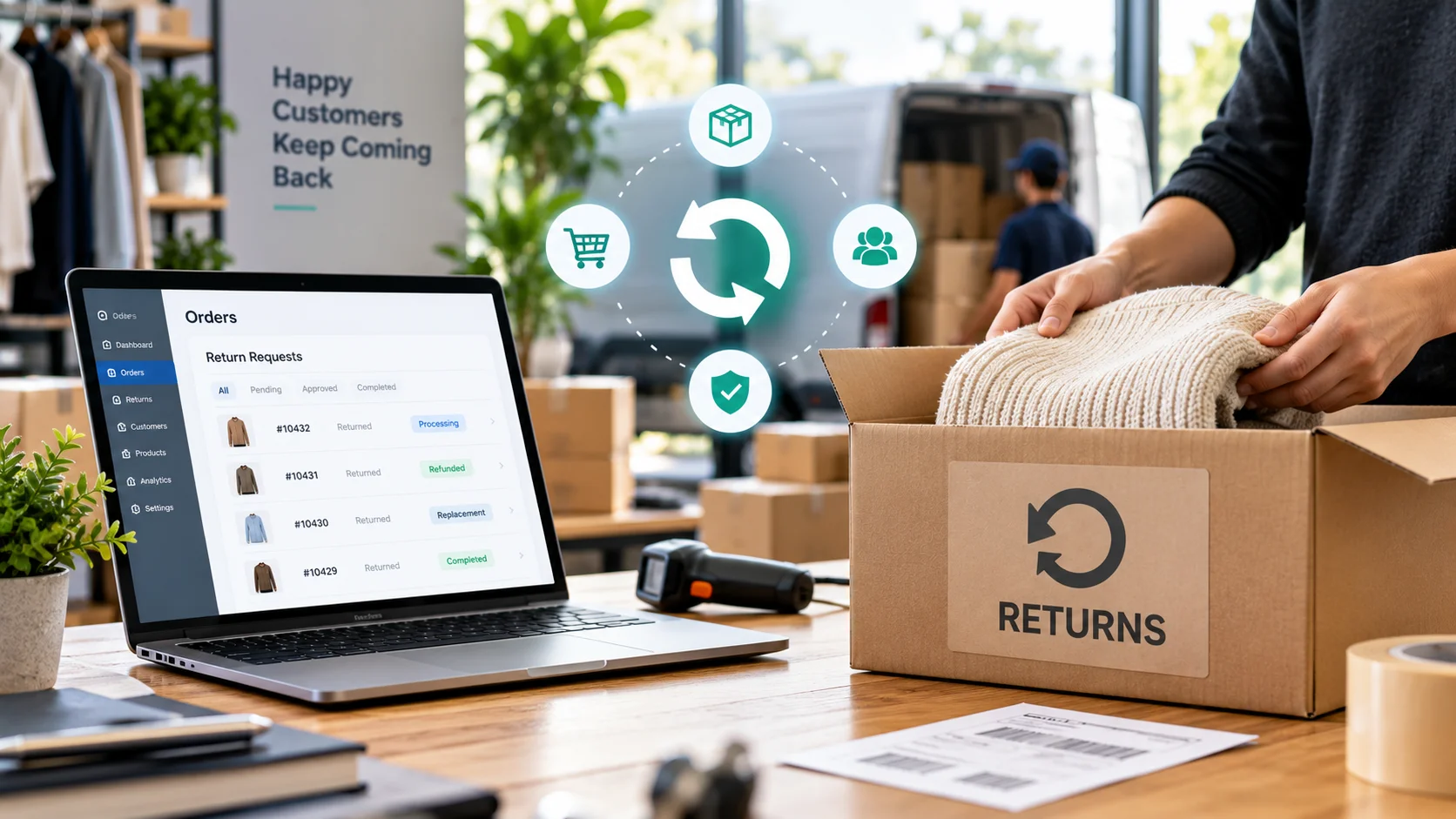
Return Management and Customer ServiceSupply Chain Management manages the returns and also provides services to customers such as customer inquiries, issues related to order shipping and other customer services. |
Supply Chain Management Stats in Ecommerce
Here are some figures on the scale of the SCM software market:
What are the Benefits of SCM in Ecommerce?
Supply Chain Management provides many benefits to Ecommerce and its businesses. Some of the benefits are mentioned below:
SCM Risks and Compliance in Ecommerce
In the evolving field of Ecommerce, there are benefits but a few disadvantages as well. The marketplace is growing rapidly, which leads to a lot of changes to make in the businesses which are involved in Ecommerce. This also affects SCM, as it is quite difficult to handle the changes frequently and every requirement is complicated to find the solution for. There are many challenges such as:
Inventory Management
It is difficult to manage inventory because it is necessary to keep the stocks which are in high demand. If there is a failure in storing accurate stocks then it can lead to loss in the business. Technology can be used to maintain accuracy to avoid out-of-stock and overstock conditions.
Match-up with Demand
In supply chain management, it is crucial to accurately predict and meet the growing needs of customers. While it can be challenging to satisfy their diverse expectations, one effective approach is to optimize delivery timelines, ensuring prompt and reliable service to enhance customer satisfaction.
Cost-Effective and Fast Delivery
Ensuring fast delivery with reduced cost is not an easy task. A practical solution is just-in-time delivery models in which only the order quantity is manufactured, which saves cost and reduces waste across the supply chain.
Returns and Replacement
In buying products online, there are some risks like what if the product is not the same as the customer assumed or the product is defective? This is a major issue in Ecommerce which needs to be focused on. SCM works on this and tries its best to avoid this situation.
Key takeaway: Every SCM risk has a corresponding technology solution. The businesses that invest in real-time visibility, demand forecasting, and returns automation are the ones that turn these challenges into competitive advantages.
Frequently Asked Questions
What is supply chain management in ecommerce?
The coordination of every step that moves a product from supplier to customer, including sourcing, inventory, order processing, warehousing, shipping, and returns.
Why is SCM important for ecommerce?
It lowers costs, keeps stock accurate, speeds delivery, and improves customer satisfaction, which directly affects repeat sales.
What are the biggest supply chain challenges in ecommerce?
Inventory accuracy, matching supply to demand, fast and affordable delivery, and handling returns.
How does technology help ecommerce supply chains?
Real time inventory tracking, demand forecasting, and integrations between your store, ERP, and shipping systems reduce errors and manual work.
Conclusion
In Ecommerce, which is leading in today’s generation of technology advancement, Supply Chain Management plays an important role. Not only is it an amazing option to go with but it is also the necessity of Ecommerce as through SCM, Ecommerce companies can easily manage their business processes and flow. It makes the process of manufacturing, finishing and supplying efficient.
Strong supply chain management is what lets an ecommerce business scale without chaos. Get the fundamentals right, sourcing, inventory accuracy, fast fulfilment, and smooth returns, and the rest of the business runs more smoothly too.
As discussed above about Supply Chain Management in Ecommerce, we can conclude that Ecommerce will grow and expand in the future and SCM is part of it so it also has a bright future in this and upcoming generation. Businesses that unlock the power of SCM and invest in it could be able to grow faster than other businesses.
The bottom line: SCM is not just a backend process. It is the engine that determines whether an ecommerce business can grow reliably, retain customers, and compete at scale.
Looking to Streamline Your Ecommerce Supply Chain?
Our ecommerce development team helps businesses build and integrate SCM solutions that are built for scale, speed, and customer satisfaction from day one.