





- Sucuri Security Plugin
- WordFence Security Plugin
- Sucuri Vs Wordfence: Quick Side-by-Side Overview
- Sucuri Vs Wordfence: Important Features for 2026
- Firewall Protection
- Malware Scanning
- Malware Removal
- Pricing Breakdown
- Performance Impact
- Login Security
- Ease of Use
- Conclusion
- FAQs
- Can I run Sucuri and Wordfence at the same time?
- Is Wordfence Free actually useful?
- Does Sucuri’s free plugin include a firewall?
- What happens if my site gets hacked on Wordfence?
- Does Sucuri work on non-WordPress sites?
- Does Wordfence slow down my site?
- Which is better for WooCommerce?
- How long does Sucuri take to clean a hacked site?
WordPress is everywhere. Over 43% of all websites run on it, which also makes it the most attacked CMS on earth.
Most hacks are quiet. No warning. No obvious crash. Just a backdoor sitting in your files. It is slowly doing damage while your site looks perfectly fine on the surface. That’s the part that catches people off guard.
So you go looking for a security plugin. Two names keep showing up: Sucuri and Wordfence. Both are great at protecting your site. Not sure which one actually deserves your trust and your money?
Here’s a detailed comparison to make the decision easier. This guide lays it all out. Features, pricing, real tradeoffs. No filler.
Sucuri Security Plugin
 1. Security
With regards to site security, Sucuri is one of the most loved instrument, a standout amongst the most believed names out there – this organization truly needs no acquaintance when it accompanies security.
They offer a powerful module to keep WordPress site and server security. The business owners will require a free API key to make full utilization of the module.
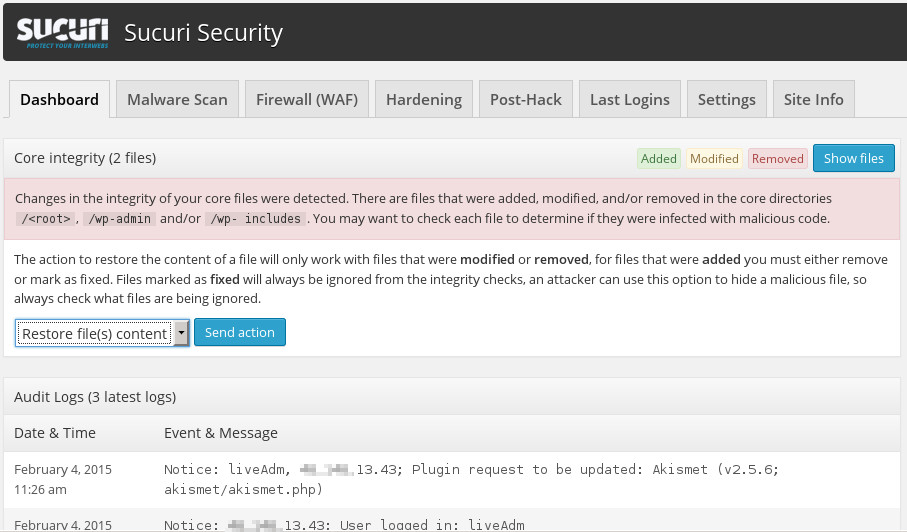
Sucuri Security dashboard keeps merchants educated about the uprightness of their center records. This is in such a case that a WordPress document has been endangered, it will have an alternate size and structure than the first record.
2. Website Scanner
The module accompanies an implicit scanner to locate any regular malware which may have invaded your webpage, any site blunders, any obsolete topics, modules or device.
Whether the merchant’s website has been boycotted on any administrations which hail locales which are distinguished as hacked and appropriating malware, and whether your server is displaying some other vulnerabilities, all are protected.
Talking about obsolete subjects, and topics, all in all, avoid topics downloaded from dodgy sites (they are ordinarily overflowing with malware – free isn’t generally free all things considered).
When the merchant runs the underlying output, the outcomes will be accessible under Sucuri Security > Malware Scan and will be refreshed at regular intervals.
The outcomes are isolated into a few classifications like Remote Scanner Results, Website Details, iFrames/Links/Scripts, code infusion, Blacklist Status, and Modified Files.
3. Recovering From Hacking Attempt
Sucuri Security additionally accompanies the entire suite of Post-Hack choices to clean a tainted site.
This can turn out to be extremely helpful to recoup a hacked site amid the beginning periods of a hacking episode the site may have endured.
WordPress utilizes a mix of security keys to encode the information spared in program treats. Since this is a potential security issue which can bring about hacking endeavors, Sucuri gives a simple method to supplant all these security keys. This will negate all the current sessions and power all clients to sign in once more.
Also Read: 10 Tips to Secure Your WordPress Website
WordFence Security Plugin
 1. Security
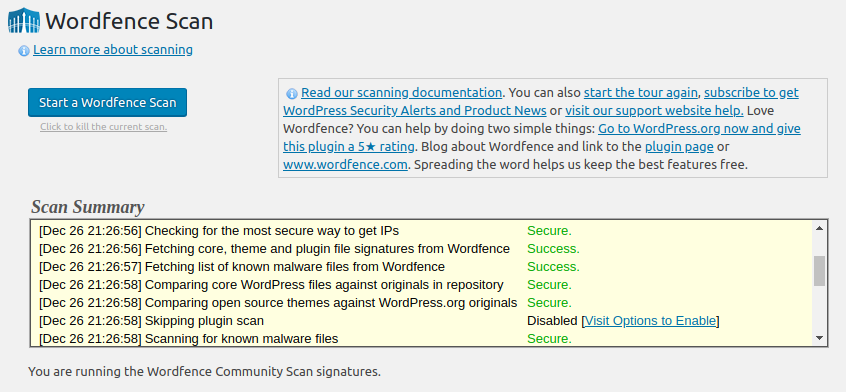
Unlike the Sucuri, the dashboard of the WordFence provides a detailed overview of the current security status of the merchant’s website. All the information related to the last scan can be viewed by the merchants.
Can the merchants be able to envision the danger your site would endure in those assaults were not being ensured by some incredible WP security?
What a genuine hazard for the majority of the substance put away in your site if these programmers got their grimy paws on the site.
2. Website Scanner
The basic scanning features of the WordPress are available free in this version of WordFence.
The website owners won’t get any continuous updates about the most recent security dangers shockingly, which implies they’ll be trusting their site does not get assaulted by the most recent zero-day vulnerabilities.
There is a worked in the firewall to keep any anomalous movement on the site, for example, examining for XMLRPC and any malignant endeavors to log in by means of the API or something else.
It is conceivable to run the application firewall in a learning mode to acclimate the framework with the normal client exercises and hence avoid bolting out an authentic client.
3. Recovering From The Hacking Attempts
To prevent the users from the brute force attacks, Wordfence comes with several options to help them. Users can assign strong passwords, limit the number of login failures and forgot password attempts before locking user.
They can also set the duration for tracking the login attempts and prevent registering the ‘admin’ username. They also have the authority to block people trying to log in with specific usernames.
The free form of Wordfence enables you to square IP addresses, while the top-notch rendition enables you to square full nations and topographies other than just IPs.
It is conceivable to hinder a specific IP address, a scope of IP addresses, have a name, client operator, referrer, and so on.
Sucuri Vs Wordfence: Quick Side-by-Side Overview
|
Feature |
Sucuri | Wordfence |
|
Type |
Cloud-based (reverse proxy) | Endpoint (plugin-based) |
|
Free Version |
Limited | Feature-rich |
|
Firewall (WAF) |
Cloud WAF — DNS level | Endpoint WAF — PHP level |
|
Malware Scanning |
Remote (free) / Server-side (paid) | Deep server-side (free) |
|
Malware Removal |
Unlimited on paid plans | $179 per incident (extra) |
|
CDN Included |
Yes | No |
|
DDoS Protection |
Yes | Limited |
|
Real-Time Threat Intel |
Yes | Premium only |
|
Country Blocking |
Yes | Premium only |
|
Performance Impact |
Low — offloads to cloud | Medium — runs on server |
|
CMS Support |
Multi-platform | WordPress only |
|
Starting Price (Paid) |
$199.99/year | $149/year |
Sucuri Vs Wordfence: Important Features for 2026
Firewall Protection
The firewall is your first line of defense. Both tools offer a Web Application Firewall (WAF) — but how they block threats is very different.
How Wordfence’s Firewall Works?
Wordfence runs a PHP-based, endpoint firewall directly inside WordPress. It monitors incoming traffic and blocks malicious IPs. It also applies WordPress-specific rules.
It sits inside your installation. So, it understands your site better than any cloud service can.
One catch: traffic still reaches your server before being blocked. During a DDoS attack, this can overwhelm your server, even if Wordfence catches most of it.
How Sucuri’s Firewall Works?
Sucuri’s WAF is cloud-based. You change your DNS settings so all traffic passes through Sucuri’s servers first. Attacks are stopped before they ever touch your origin server. This makes it more effective against DDoS and large-scale traffic floods.
The downside: the firewall is a premium-only feature. The free Sucuri plugin does not include WAF protection.
Firewall Comparison
|
Criteria |
Sucuri | Wordfence |
|
Firewall Type |
Cloud (reverse proxy) | Endpoint (PHP layer) |
|
Free Firewall Available |
No | Yes |
|
Blocks DDoS |
Yes — network level | Limited |
|
WordPress-Specific Rules |
Partial | Yes — deep integration |
|
Rule Updates (Free) |
Real-time | 30-day delay |
|
Rule Updates (Paid) |
Real-time | Real-time |
|
Reduces Server Load |
Yes | No |
|
Works if WordPress is Down |
Yes | No |
Malware Scanning
Wordfence Scanning
Wordfence performs a deep, server-side scan. It checks your WordPress core files, themes, and plugins against known-clean repository versions. Any modifications, backdoors, or suspicious files get flagged. You can view original vs. changed file comparisons directly in the dashboard.
This is available on the free version. That’s a significant advantage.
Sucuri Scanning
The free Sucuri plugin runs a remote scan. It checks what’s publicly visible on your site, not what’s inside your server files. It’s less thorough but doesn’t add any server load.
For deep server-level scanning, you need a paid Sucuri plan.
Malware Scanner Comparison
|
Criteria |
Sucuri | Wordfence |
|
Scan Depth (Free) |
Remote only | Full server-side |
|
Core File Integrity Check |
Yes | Yes |
|
Plugin & Theme Scanning |
Yes | Yes |
|
Backdoor Detection |
Yes | Yes |
|
Scan Impact on Server |
None | Medium — can slow shared hosting |
|
Signature Updates (Free) |
Real-time | 30-day delay |
Bottom line
: For free users, Wordfence is the stronger scanner. Sucuri’s paid plans match that depth with less server strain.
Malware Removal
This is where the two products differ most in terms of real-world cost. Sucuri includes unlimited malware removal on all paid platform plans. They also provide a post-cleanup report and hardening recommendations. Wordfence charges $179 per site cleanup as a separate service. Their premium plugin helps you identify infected files manually, but complex infections often need professional cleanup. If your site gets reinfected three months later, that’s another $179. For agencies managing multiple sites or anyone running a business-critical site, Sucuri’s unlimited model is significantly better value.
Malware Removal Comparison
|
Criteria |
Sucuri | Wordfence |
|
DIY Cleanup Tools |
Limited | Yes (on paid plans) |
|
Managed Cleanup Included |
Yes — unlimited | No — $179 per incident |
|
Forensic Report |
Yes | Yes |
|
Post-Hack Hardening |
Yes | Yes |
|
Reinfection Coverage |
Unlimited | Charged per incident |
Pricing Breakdown
Wordfence Plans
|
Plan |
Price | What You Get |
|
Free |
$0 | Deep scanner, basic firewall, 2FA |
|
Premium |
$149/year per site | Real-time rules, country blocking, IP blacklist |
|
Care |
$590/year per site | Managed security, hands-off |
|
Response |
$1,250/year per site | 1-hour incident response SLA |
|
Site Cleaning |
$179 per incident | One-time hack cleanup (add-on) |
Sucuri Plans
|
Plan |
Price | What You Get |
|
Free Plugin |
$0 | Monitoring, remote scan, hardening tools |
|
Basic Platform |
$199.99/year | WAF, CDN, unlimited malware removal |
|
Pro Platform |
$299.99/year | Priority support, advanced DDoS protection |
|
Business Platform |
$499.99/year | Fastest response, PCI compliance support |
The key pricing reality: Wordfence is cheaper upfront. But if your site gets hacked, Sucuri pays for itself quickly. One malware removal on Wordfence ($179) plus the premium subscription ($149) already exceeds Sucuri’s Basic plan price.
Here’s a quick comparison:
|
Business Size |
Sucuri (Annual) | Wordfence (Annual) | Notes |
|
Small Business |
$199.99 (Basic) | $149 Premium + $179 cleanup = $328 | Wordfence cheaper upfront, more expensive if hacked once |
|
Medium Business |
$299.99 (Pro) | $149 + $179–$358 cleanup = $328–$507 | Sucuri more predictable if infections occur |
|
Enterprise / E-commerce |
$499.99 (Business) | $149 + cleanup + optional managed support ($590–$1250) = $328–$1,399 | Wordfence costs vary widely depending on incidents |
Performance Impact
Security tools shouldn’t hurt your site speed. Here’s how each handles it. Wordfence runs on your server. During scans, it consumes CPU and memory. This can slow things down on shared hosting. Scheduling scans during off-peak hours helps, but you can’t eliminate the impact entirely.
Sucuri’s paid plans actually improve site performance. Its Anycast CDN that caches content across global nodes, reducing load times for international visitors. Filtering attacks in the cloud also means far less junk traffic hitting your origin server.
Login Security
Both plugins offer solid protection for your login page.
|
Criteria |
Sucuri | Wordfence |
|
Server Load During Scans |
None | Medium to high |
|
CDN Included |
Yes (paid) | No |
|
DDoS Traffic Absorption |
Yes | No |
|
Speed Improvement |
Yes — via CDN | Neutral or slight negative |
Wordfence has a slight edge here. Its leaked password detection and real-time security network add layers that Sucuri doesn’t match on login security specifically.
Ease of Use
Wordfence installs like any standard WordPress plugin. You’ll get guided setup and a dashboard inside your WordPress admin area. It’s familiar. However, the interface is dense. You’ll need to deal with a lot of tabs, options, and data. Beginners can find it overwhelming at first.
| Criteria | Sucuri | Wordfence |
| Server Load During Scans | None | Medium to high |
| CDN Included | Yes (paid) | No |
| DDoS Traffic Absorption | Yes | No |
| Speed Improvement | Yes — via CDN | Neutral or slight negative |
Sucuri’s free plugin is straightforward to install. But activating the cloud WAF requires changing your DNS settings at your domain registrar. That step trips up many non-technical users.
Once configured, Sucuri’s dashboard is cleaner and simpler. It’s built for users who want security working quietly in the background rather than actively managing it.
- Want hands-on control? Wordfence.
- Want set-and-forget simplicity? Sucuri.
Conclusion
| Criteria | Sucuri | Wordfence |
| Server Load During Scans | None | Medium to high |
| CDN Included | Yes (paid) | No |
| DDoS Traffic Absorption | Yes | No |
| Speed Improvement | Yes — via CDN | Neutral or slight negative |
There’s no single winner here. These tools serve different needs.
Pick Wordfence if:
You want a powerful free option
You prefer deep, WordPress-level visibility
You’re managing one or two sites on a budget
You want granular control over your security settings
Pick Sucuri if:
You’re running a business, store, or high-traffic site
You want unlimited malware removal without per-incident costs
You need DDoS protection and CDN performance
You want cloud-level filtering before threats reach your server
One practical approach: use Wordfence Free to get started, then migrate to Sucuri’s paid platform as your site grows. Some security professionals even run both together.
Either way, having something configured and actively monitored is always better than waiting.
FAQs
Can I run Sucuri and Wordfence at the same time?
Yes. Some site owners use Sucuri’s cloud WAF for network-level filtering and Wordfence for server-side scanning. Just avoid duplicating rate-limiting rules, which could cause conflicts.
Is Wordfence Free actually useful?
Very much so. The free version includes deep malware scanning, a basic firewall, brute force protection, and 2FA. The main limitation is that firewall rules and malware signatures update 30 days after release.
Does Sucuri’s free plugin include a firewall?
No. The free Sucuri plugin handles monitoring, integrity checks, and remote scanning. The WAF is a paid feature that requires a DNS change to activate.
What happens if my site gets hacked on Wordfence?
You’ll be alerted and can attempt a manual cleanup using the plugin’s tools. Complex infections typically require their paid site cleaning service, which costs $179 per incident — separate from your plugin subscription.
Does Sucuri work on non-WordPress sites?
Yes. Sucuri supports Joomla, Magento, Drupal, OpenCart, and custom PHP/HTML sites. Wordfence is WordPress-only.
Does Wordfence slow down my site?
It can on shared hosting, particularly during scans. Scheduling scans at off-peak hours and enabling the extended firewall mode (not just plugin mode) reduces the impact significantly.
Which is better for WooCommerce?
Sucuri is generally the stronger choice. Its cloud WAF keeps your checkout and payment pages protected before attacks arrive, and unlimited malware removal is critical for any site processing transactions.
How long does Sucuri take to clean a hacked site?
It depends on your plan. Business plan users get the fastest response. Most cleanup requests are initiated within a few hours to 24 hours. Standard plan users are on a general queue.