



- A Quick Look at How Search Got Here
- What Is SEO (Search Engine Optimization)?
- LLM Optimization: The Part Most People Skip
- What Is AEO (Answer Engine Optimization)?
- How AEO Applies to Your Strategy
- What Is GEO SEO (Generative Engine Optimization)?
- What Helps
- SEO vs AEO vs GEO: The Main Differences
- Why You Can’t Ignore This
- Where This Shows Up in Real Life
- Local Businesses
- Ecommerce
- Content
- Where to Start
- What’s Coming Next
- FAQs
- What is the difference between GEO, AEO and SEO in simple terms?
- Is GEO replacing SEO in 2026?
- Is SEO dead in the age of AI search?
- What is the difference between GEO and AEO?
- Summing Up
- Ready to Become the Answer?
SEO gets your page ranked on Google. Answer engine optimization (AEO) gets your content picked as the direct answer, like a featured snippet or a voice result. GEO SEO, which is short for generative engine optimization, gets your brand mentioned inside answers from ChatGPT, Gemini and Perplexity.
SEO
Gets your page ranked on Google.
AEO (Answer Engine Optimization)
Gets your content picked as the direct answer, like a featured snippet or a voice result.
GEO SEO (Generative Engine Optimization)
Gets your brand mentioned inside answers from ChatGPT, Gemini and Perplexity.
They don’t compete with each other. SEO is the base, and the other two help you stay visible as people search in more places.
Let’s start with what’s changed. A lot of people now get their answer without clicking anything. Recent studies say around 60% of Google searches end that way, and AI Overviews show up on a big chunk of them. ChatGPT reportedly handles billions of prompts every day too.
Keywords and backlinks still matter. They just can’t do the whole job alone anymore.
So in this guide, we’ll go through what SEO, AEO and GEO each mean, how they’re different, and how to use all three without making things complicated. We’ll also cover LLM optimization, since it sits underneath all of this.
A Quick Look at How Search Got Here
|
1
|
The Early 2000s: Counting KeywordsSEO was easy. Pick a keyword, repeat it a lot, get a few links, and wait. Search engines basically counted words, so pages ended up sounding like “Best pizza in Chicago. Our Chicago pizza restaurant has the best pizza in Chicago.” Nobody wanted to read that. |
|
2
|
Google Pushes BackGoogle was sick of it as well. We saw updates for thin content (Panda) and spammy links (Penguin). And then phones ate our searches, with mobile-first indexing. And we were beginning to talk to Siri and Alexa in a complete sentence instead of going down the list of broken keywords in our head. |
|
3
|
Today: AI Is Part of SearchAI understands context, works out what you really mean, and checks who wrote the content and whether they can be trusted. The old ranking factors haven’t gone away. But getting chosen is harder now, and clicks are fewer. |
What Is SEO (Search Engine Optimization)?
SEO is how you make your website easier to find on search engines. Better visibility brings more organic traffic, and those visitors were already looking for something like what you offer.
It still comes down to a few basics:
On-Page SEO
Your titles, headings and keywords should match what people search for, so search engines can find the page quickly.
Off-Page SEO
Backlinks from trusted sites work like votes for your credibility.
Technical SEO
Fast pages, a mobile-friendly design and clean navigation. It’s not exciting, but it keeps the user-friendly experience your visitors expect.
Local SEO
City names, your address and an updated Google Business Profile help you show up for nearby searches.
Content Optimization
Write for what the searcher actually wants, not for a keyword count.
SEO is slow, but the results stick. If you want to speed things up, a professional SEO company can help you skip a few expensive mistakes.
LLM Optimization: The Part Most People Skip
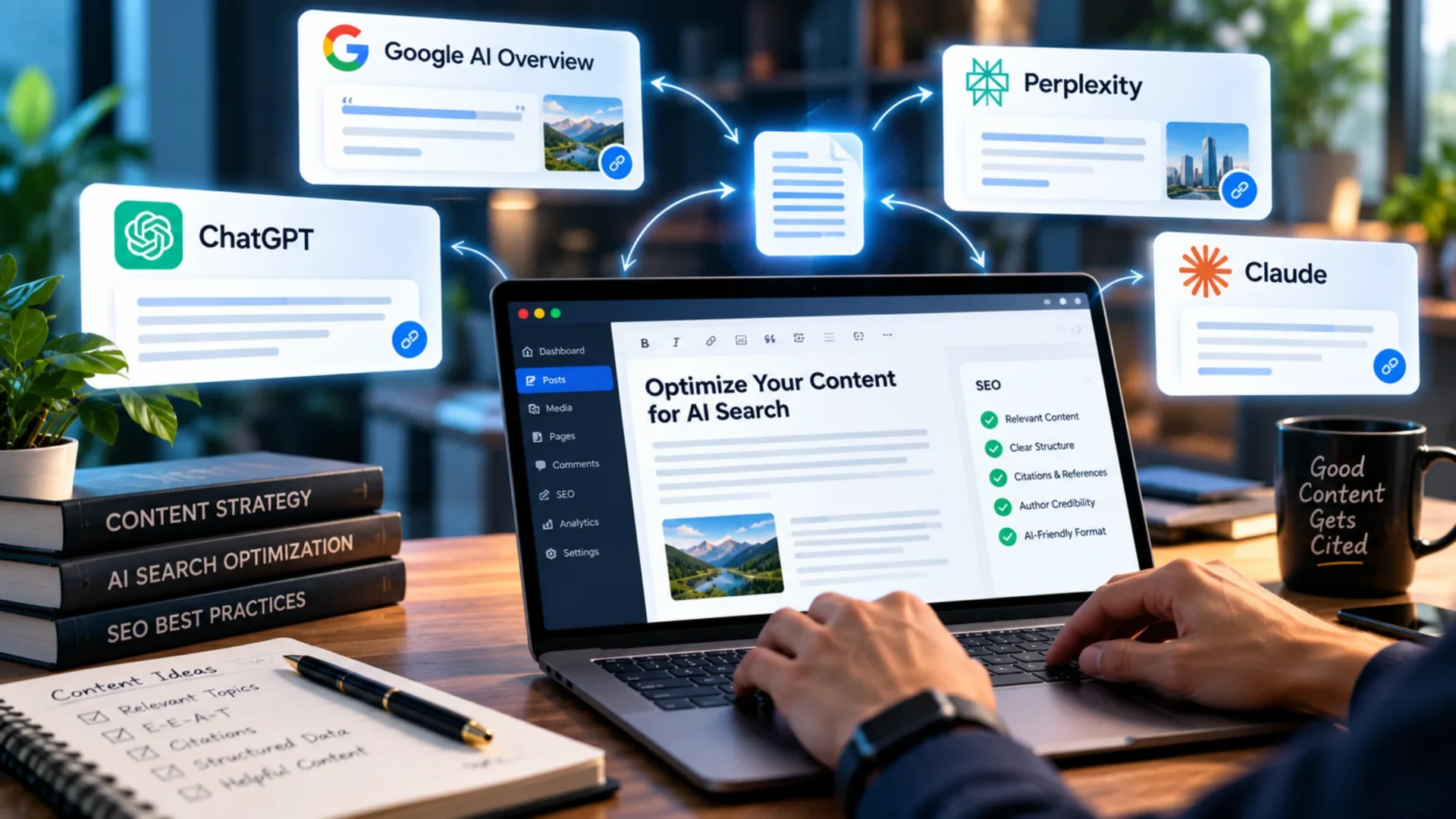
Before AEO and GEO, quick word on LLM optimization. It simply means making your content easy for large language models (the tech behind ChatGPT, Gemini and Claude) to understand.
The goal here isn’t to rank. It’s to be included. If an AI doesn’t pick your content while building an answer, then for that person, you don’t exist.
It helps to picture three steps:
|
1
|
Can the AI Find Your Content?That’s where SEO, structured data and crawlability come in. |
|
2
|
Can It Understand What You Wrote?Clear context and consistent names for people, brands and topics make that easier. |
|
3
|
Would It Feel Safe Quoting You?That depends on how clear and trustworthy your content is. |
A few habits help at every step. Use schema markup on articles, FAQs, reviews and business details. Write about real entities, not just keywords, and stick to the same terms throughout. And back up your claims with reliable sources.
In short, LLM optimization makes your content readable for AI. AEO and GEO make it useful to AI.
What Is AEO (Answer Engine Optimization)?
Answer engine optimization (AEO)
is about giving quick, correct answers. Google’s Knowledge Graph got people used to instant results, and Siri, Alexa and Google Assistant made that habit stronger. Nobody wants to open five websites for one simple question anymore.
So AEO helps your content show up directly, in featured snippets, voice results and AI summaries.
How AEO Applies to Your Strategy
Structure Content as the Result
Lists, tables, and concise, straightforward answers are the best candidates for snippets, so try to structure your content as a result.
Write the Way You Speak
Voice assistants respond to natural language, so try to write more like you speak.
Use Schema Markup
Use schema markup for FAQs, reviews and events. The more signals you provide, the better.
Summary First, Detail Second
Give a summary reply first, followed by the detailed one.
Answer the Follow-Ups
Answer the follow-up questions people should ask next.
Why does this matter? Because more and more queries get solved without a click. If you’re not the source being pulled, nobody sees you, even if you rank well. For anyone offering affordable SEO services, AEO is a really useful thing to add.
What Is GEO SEO (Generative Engine Optimization)?
Generative engine optimization (GEO)
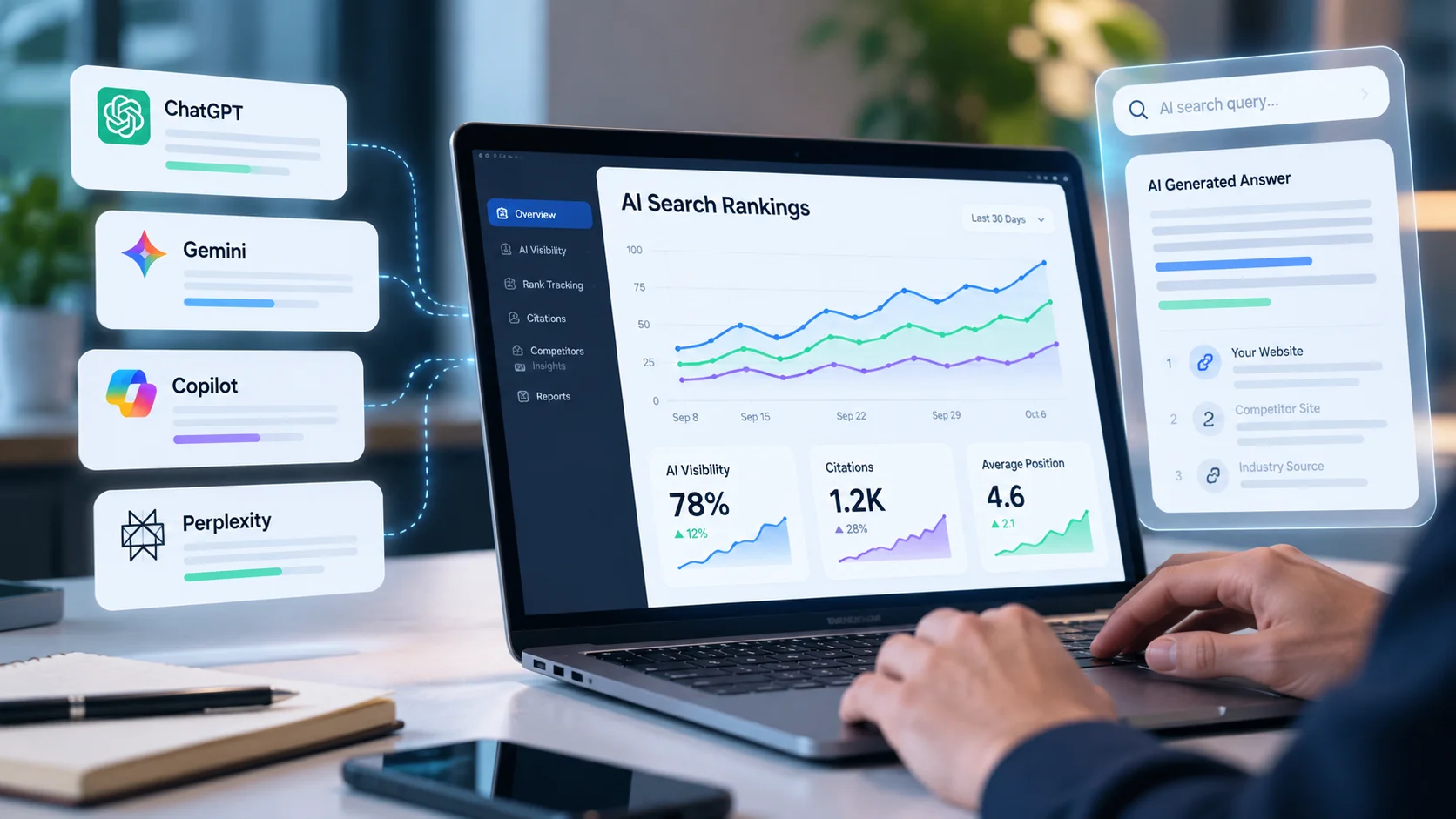
is aimed at the AI tools that write answers and summaries, like Google AI Overviews, Bing Copilot, ChatGPT, Gemini and Perplexity.
These tools don’t just pull one page. They take bits from many sources, mix them into one summary, and decide which brands to name. Research suggests they work with small pieces of knowledge, like a fact, a definition or a stat, instead of reading a whole page from top to bottom. So content that is well organized, backed by data and easy to quote has a better chance of getting in.
If LLM optimization makes your content readable, GEO SEO makes it quotable.
What Helps
State Facts Plainly
Skip vague wording, so an AI can quote you with confidence.
Follow E-E-A-T
Experience, Expertise, Authoritativeness and Trustworthiness is still one of the strongest trust signals.
Build Your Brand Name Over Time
AI answers mention brands more and more.
Write in a Human, Conversational Tone
Natural writing reads better to people and to the AI tools quoting you.
Use Both Long and Short Content
Long pieces give depth that AI can pull from, and short answers work well for simple questions.
A good GEO page often answers the question in the first couple of lines, then goes deeper for people who want more. Professional content marketing services can help you build that kind of content.
SEO vs AEO vs GEO: The Main Differences
The funny part is how much they overlap. All of them want better visibility, all of them care about user experience, and all of them rely on good content and data. So the work you do for one usually helps the others. A page built well for answer engine optimization often does fine in GEO too.
Why You Can’t Ignore This
People don’t search like they used to. Instead of typing “SEO services”, they ask, “Where can I find affordable SEO services near me?” AI tools and voice search have made that normal.
So you need SEO, AEO and GEO working together. If you run a SaaS company, our enterprise SaaS SEO strategy shows how to handle AI search next to traditional SEO. If you run an online store, Ecommerce SEO is where product and category pages need your attention.
Search is going hybrid. Normal rankings still matter for plenty of queries, and AI answers take over for the rest. Smart brands get ready for both.
Where This Shows Up in Real Life
Local Businesses
If you’re a local business, start with your Google Business Profile. Keep your hours, address and contact details accurate. Voice assistants lean on verified profiles when someone asks for something nearby.
Example: say a small bakery keeps its profile fresh with photos, current offers and reviews. When someone asks Google Assistant for a good bakery close by, that bakery has a real shot at being the one named.
Want to go deeper? Here are some local SEO tactics.
Ecommerce
Online stores get a lot out of GEO SEO. AI tools can check product keywords in real time and suggest better titles, descriptions and meta tags. That helps your products show up on search engines and AI platforms, and sharper titles usually bring more clicks.
Neil Patel, a leading digital marketing expert, said it well: “AI-powered tools have taken a lot of the grunt work out of SEO by gathering data, analyzing it, and translating it into actionable steps.”
Example: picture an electronics store. GEO tools can spot that people are searching “wireless earbuds” or “gaming laptops” and suggest product titles that match those searches closely.
If you want help here, our Ecommerce SEO services team does exactly this.
Content
Content still drives visibility, and AI tools can make it sharper. They look at search intent and user behavior to show what your audience really wants. A travel blog, for example, might find that “budget travel tips” and “best hotels for families” are worth writing about. When your content matches intent, you help your rankings, and you also give AI a clear reason to cite you.
Where to Start
If you’re not sure where to begin, here’s a simple order.
|
1
|
Begin With Your ContentAlign it to search intent and update regularly. |
|
2
|
Focus on Your Local ListingYour Google Business Profile, reviews, and up to date photos. |
|
3
|
Turn to AI for PatternsUse it to identify patterns and anticipate what users will search for, ahead of your competitors. |
Write in a natural, conversational way that answers questions directly. That one habit helps with snippets, voice search and AI answers all at once. If you sell online, fix your product and category pages too, with better titles, meta tags and fuller descriptions.
Add structured data everywhere you can. It’s how machines understand your page. And don’t forget authority. Backlinks, expert mentions and a steady presence on trusted platforms all feed the trust signals AI depends on.
A professional SEO company can take a lot of this off your plate, so you don’t have to figure it all out alone. This is where AI-powered marketing is heading anyway.
What’s Coming Next
AI search is still growing fast. Visual search is getting better, voice queries are sounding more like real conversations, and personalization keeps getting sharper. Search will probably turn into more of a back-and-forth chat, and content that handles longer conversations will have the advantage.
The brands that do well won’t pick one strategy. They’ll mix all of them.
FAQs
What is the difference between GEO, AEO and SEO in simple terms?
Get found on Google with SEO. AEO enables your content to be the featured answer in Google’s featured snippets and voice search results. GEO establishes your brand as a source for AI chatbots including ChatGPT, Gemini, and Perplexity.
Is GEO replacing SEO in 2026?
No. GEO doesn’t replace SEO, it’s separate from SEO. If there isn’t a solid foundation of SEO, it’s difficult for AEO to thrive, and also GEO.
Is SEO dead in the age of AI search?
Not at all. It’s evolving. SEO is still responsible for getting you seen, while LLM tuning, GEO and AEO are responsible for which content appears and how it is displayed in AI results.
What is the difference between GEO and AEO?
GEO SEO is about getting cited inside AI-generated summaries. Answer engine optimization is about giving direct, question-led answers, usually in a conversational style. Together, they improve your visibility in AI search.
Summing Up
The future of search isn’t about picking between SEO, answer engine optimization and GEO SEO. You run them together as one plan.
SEO is still your base. AEO covers the demand for quick and voice-driven answers. GEO gets your brand ready for the AI platforms that now sit between you and your customers.
In 2026, visibility depends less on your rank and more on whether you get picked, trusted and quoted. Brands that adapt early get a real edge, because they aren’t just found. They’re mentioned. Each of these strategies plays a part in your digital commerce success.
It’s no longer only about clicks. It’s about becoming the answer.
Ready to Become the Answer?
A professional SEO company can take a lot of this off your plate, so you don’t have to figure it all out alone.