




- Why China blocked the Meta Manus deal
- What makes Manus AI strategically important
- What this means for multinational tech firms
- Quick Question for Readers
- What it signals for enterprises
- Quick Question for Readers
- Practical next steps for enterprise teams
- Building an AI strategy resilient to global disruption?
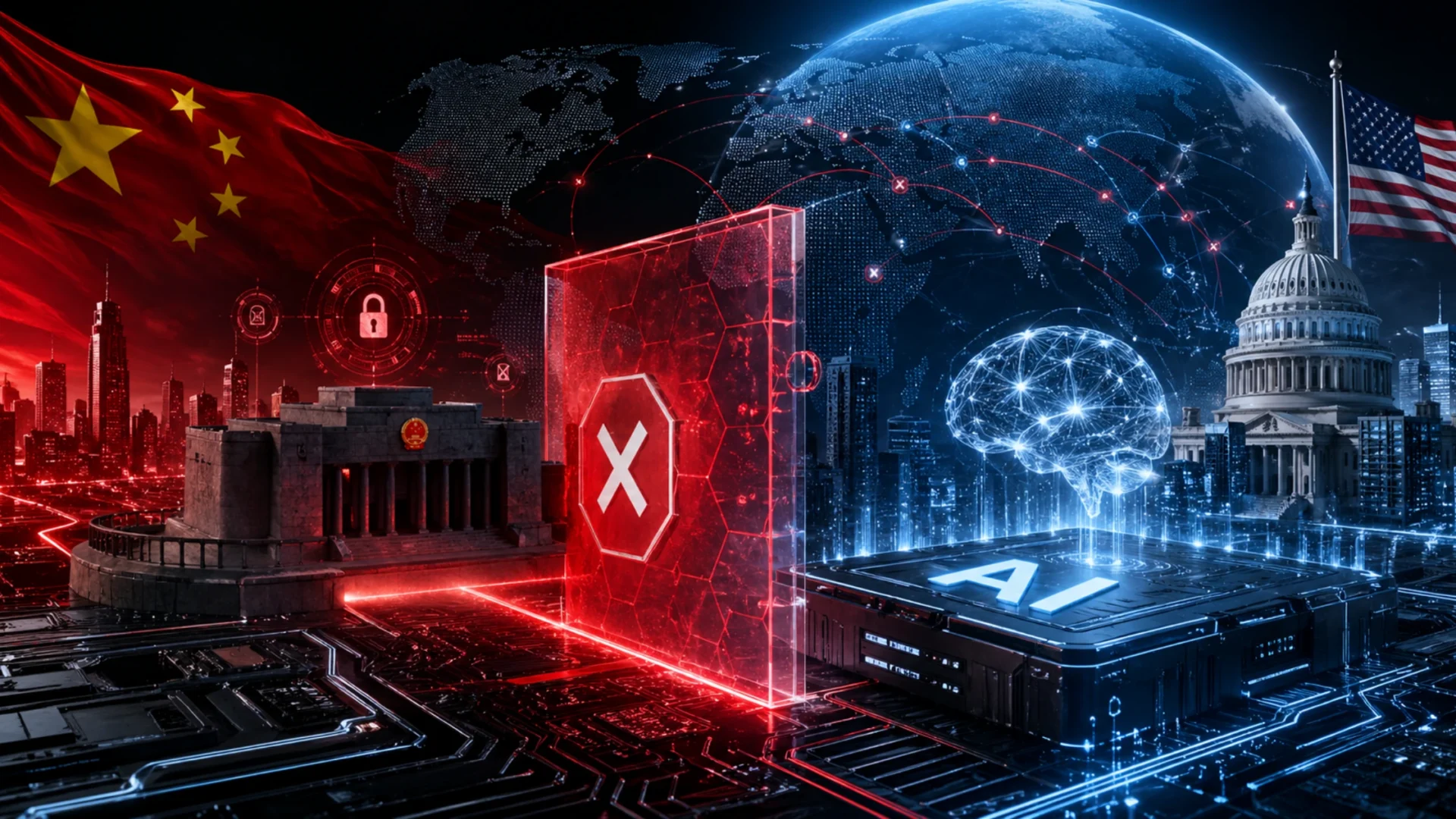
Beijing has shut the door on one of the year’s most watched tech deals. Chinese regulators have blocked Meta Platforms’ proposed $2 billion acquisition of Manus, a fast rising AI startup, marking another flashpoint in the deepening rivalry between Washington and Beijing over artificial intelligence.
The decision ends months of speculation about whether Mark Zuckerberg’s company could secure a foothold inside China’s tightly guarded AI ecosystem. It also signals just how protective Beijing has become of homegrown AI talent.
Why China blocked the Meta Manus deal
Officially, regulators cited national security and data sovereignty concerns. That’s the standard line. But there’s more underneath it. Manus has built a strong reputation for autonomous AI agents, software that can browse, reason, and execute tasks with minimal human input. For Beijing, letting that capability slip into a US tech giant’s hands isn’t just a commercial issue. It’s strategic.
|
$2B
Meta’s blocked acquisition offer
|
12 to 18
Months expected for future deal reviews
|
2 Years
Of Beijing’s AI self reliance push
|
#1
AI’s rank on China’s sensitive tech list
|
China’s State Administration for Market Regulation has tightened its review of foreign acquisitions involving sensitive technologies. AI sits squarely at the top of that list. Manus’s rapid rise inside China made the deal a hard sell from day one, even before formal review began. There’s also the broader policy backdrop. Beijing has spent the last two years pushing self reliance in chips, cloud, and large language models. Approving a Meta led buyout would have cut directly against that effort.
What makes Manus AI strategically important
- Strong adoption among Chinese enterprises looking for ChatGPT style alternatives
- A proprietary agent orchestration layer that powers autonomous workflows
- A research team with backgrounds at top Chinese universities and global tech firms
- Early traction in finance, e commerce, and customer service automation
- A leadership position in agentic AI, where the next wave of enterprise value sits
- One of a small handful of Chinese AI startups capable of attracting ten figure offers
Manus isn’t just another generative AI lab. The company has positioned itself as a leader in agentic AI, systems that operate semi independently across web tools, enterprise software, and consumer apps. That’s where the next wave of value sits, according to most analysts tracking the sector. Honestly, deals like this don’t come up often.
Meta has been pouring capital into AI for two years straight. Llama models, custom silicon, the Reality Labs push, and now agentic features inside WhatsApp and Instagram. The Manus deal would’ve slotted neatly into that roadmap. Losing it stings. It doesn’t break the strategy.
Impact on Meta’s AI strategy
Meta still has its open source Llama family, partnerships with major cloud providers, and growing internal AI talent. Where the loss really shows up is geographic reach. Without Manus, Meta has no clear path into China’s enterprise AI market, and that’s a market closed off in most other ways too. Expect Meta to redirect that $2 billion. Likely targets include European AI labs, Indian startups working on agentic systems, or smaller US firms. The capital won’t sit idle for long.
This blocked deal lands in the middle of a tense period. The US has tightened export controls on advanced chips. China has retaliated with restrictions of its own on rare earths and critical minerals. Both governments are now actively reviewing tech transactions on national security grounds, sometimes with little notice.
|
2024
US export controls on advanced AI chips tightened significantly
|
2026
China blocks Meta’s $2 billion bid for Manus AI
|
What this means for multinational tech firms
- Cross border AI deals will face heavier scrutiny going forward
- Acquisitions in sensitive sectors may take 12 to 18 months to clear, if at all
- Joint ventures might replace outright buyouts as the preferred structure
- Local partnerships will matter more than ever for market access
- Licensing arrangements and minority stakes may become the new default
- Regulatory review timelines will need to be built directly into deal economics
Frankly, the era of frictionless tech M&A between the world’s two largest economies is over. What replaces it is still being written. The deal collapse will reshape how investors and acquirers approach AI startups based in China. Some founders may now look harder at IPOs on the Hong Kong or Shanghai exchanges. Others might restructure to base operations elsewhere. Singapore, the UAE, and London have all been quietly courting Chinese AI talent.
For US buyers, the playbook shifts toward partnerships, licensing arrangements, and minority investments instead of full acquisitions. Slower, yes. But also less likely to draw a regulatory veto. Industry watchers expect a quieter Q3 and Q4 for cross border AI M&A. Activity should rebound, but only after both governments clarify how they’ll handle large transactions involving frontier AI capabilities.
What it signals for enterprises
Companies relying on AI vendors with Chinese exposure should review their supplier risk now, not later. Sudden regulatory action, on either side of the Pacific, can disrupt roadmaps overnight. Having backup AI providers, diversified data infrastructure, and clear contingency plans isn’t optional anymore. The Manus block isn’t an isolated event. It’s part of a pattern. And the pattern is hardening fast.
For multinational firms with active AI roadmaps, the Manus situation should serve as a planning moment, not a panic moment. Smart enterprises are already mapping where their AI capabilities come from, where their data flows, and where regulatory pressure could land next. That work doesn’t take long. But it does need to start now.
Practical next steps for enterprise teams
Map your full AI vendor and data dependency footprint. Identify which workflows depend on a single provider or single jurisdiction, and build redundancy into the most critical paths. Review contractual exit clauses with current AI partners. If you’re planning M&A activity in AI, factor in 12 to 18 months of regulatory review time and prepare alternative deal structures such as joint ventures or licensing models that face less friction.
The blocked Manus deal isn’t just a story about Meta. It’s a window into how the next decade of AI competition will actually be fought. Capital, talent, data, and regulatory power are now all in play together, often pulling in different directions. Companies that read the signals early and adjust their strategy accordingly will hold a meaningful advantage as the picture sharpens.
For Meta, this is a setback, not a defeat. The $2 billion will move elsewhere. The talent search will continue. But the message from Beijing has landed clearly: China’s frontier AI assets are not for sale to US buyers, at any price, in this climate.
Building an AI strategy resilient to global disruption?
Elsner helps enterprises design AI roadmaps built for a fragmented global tech landscape. From vendor diversification to compliant agentic AI deployment, our consultants help you stay ahead of regulatory shifts and supplier risk.
Cross border AI dealmaking won’t disappear. It will reshape itself around the new boundaries that governments are drawing. The companies that adapt fastest, with smarter structures, deeper local partnerships, and less reliance on any single market, are the ones that will keep moving while others stall in regulatory review.
Meta’s blocked Manus deal is a headline today. The pattern it represents will define enterprise AI strategy for years to come.
