



- What Determines SaaS Development Cost?
- Product Complexity
- Features and Functionality
- UI/UX Design Requirements
- Technology Stack
- Development Team Structure
- SaaS Development Cost Breakdown
- Cost Based on SaaS Product Type
- What are the Hidden Costs in SaaS Development?
- Maintenance and Updates
- Cloud Hosting and Infrastructure
- Third-Party Integrations
- Security and Compliance
- SaaS Pricing Models Explained
- Subscription-Based
- Freemium Model
- Usage-Based Pricing
- How to Reduce SaaS Development Costs?
- Build In-House vs Outsource SaaS Development
- When Should You Invest in SaaS Development?
- Market demand validation.
- A clear business model.
- A long-term investment mindset.
- Planning to Build Your SaaS Product?
- Conclusion
- Frequently Asked Questions
- How much does it cost to build a SaaS product?
- What factors affect SaaS development cost the most?
- Can I build a SaaS product on a low budget?
- How long does SaaS development take?
- Is outsourcing SaaS development a good option?
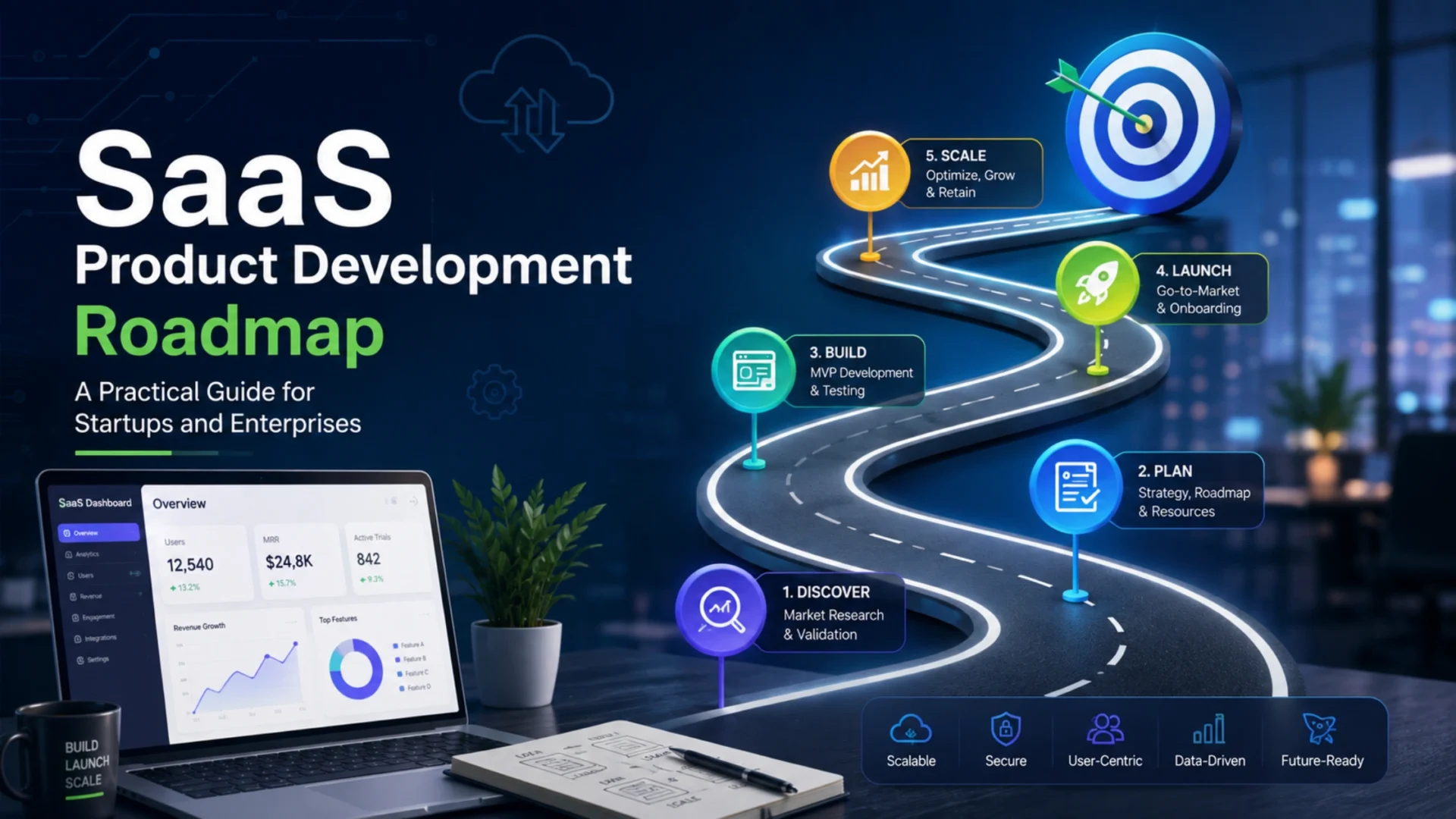
Building a SaaS product in 2026? The honest cost range is $30,000 to $500,000+ — and where you land depends entirely on decisions made in the first few weeks.
Most funded SaaS products launch somewhere between $80,000 and $200,000. The ones that blow past budget almost always make the same few mistakes early on.
This guide breaks it all down:
- What you’re actually paying for at each stage
- What separates a $50K build from a $500K one
- Where most businesses quietly lose money without realizing it
Whether you’re a founder scoping your first product, a CTO validating a quote, or a business owner trying to make sense of an agency estimate — you’ll find your answer here.
No recycled numbers. No vague ranges. Just a complete breakdown of SaaS development costs in 2026.
What Determines SaaS Development Cost?
There’s no single answer to what drives SaaS development cost, but there are clear culprits. Some are obvious. Some aren’t.
Product Complexity
An MVP and a full SaaS platform are almost different categories of work. Not just in features. They differ in how the whole thing is architected, how data flows and how users interact with it.
A lean MVP with one focused use case and basic login/authentication might ship in two or three months. Add multi-tenancy, custom reporting, complex permissions, and audit logging and you’re in a completely different project. If you haven’t validated your market, start lean.
Features and Functionality
This one matters more than most people expect. Core features are relatively predictable to build. The cost to build SaaS products starts climbing when you bring in real-time data, third-party integrations, AI-powered features, or custom notification systems. Each one adds scope, each one adds time — and the complexity compounds fast
Each one adds scope. Each one adds time. And scope creep in feature planning is how budgets blow up before a line of code is written. Pick the ten features that matter most. Build those first.
UI/UX Design Requirements
If you’re using an established component library and keeping the interface fairly standard, design costs stay manageable.
But for products where the interface is the product (design tools, workflow builders) custom UI/UX is not optional. Budget for it properly. It takes real time to do well.
Technology Stack
React on the frontend, Node.js or Python on the backend, AWS or GCP for infrastructure. This is the common setup for a reason. Plenty of available developers, solid documentation, and predictable scaling behavior. Choosing something more niche might offer technical advantages, but it shrinks your hiring pool and tends to raise the software development cost for SaaS over time. Not always the wrong call. Just a tradeoff worth making consciously.
Development Team Structure
Three options, each with real tradeoffs:
- In-house team:
High control, high cost. Salaries, benefits, onboarding time, turnover risk. Right for companies that have ongoing, long-term product needs. - Agency:
A cross-functional team with faster ramp-up, often better-suited for the full initial build especially when you work with a dedicated SaaS development services provider who has shipped similar products before. Rates vary by region and specialization. - Freelancers:
Can be cost-effective for specific pieces of work. Managing a distributed freelance team across an entire SaaS product, though, adds coordination overhead that’s easy to underestimate.
Most early-stage companies either go full agency for the build or hire a small in-house technical core and supplement with agency support. Both can work.
SaaS Development Cost Breakdown
Here’s a component-level look at SaaS development pricing. These are real ranges, not aspirational ones.
Add it up and you’re looking at roughly $41,000 to $160,000 for a mid-complexity product. That SaaS pricing development range is wide because scopes are wide. A simple product built efficiently sits at the lower end. A feature-rich build with multiple integrations and custom design pushes toward the top.
Cost Based on SaaS Product Type
Sometimes it’s easier to think about total SaaS application development cost by product type rather than by component. Here’s how the numbers tend to land:
An MVP is a working product. Not a rough demo. It’s something real users can actually use and collect meaningful feedback. Mid-level products go deeper: more features, more integrations, a more considered UI. Enterprise is a different conversation entirely. Compliance requirements, complex onboarding, dedicated admin tooling, SSO, and more The list keeps growing, and so does the budget.
What are the Hidden Costs in SaaS Development?
The build budget is the one people plan for. What tends to bite them later is everything else.
Maintenance and Updates
Your product needs to keep working after launch. That means dependency updates, performance patches, bug fixes, compatibility work as browsers and operating systems change.
This isn’t glamorous, but skipping it is how products quietly break. A reasonable maintenance budget is 15–20% of your initial development cost per year. Some teams budget nothing for this. That’s usually a mistake.
Cloud Hosting and Infrastructure
AWS, GCP, and Azure all charge based on usage. Early on the bills are small. As user volume grows, as data processing increases and as storage compounds.
Infrastructure costs scale with you. The issue is they don’t always scale predictably. Build a realistic cost projection before launch and revisit it every quarter.
Third-Party Integrations
Stripe, Twilio, SendGrid, Intercom: each one feels small as a line item. Five or six of them, combined with usage-based pricing at scale, adds up faster than expected.
Map out every external service your product depends on and price out the usage tiers you’ll hit at different growth stages.
Security and Compliance
If your product touches health data, financial data, or anything under GDPR or SOC 2 scope, security and compliance aren’t optional extras.
You need penetration testing, audit logging, access controls and formal certifications. All of it costs real money. Building in compliance requirements from the start is significantly cheaper than retrofitting them after the fact.
This is one of the clearest reasons why choosing the right SaaS development partner from day one one that treats security as architecture, not an afterthought — pays off significantly in the long run.
SaaS Pricing Models Explained
The model you choose for how you’ll charge customers shapes how you build. It affects features, infrastructure, and what the user experience needs to feel like.
Subscription-Based
Flat monthly or annual fee. Simple for customers to understand, predictable for you to forecast. Most B2B SaaS products use this as their core model, sometimes with tiered plans based on team size or features. Good default starting point.
Freemium Model
Free access with a paid upgrade path. This software development cost SaaS model lowers the barrier to entry and can accelerate user growth. The catch is you’re supporting real infrastructure costs for users who may never pay.
This works when there’s a clear, natural trigger for upgrading — hitting a storage limit, needing team features, wanting advanced analytics. Without that trigger, freemium can be expensive and unfocused.
Usage-Based Pricing
Customers pay based on what they actually use. API calls, processed records, active users, data storage. Revenue tracks value delivered, which customers tend to like. The tradeoff is revenue becomes harder to predict and you need metering infrastructure built into your product from day one.
How to Reduce SaaS Development Costs?
A few things that consistently help keep the custom SaaS development cost from running away:
- Build an MVP first.
Not because it’s cheaper in isolation — because it tells you what to build next. Founders who skip this step often build the wrong features at full cost. - Cut the feature list.
Every feature in v1 is a feature you have to build, test, document, and maintain. Features you defer cost nothing now. - Pick a mainstream tech stack.
It lowers hiring cost, raises the pool of available developers, and reduces the chance of obscure dependency problems down the line. - Work with a team that’s done this before.
An experienced team catches architectural problems in week two. An inexperienced one catches them after launch. The second scenario is much more expensive.
Build In-House vs Outsource SaaS Development
There’s no universal right answer here. It depends on your product stage, your existing team, and how much of the product work is ongoing versus project-based.
A model that works for a lot of companies: outsource the initial build to an experienced custom software development agency, keep a small in-house technical presence to own the product long-term. You get the agency’s speed and cross-functional capability without being permanently dependent on them for every change. You get the agency’s speed and cross-functional capability without being permanently dependent on them for every change.
When Should You Invest in SaaS Development?
Timing matters as much as budget. Three things worth checking before committing.
Market demand validation.
Not “people think this sounds like a good idea.” Actual evidence that someone would pay for it. Conversations where people ask when they can sign up carry more weight than polite interest.
A clear business model.
You don’t need every pricing detail locked in, but you should have a working thesis on how the product generates revenue and what the economics look like at meaningful scale.
A long-term investment mindset.
SaaS products improve over time or they stagnate. If the plan is one build with no ongoing investment, that’s a different product than what most SaaS businesses are actually running. The upfront cost is real, but it’s the beginning of the spend, not all of it.Naturally extend with a new sentence: “Businesses that skip this often end up paying significantly more through reactive software product modernization — rebuilding architecture that should have evolved incrementally from the start.
Planning to Build Your SaaS Product?
Elsner offers consultation and cost estimation to help you define a realistic budget before you commit. Get clarity on scope, pricing, and the right development approach for your SaaS product.
Conclusion
SaaS development pricing in 2026 has real structure to it, even if the top-line number varies. Complexity, team structure, hidden costs, compliance requirements — these aren’t surprises if you plan for them. What trips up most companies is treating the build cost as the full cost, then finding out post-launch that ongoing maintenance, infrastructure, and security add meaningful budget on top.
Build lean where you can. Plan realistically for what you can’t cut. And treat early investment as the foundation it actually is not as money spent, but as infrastructure being built.
Frequently Asked Questions
How much does it cost to build a SaaS product?
How much it cost to build SaaS depends on scope. A focused MVP typically runs $20,000 – $50,000. A mid-level product with more features and integrations falls between $50,000 and $120,000. Enterprise SaaS starts at $120,000 and scales with complexity, compliance requirements, and infrastructure.
What factors affect SaaS development cost the most?
Product complexity, feature scope, and team structure. Those three move the number more than anything else. Compliance requirements and third-party integrations add significantly for specific product categories.
Can I build a SaaS product on a low budget?
Yes, with an MVP approach. Build the core use case only, skip anything that isn’t essential to validating your product, and you can get to a real working product in the $20,000 – $35,000 range. The discipline is in keeping scope narrow.
How long does SaaS development take?
An MVP typically takes 3–5 months. Mid-level products run 5–9 months. Enterprise builds with complex integrations and compliance requirements can extend beyond a year. Timeline and cost are connected, compressing the timeline usually means adding people, which adds cost.
Is outsourcing SaaS development a good option?
For most startups and growing businesses, yes. A good agency brings a full cross-functional team without the overhead of full-time salaries across every role. The key is picking a partner with relevant experience. A team that’s built similar products before can save you from architectural decisions that look fine early and cause problems at scale.