



- The Core of a High-Converting Tile Ecommerce Website
- Why Design Matters for Tile Ecommerce
- Key Benefits of Effective Tile Store Web Design
- Elements That Define a Winning Tile Ecommerce Website
- User-Friendly Interface
- Visual Experience
- Mobile Optimization
- 1. User-Friendly Interface
- 2. Visual Appeal
- 3. Mobile Optimization
- Essential Features to Include in Your Tile Ecommerce Store
- Advanced Search and Filtering
- Customer Reviews and Ratings
- Smooth Checkout Experience
- SEO Optimization for Tile Ecommerce Websites
- Role of SEO in Driving Organic Traffic
- Keyword Optimization and Fast Loading Speeds
- Custom vs. Template: Which Approach Fits Your Store?
- Custom Development
- Template Design
- Benefits of Custom Ecommerce Website Development
- Why Personalized Development Can Offer Higher ROI
- Integration with Leading Platforms
- Best Practices to Perfect Your Tile Ecommerce Website
- Focus on Branding
- Improve Product Pages
- Support Visual Decisions
- Working With a Professional Ecommerce Team
- Benefits of Hiring a Professional Ecommerce Development Team
- How Experts Help Create High-Converting Websites
- Wrapping It All Up
- Frequently Asked Questions
- What are the key elements of a successful tile ecommerce website?
- How can a user-friendly design increase conversions for my tile store?
- Why is mobile optimization important for a tile ecommerce website?
- What features should I include in my tile ecommerce store to boost sales?
- How does SEO optimization improve the performance of a tile ecommerce website?
- What are the advantages of custom tile ecommerce website development over using templates?
- How can professional ecommerce services help improve my website’s design and conversion rates?
Quick Answer
A high-converting tile ecommerce website combines intuitive navigation, high-quality product visuals, mobile optimization, advanced filtering, customer reviews, and a friction-free checkout. Because tiles are visual and specification-heavy products, strong imagery, filters, and detailed product information play a major role in helping shoppers make confident purchase decisions.
|
01. Discover Make products easy to find with clear categories, smart search, and useful filters. |
02. Compare Use imagery, specifications, reviews, and product details to reduce purchase uncertainty. |
03. Convert Keep checkout simple, mobile-friendly, and focused on completing the purchase. |
Key takeaway: For tile ecommerce, product discovery and visual confidence are just as important as the checkout experience.
Nowadays, a website is not just a virtual storefront. It is the heart of your online business. For tile retailers, where aesthetics, product specifications, and product choice matter most, thoughtful website design can make a major difference.
Customers searching for tiles are not simply looking to buy. They are imagining how a product might look in a kitchen, bathroom, living room, outdoor area, or commercial space. That means your store needs to combine visual inspiration with practical information that makes product selection easier.
A successful online tile store should help customers discover relevant products, compare options, understand specifications, build confidence, and complete the purchase without unnecessary friction. This guide explains the design principles, essential features, SEO considerations, custom versus template choices, and practical best practices that can help create that experience.
The Core of a High-Converting Tile Ecommerce Website
Why Design Matters for Tile Ecommerce
Design is not simply about making a storefront look attractive. For an online tile business, it is about making the shopping journey easier, clearer, and more trustworthy.
|
Make product discovery easier Clear categories, filters, search, and navigation help shoppers quickly narrow a large product catalog. |
Build buying confidence High-quality imagery, specifications, reviews, and clear policies answer questions before a customer reaches checkout. |
Key Benefits of Effective Tile Store Web Design
- Higher engagement: Better organization encourages shoppers to explore more of the catalog.
- Stronger trust: Professional visuals and clear product information improve credibility.
- Better conversions: A smoother customer journey removes unnecessary friction between browsing and purchasing.
Elements That Define a Winning Tile Ecommerce Website
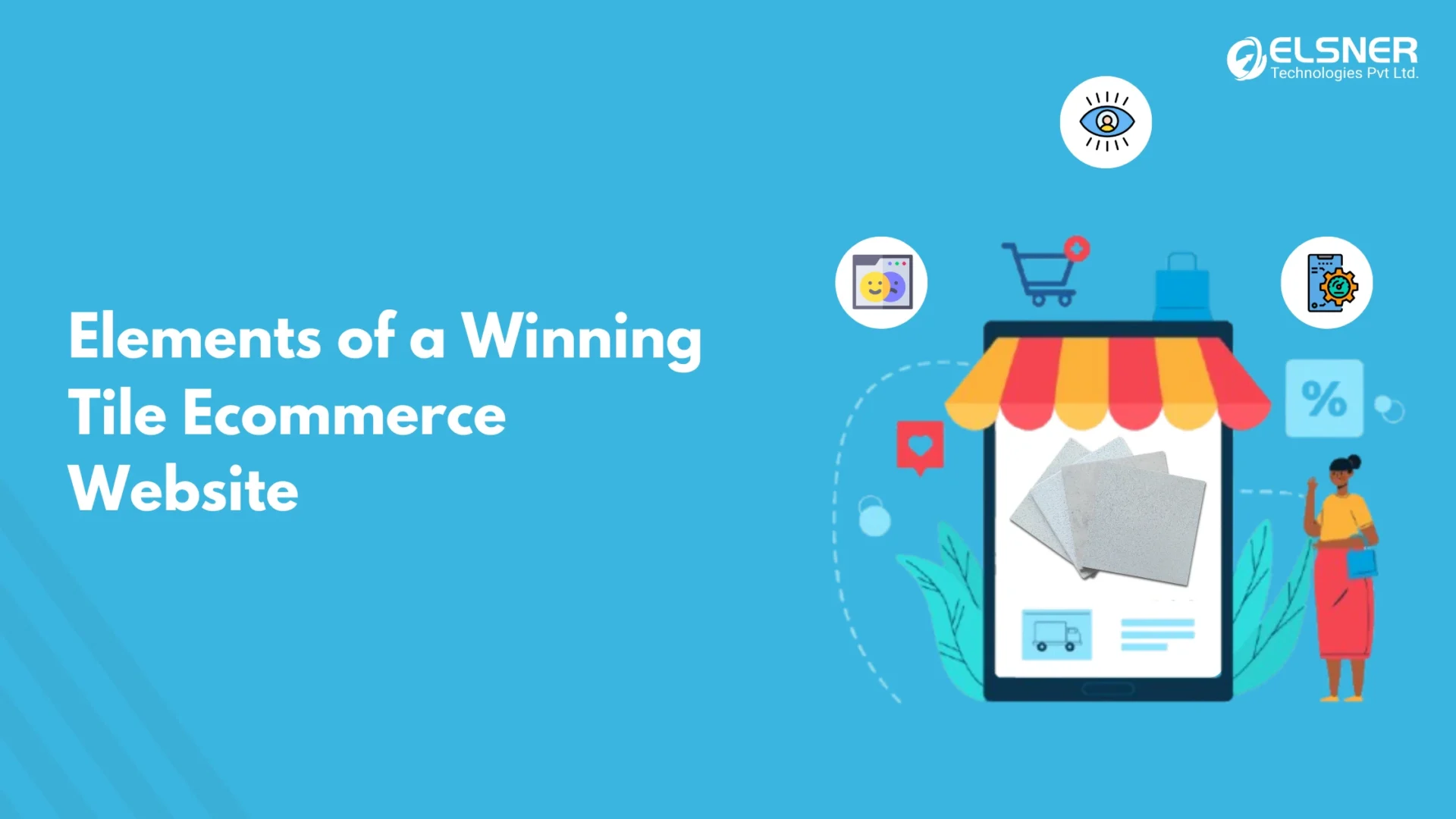
User-Friendly Interface
Clear categories, intuitive navigation, breadcrumbs, and responsive layouts help shoppers move through the store without friction.
Visual Experience
High-resolution imagery, room visuals, product galleries, and videos help customers understand the product before buying.
Mobile Optimization
Fast pages, touch-friendly controls, simple filtering, and streamlined checkout keep mobile shoppers moving.
1. User-Friendly Interface
Customers should not have to figure out how your website works. The interface should guide them naturally from categories to product pages and checkout.
- Simple navigation: Categories based on material, application, style, and use case should be easy to understand.
- Responsive design: The shopping experience should remain smooth across desktop, tablet, and mobile devices.
Tip: Use breadcrumb navigation so shoppers can easily return to previous categories and collections.
2. Visual Appeal
Tiles are inherently visual products, so the website should make full use of product imagery and context.
- Use high-resolution images that show texture, color, finish, and pattern accurately.
- Use product galleries or videos where they help communicate scale and application.
- Show products in organized grids so shoppers can compare options comfortably.
The goal is to help shoppers visualize the product in their own spaces and feel more confident about their selections.
3. Mobile Optimization
Mobile shoppers expect pages to load quickly and interfaces to remain easy to use on smaller screens. A mobile-first experience should make browsing, filtering, and checkout straightforward.
- Optimize images and other assets for faster loading.
- Keep navigation, filters, buttons, and checkout controls touch-friendly.
- Avoid intrusive pop-ups that block product information or frustrate shoppers.
Essential Features to Include in Your Tile Ecommerce Store
Advanced Search and Filtering
Not every customer arrives knowing exactly which product they need. Strong search and filtering tools can shorten the path from browsing to the right tile.
- Use filters for size, texture, price, material, color, finish, shape, and application.
- Consider predictive or AI-assisted search when it genuinely improves product discovery.
A practical filter structure can look like this:
| Filter | Examples | Why It Helps |
| Size | 12×12, 24×24, Custom Sizes | Helps shoppers find the right dimensions quickly. |
| Color | White, Gray, Blue, Multi-color | Supports visual product discovery. |
| Material | Porcelain, Ceramic, Marble, Glass | Makes technical selection easier. |
| Finish | Glossy, Matte, Textured, Satin | Helps shoppers narrow down appearance and feel. |
| Shape | Square, Rectangle, Hexagon, Mosaic | Useful for pattern and layout selection. |
| Application | Wall, Floor, Outdoor, Backsplash | Helps users shop based on intended use. |
| Price | $10-$50, $51-$100, $101+ | Lets shoppers stay within budget. |
| Brand | TopTile, EcoTile, CustomTile | Helps shoppers compare preferred manufacturers. |
Advanced filters make product discovery faster and reduce the effort required to move through a large catalog.
Customer Reviews and Ratings
Trust signal
Reviews give shoppers additional confidence when they cannot physically inspect a tile before ordering.
- Display verified ratings for products.
- Highlight useful themes such as durability, appearance, and ease of installation.
- Keep reviews visible near important product information.
Smooth Checkout Experience
A complicated checkout can undo the work your product pages have done. Keep the final purchase steps focused and easy to understand.
Reduce unnecessary steps between cart and payment.
Offer payment methods your target customers already trust.
Make shipping, totals, availability, and errors easy to understand.
SEO Optimization for Tile Ecommerce Websites
Even the most attractive ecommerce store needs visibility. SEO helps search engines understand your categories, products, and supporting content while making it easier for shoppers to discover the store through relevant searches.
For more ideas, explore our tile ecommerce SEO guide.
01. Search Intent
Match category, product, and informational pages with the searches your customers actually use.
02. Performance
Optimize images and technical performance so pages remain fast and easy to use.
03. Internal Links
Connect related categories, products, guides, and industry pages to strengthen site architecture.
Role of SEO in Driving Organic Traffic
SEO can help an online tile store appear for searches with commercial and informational intent. Relevant category pages, product pages, useful content, and strong internal linking can attract visitors who are actively researching or shopping.
Keyword Optimization and Fast Loading Speeds
- Use relevant search terms naturally in titles, product descriptions, headings, and metadata.
- Compress product images and use efficient image formats.
- Publish useful content around maintenance, installation, materials, buying guides, and design ideas.
- Connect related pages using relevant internal links.
Custom vs. Template: Which Approach Fits Your Store?
The right approach depends on your catalog size, budget, customer journey, required integrations, and future growth plans.
Custom DevelopmentBest for complex catalogs and differentiated shopping experiences.
|
Template DesignBest for simpler stores that need a faster starting point.
|
For businesses that need advanced filters, custom product logic, room visualization, or specialized integrations, custom development can provide more flexibility. A template may make more sense when speed and simplicity are the immediate priorities.
Benefits of Custom Ecommerce Website Development
| Aspect | Custom Development | Template Design |
| Flexibility | Tailored to business requirements | Limited by template structure |
| Scalability | Can evolve with business needs | May become restrictive over time |
| Brand Identity | Fully tailored visual experience | More standardized presentation |
| User Experience | Built around specific customer journeys | Uses predefined interaction patterns |
| Integration | Better suited to advanced integrations | Usually offers less flexibility |
Why Personalized Development Can Offer Higher ROI
Personalized development gives a business more control over the customer journey, product discovery process, and site functionality. When the experience is built around real customer needs, it can help improve usability and remove conversion barriers.
Custom solutions can also make it easier to integrate SEO requirements, analytics, product data, and other business systems into the overall ecommerce experience.
Integration with Leading Platforms
Platforms such as Shopify and WooCommerce provide established foundations for ecommerce operations.
- Integrations can simplify inventory, payments, marketing, and order management.
- Choose a platform that supports your current catalog while leaving room for future growth.
Best Practices to Perfect Your Tile Ecommerce Website
01
Focus on Branding
Keep colors, typography, photography, and interface elements consistent so the store feels recognizable.
02
Improve Product Pages
Provide detailed specifications, product images, availability, shipping information, and useful installation guidance.
03
Support Visual Decisions
Use galleries, room scenes, 3D models, or visualization tools where they genuinely help customers understand the product.
Working With a Professional Ecommerce Team
Professional ecommerce specialists can help businesses build a store that balances design, functionality, performance, and scalability. This becomes especially valuable when the catalog is large, filtering is complex, or advanced features are required.
Benefits of Hiring a Professional Ecommerce Development Team
|
Tailored Design The store can be designed around your catalog, audience, branding, and customer journey. |
Advanced Features Specialists can integrate filtering, search, visual tools, and business-specific functionality. |
|
Optimized Performance Good implementation practices can improve loading, responsiveness, and the overall shopping experience. |
Scalability A well-planned store can support more products, traffic, integrations, and future requirements. |
How Experts Help Create High-Converting Websites
A professional team can focus on the details that affect the entire shopping experience, from mobile usability and product discovery to performance, integrations, and checkout.
Working with experienced developers can also make it easier to introduce custom functionality and connect the store with other business tools as requirements evolve.
Practical point: The right development approach should support the customer journey rather than add unnecessary complexity.
Wrapping It All Up
Creating a high-converting tile ecommerce website requires a balanced approach to design, functionality, performance, and SEO. From product discovery and filtering to product information, mobile usability, reviews, checkout, and internal linking, every part of the experience should make it easier for customers to choose and buy.
A thoughtful combination of strong visuals, useful product information, clear navigation, and scalable technology can give an online tile store a stronger foundation for long-term growth.
Ready to improve your online tile store? Start with the customer journey, identify where shoppers struggle, and prioritize the design and functionality changes that remove those barriers.
Frequently Asked Questions
What are the key elements of a successful tile ecommerce website?
A successful online tile store should offer intuitive navigation, high-quality product imagery, detailed specifications, advanced filtering, mobile optimization, customer reviews, and a streamlined checkout experience.
How can a user-friendly design increase conversions for my tile store?
A user-friendly design makes it easier for shoppers to find products, compare options, understand specifications, and complete checkout. Removing unnecessary friction creates a smoother buying journey and can reduce abandonment.
Why is mobile optimization important for a tile ecommerce website?
Mobile optimization ensures that product pages, navigation, filters, and checkout work comfortably on smaller screens. It removes friction for shoppers who discover and browse products on mobile devices.
What features should I include in my tile ecommerce store to boost sales?
Useful features include advanced filters, detailed product pages, image galleries, customer reviews, clear availability information, multiple payment methods, and a smooth checkout process. More advanced stores may also use room visualization or AR experiences.
How does SEO optimization improve the performance of a tile ecommerce website?
SEO helps relevant category, product, and supporting content appear for searches related to tiles. Strong site structure, natural keyword usage, internal linking, useful content, optimized images, and good performance can all support organic visibility.
What are the advantages of custom tile ecommerce website development over using templates?
Custom development provides greater control over design, functionality, integrations, performance, and scalability. Templates can be faster to launch, but custom solutions may be more suitable when the store needs advanced filters, unique product experiences, or specialized integrations.
How can professional ecommerce services help improve my website’s design and conversion rates?
An experienced ecommerce team can improve site architecture, mobile usability, product discovery, filtering, performance, checkout, integrations, and other conversion-related elements. The goal is to create an experience that supports both customer needs and business objectives.