




Google’s $135 Million Android Settlement Is Now Live: Here’s Whether You Qualify and How to Claim It

  • Published: Apr 16, 2026
  • Updated: Apr 17, 2026
  • Read Time: 7 mins
  • Author: Pankaj Sakariya

Picture this: your phone sits face-down on your coffee table. The screen is off and no apps are running. You haven’t touched it in an hour. Yet, according to a federal lawsuit, Google was quietly using that idle device. It sends your personal data back to its servers, burning through your cellular data in the process.

That’s the accusation at the heart of a case that just landed Google with a $135 million settlement. And if you’ve owned an Android phone anytime in roughly the past eight years, there’s a decent shot you’re entitled to a piece of it.

How Did We Get Here?

The original lawsuit was filed in 2020, and the allegations inside it were blunt. Plaintiffs argued that Android devices were programmed to phone home to Google on a continuous basis, transmitting user information even when phones weren’t being actively used, even with all apps closed.

The lawsuit framed it starkly, accusing Google of forcing users to effectively subsidize its own data collection by secretly programming Android devices to transmit user information in real time, consuming the cellular data people had already purchased.

Think about what that actually means in practical terms. Someone on a 2GB prepaid plan, carefully rationing their data, could have been losing megabytes every month to background transmissions they never consented to and had no way of knowing about. For wealthier users on unlimited plans, it might barely register. For everyone else, it’s a real cost.

Google pushed back on the characterization, with a company spokesperson saying the lawsuit mischaracterized standard industry practices that keep Android safe. The company also said it would roll out additional disclosures explaining how its services work. But rather than fight the case all the way through trial, Google agreed to settle.

So Who Actually Gets Paid?

The eligibility criteria are pretty broad, which is part of why this settlement is getting so much attention. Anyone living in the US who used an Android phone to access the internet over a cellular data connection at any point since November 12, 2017, could qualify.

That date isn’t arbitrary, it marks the start of the legal window the case covers. Given how long ago 2017 was and how dominant Android is in the US market, the pool of potential claimants is enormous.

There is one carve-out worth knowing about. People who are already part of a separate but related lawsuit, Csupo v. Google LLC, which specifically covers certain California residents, are excluded from this settlement. If you’re a California Android user and you’re not sure whether that applies to you, the settlement website can help you sort it out.

What’s the Actual Payout?

Here’s where you should probably calibrate your expectations. Individual payments are expected to land somewhere around $1 to $1.50 per person, with a cap of $100. The final number for any given person depends on how many eligible users actually end up receiving money, and the $135 million pot shrinks further once attorneys’ fees, taxes, administrative costs, and other court-approved expenses get subtracted.

With roughly 117 million Android users in the country, the arithmetic doesn’t really add up to life-changing sums. But honestly, that’s beside the point for most people following this story. Class-action settlements aren’t primarily about individual windfalls, they’re about establishing that a company can’t simply absorb the legal risk of questionable data practices as a cost of doing business. The $135 million figure matters more as a signal than as a personal finance event.

Here’s How to Claim Your Payment

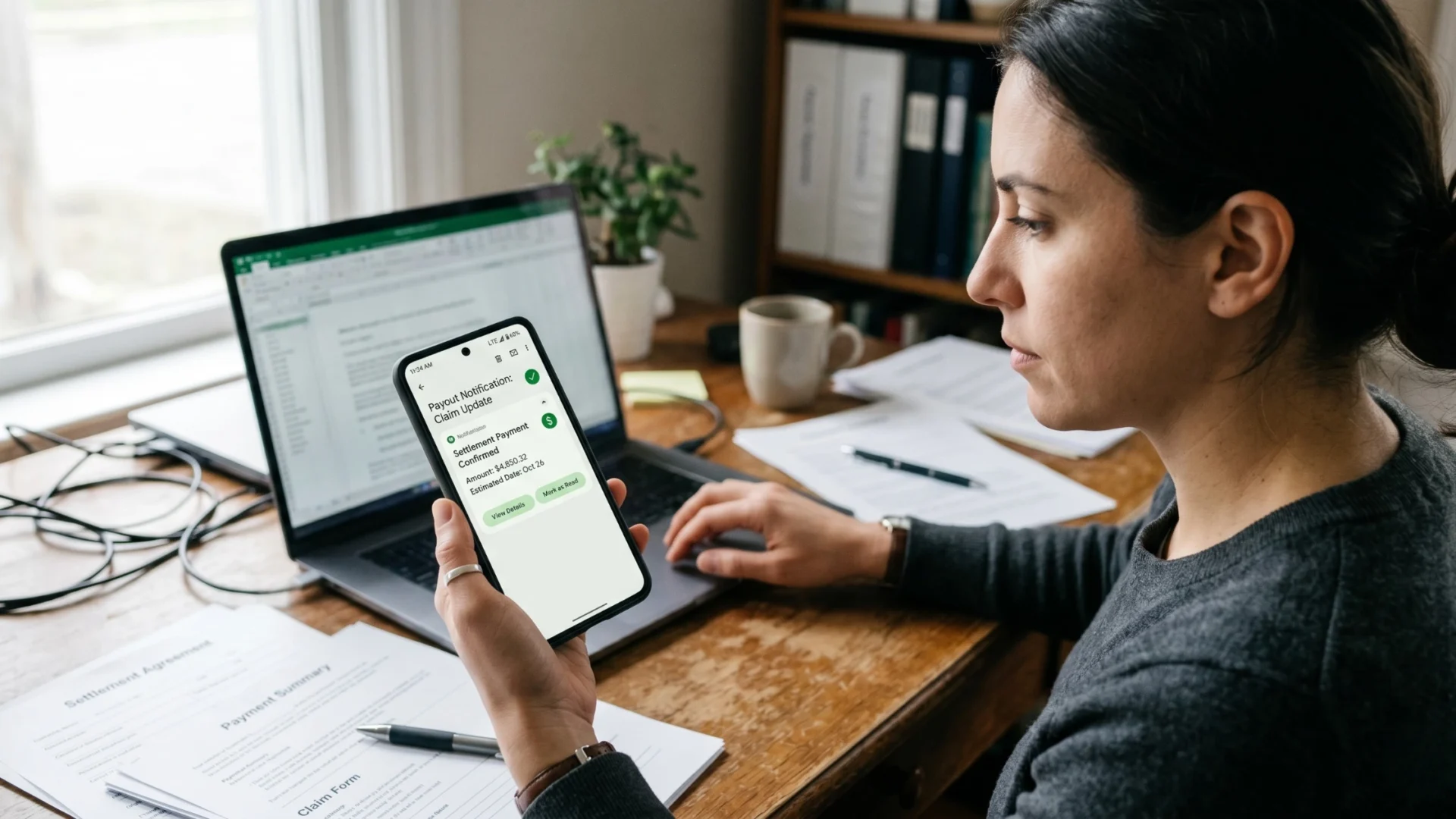
Qualifying users who don’t opt out will receive a personalized notice, either by mail or email, with a notice ID and a confirmation code attached. You’ll need both to complete your claim.

Head to the official settlement website and enter your payment preference using those credentials. The site is federalcellularclassaction.com. It’s a straightforward process that shouldn’t take more than a few minutes.

If you’ve already gotten a notice and it’s been sitting in your inbox untouched, now would be a good time to dig it out. If you think you qualify but haven’t received anything, go to the site directly and contact the settlement administrator to check your status. The administrator will make an attempt to pay even users who don’t submit their payment details, but people who don’t act run the risk of simply not getting paid if those outreach attempts fail.

Dates You Can’t Afford to Miss

Two deadlines matter here. If you want to formally object to any aspect of the settlement, that window closes May 29. The court’s final approval hearing is set for June 23.

If the judge signs off on the deal in June, payment distribution should follow not long after. There’s no reason to wait until the last minute.

This Isn’t a One-Off It’s Part of Something Larger

The Google Android settlement is the kind of story that’s easy to skim past, mostly because the individual dollar amounts are so modest. But zoom out a little, and the context is striking.

Earlier this year, Google separately agreed to pay $68 million to resolve another class-action case, this one over claims that its Google Assistant was secretly activating on smart devices and recording private conversations, which were then allegedly used to serve targeted ads.

Then there’s Apple. In December 2024, the company settled a $95 million lawsuit over similar allegations involving Siri.

Two companies. Two operating systems that together cover virtually every smartphone in America. Both are now settling major privacy cases involving background data collection by their AI assistants and system software. That’s not a random cluster of litigation, it’s a signal about where the legal and regulatory environment around mobile data is heading.

Plaintiffs’ attorneys clearly see an opportunity in this space. Regulators in Washington have been paying closer attention to how mobile platforms handle passive data collection. And ordinary users, at least judging by the scale of participation in these cases, are no longer quite as willing to shrug and assume the tradeoff is acceptable.

What Android Users Should Actually Take Away From This

The settlement payment, whatever it ends up being, will come and go. The more lasting takeaway is probably behavioral.

Most Android users have never once opened their phone’s data usage settings to see which processes are consuming bandwidth in the background. After this lawsuit, maybe that changes for some people. Google’s pledge to offer more transparent disclosures is worth watching, but whether those disclosures are genuinely illuminating or just additional text nobody reads will say a lot about how seriously the company takes the underlying concern.

For developers and companies building products on the Android platform, the scrutiny this case represents is also relevant. Background data transmission that users haven’t explicitly authorized is no longer something courts are willing to treat as a technical non-issue. That line has shifted, and products built around passive data collection need to account for the new reality.

The Bottom Line

This isn’t about getting rich off a legal settlement. The amounts are small, the process is quick, and the window is real, so if you’ve had an Android phone on a cellular plan since 2017, it takes almost no effort to find out whether you qualify and submit your claim.

More importantly, cases like this one are slowly reshaping the ground rules around what tech companies can do with your data without your knowledge. That matters a lot more than a dollar fifty.

Check the official site, confirm your eligibility, and lock in your payment method before the deadlines arrive. The data that allegedly got harvested was yours to begin with.

Interested & Talk More?

Let's brew something together!

GET IN TOUCH
WhatsApp Image