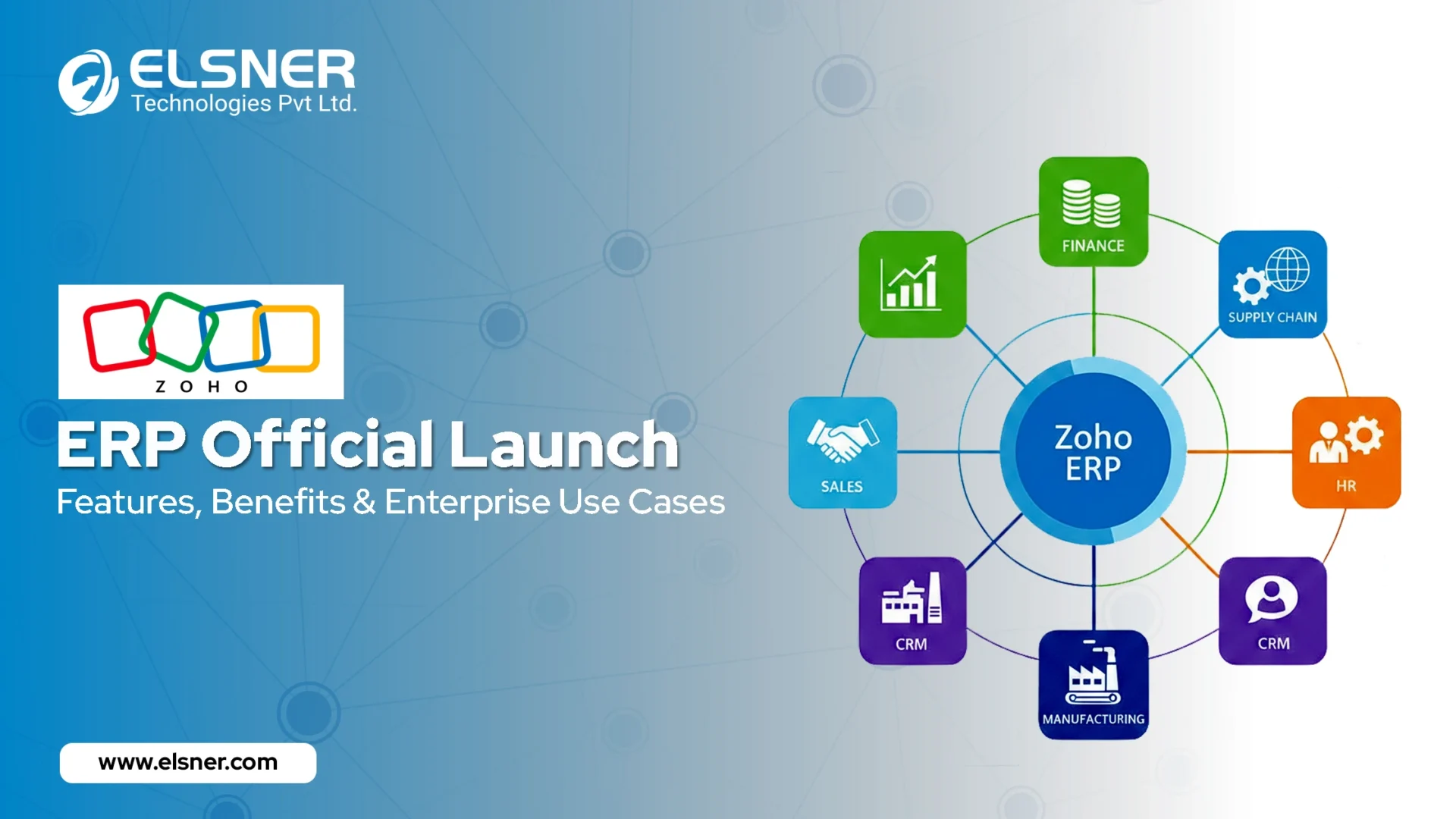
- What Is Zoho ERP?
- Why Zoho Launched a Full-Scale ERP Platform
- Core Modules and Key Features of Zoho ERP
- Finance and Accounting
- Inventory and Warehouse Management
- Supply Chain Management
- Manufacturing Operations
- Human Resources and Payroll
- Analytics and Reporting
- Workflow Automation and Governance
- Security and Compliance
- Business Benefits of Using Zoho ERP
- Centralized Operational Visibility
- Process Standardization
- Improved Data Accuracy
- Scalability and Performance
- Cost Optimization
- Strong Compliance and Governance
- Better Customer Experience
- Enterprise Use Cases of Zoho ERP
- Manufacturing Enterprises
- Trading and Distribution Businesses
- EPC and Project-Based Organizations
- Multi-Entity Organizations
- High-Growth Enterprises
- Zoho ERP vs Zoho One: Quick Overview
- Implementation, Migration, and Adoption Considerations
- Business Process Mapping
- Data Migration Strategy
- Integration Requirements
- Change Management
- Customization and Scalability
- Why Choose Elsner for Zoho ERP Consulting and Implementation
- Frequently Asked Questions
- What industries can use Zoho ERP?
- Is Zoho ERP cloud-based?
- Can businesses migrate from Zoho One to Zoho ERP?
- How long does Zoho ERP implementation take?
- Does Zoho ERP support compliance and audit controls?
- Final Thoughts
Enterprise businesses today operate in an environment where speed, accuracy, compliance, and scalability define success. As organizations grow across regions, product lines, and channels, disconnected software systems start creating operational bottlenecks, data silos, and reporting challenges. To address these enterprise realities, Zoho has officially launched Zoho ERP, a unified, process-driven ERP platform designed to support complex, large-scale business operations.
With development and expansion initiated from Kumbakonam, Tamil Nadu, Zoho continues its vision of building enterprise-grade technology from regional innovation hubs while empowering local talent and education ecosystems. This launch also strengthens the ecosystem around enterprise implementation through Zoho Consulting Services, enabling organizations to accelerate adoption and maximize long-term platform value. The move marks a strategic shift for Zoho, moving beyond app-based business tools into a deeply integrated enterprise platform built for long-term scalability, governance, and operational excellence.
In this guide, we explore what Zoho ERP is, its core features, business benefits, real-world enterprise use cases, and what organizations should consider when adopting or migrating to this next-generation ERP platform.
What Is Zoho ERP?
Zoho ERP is a fully integrated enterprise resource planning system designed for mid-to-large businesses that require centralized control over finance, operations, supply chain, manufacturing, inventory, HR, and analytics, all within a single unified platform.
Unlike modular business applications that operate independently, Zoho ERP connects every business function through shared data models and standardized workflows, helping enterprises streamline operations and improve efficiency, as explained in how Zoho ERP simplifies business workflows. This allows enterprises to manage complex processes end-to-end rather than coordinating multiple disconnected systems.
At its core, Zoho ERP focuses on:
- Unified data architecture across departments
- Process-driven automation instead of isolated tasks
- Enterprise-grade compliance and controls
- Scalability for high-volume operations
- Advanced analytics and reporting
The platform is particularly suitable for organizations that operate across multiple locations, entities, warehouses, production units, or regulatory environments and require strong governance and operational visibility.
Why Zoho Launched a Full-Scale ERP Platform

The enterprise software landscape has evolved significantly over the last decade. While cloud applications accelerated adoption and agility, many organizations now face challenges when managing growth with fragmented systems.
Common enterprise pain points include:
- Data inconsistencies between finance, inventory, and sales systems
- Manual reconciliations and duplicate data entry
- Limited visibility into real-time operational performance
- Compliance risks due to uncontrolled workflows
- Difficulty scaling systems as transaction volumes increase
Zoho recognized the need for a single enterprise-grade platform that combines flexibility with operational discipline. Zoho ERP addresses this gap by delivering standardized workflows, centralized governance, and integrated analytics without compromising cloud agility.
The launch also aligns with Zoho’s long-term commitment to building sustainable enterprise products while nurturing engineering talent outside traditional metro hubs. By developing from Kumbakonam, Zoho strengthens regional innovation and contributes to long-term ecosystem growth.
Core Modules and Key Features of Zoho ERP
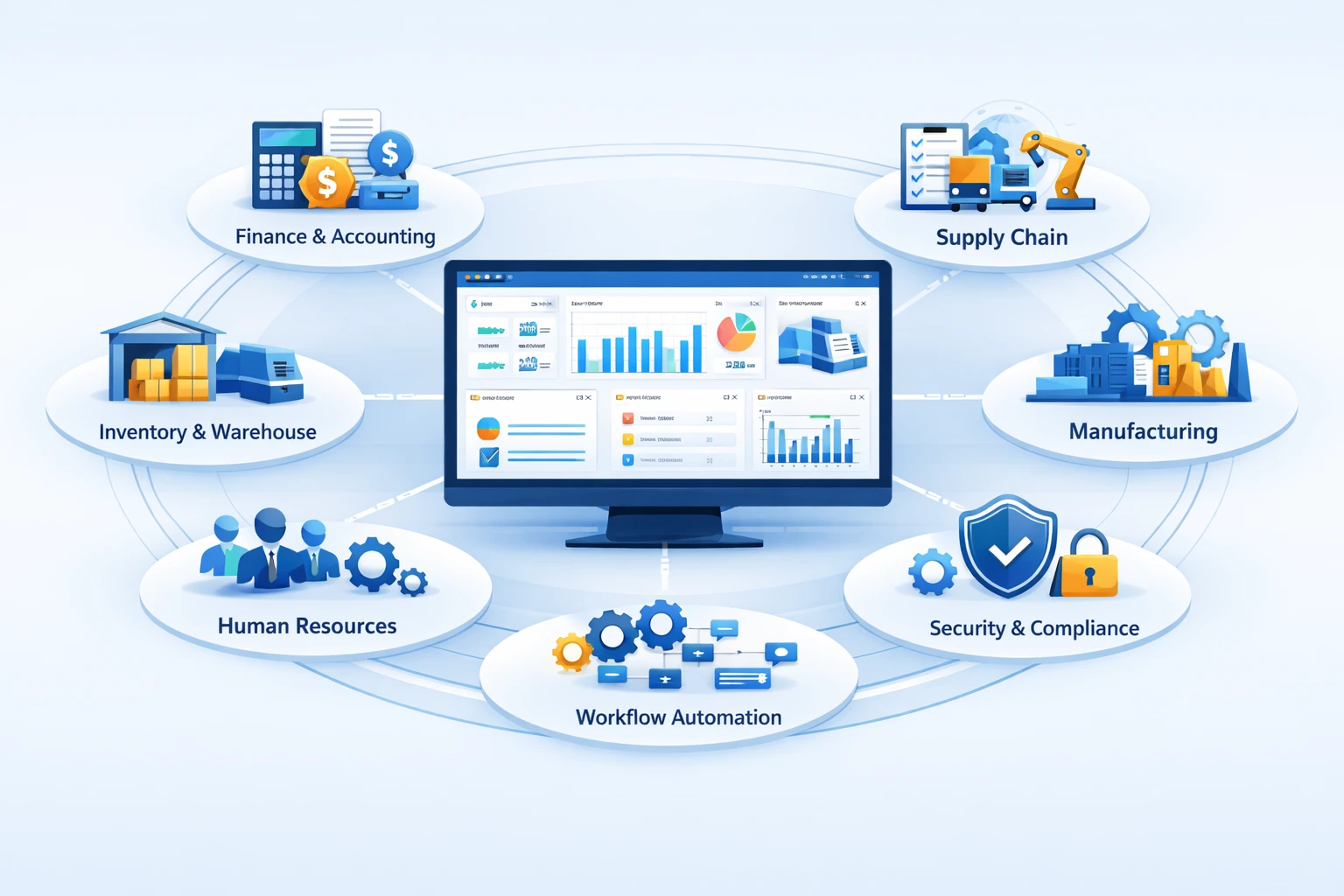
Zoho ERP is designed as a comprehensive platform that supports every critical business function. Below are the major modules and capabilities enterprises can leverage.
Finance and Accounting
- General ledger, accounts payable and receivable
- Multi-entity accounting and consolidation
- Tax compliance and statutory reporting
- Budgeting and financial forecasting
- Automated reconciliations and audit trails
Inventory and Warehouse Management
- Multi-warehouse inventory tracking
- Batch and serial number management
- Real-time stock visibility
- Automated replenishment planning
- Warehouse operations optimization
Supply Chain Management
- Procurement automation
- Vendor management
- Purchase planning and forecasting
- Logistics coordination
- Demand-supply alignment
Manufacturing Operations
- Bill of materials management
- Production planning and scheduling
- Work order tracking
- Quality control processes
- Capacity utilization monitoring
Human Resources and Payroll
- Employee lifecycle management
- Attendance and payroll automation
- Compliance tracking
- Performance management
- Workforce analytics
Analytics and Reporting
- Unified enterprise dashboards
- Financial and operational KPIs
- Predictive analytics
- Custom reporting
- Data visualization
Workflow Automation and Governance
- Rule-based approvals
- Exception handling
- Audit logging
- Compliance enforcement
- Role-based access controls
Security and Compliance
- Enterprise-grade data security
- Access control policies
- Regulatory compliance frameworks
- Disaster recovery and backup management
These modules operate on a shared data foundation, ensuring consistency, transparency, and accuracy across the organization.
Business Benefits of Using Zoho ERP
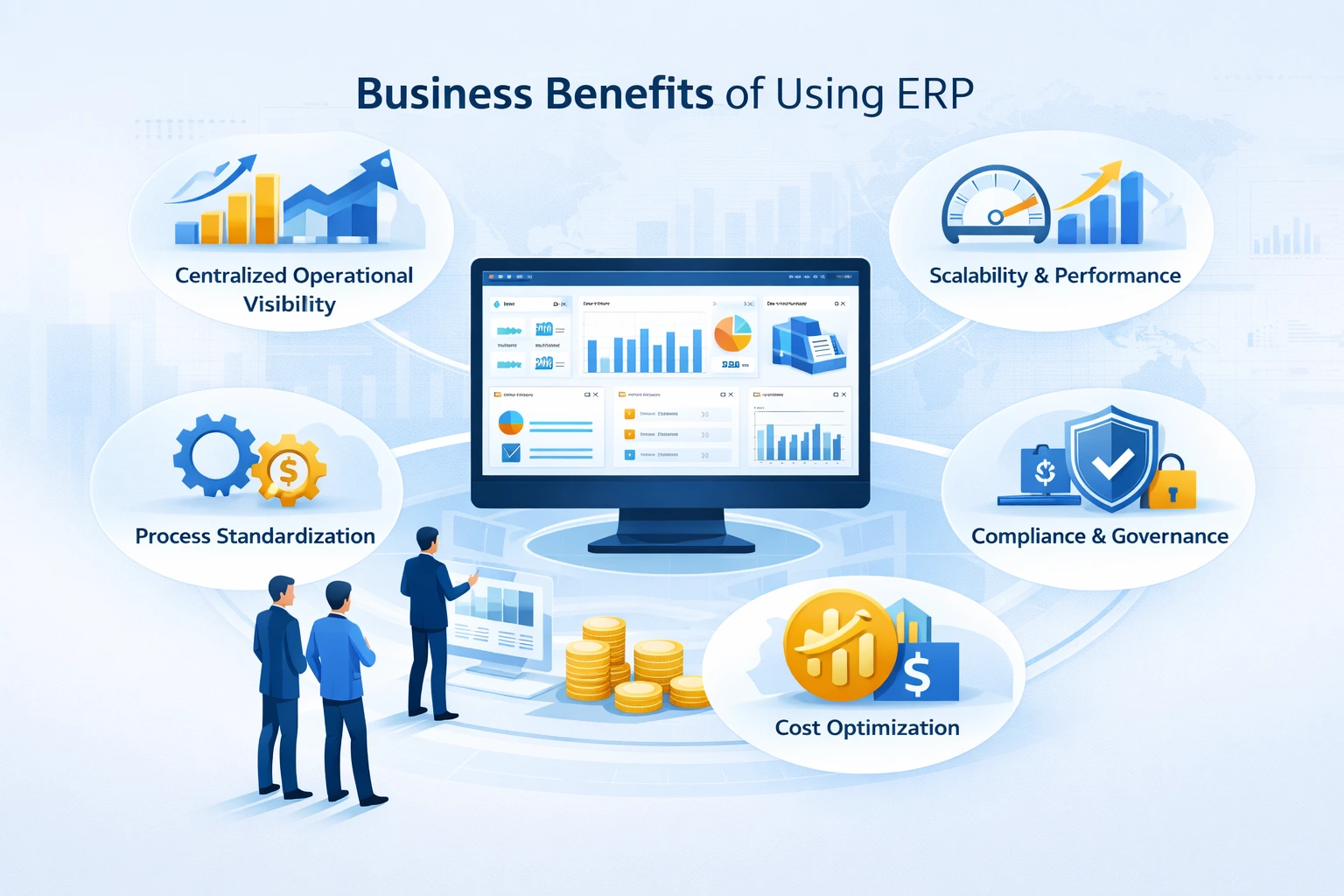 Adopting a unified ERP platform delivers tangible operational and strategic advantages for enterprises.
Centralized Operational Visibility
Organizations gain real-time insights across departments, enabling faster decision-making and improved accountability.
Process Standardization
Standard workflows reduce operational errors, improve compliance, and ensure consistent execution across locations and teams.
Improved Data Accuracy
Elimination of duplicate data entry and synchronization issues increases reporting reliability and financial accuracy.
Scalability and Performance
Zoho ERP supports growing transaction volumes, multi-entity expansion, and complex business structures without system fragmentation.
Cost Optimization
Automation reduces manual overhead, improves inventory turnover, and minimizes operational inefficiencies.
Strong Compliance and Governance
Built-in controls, audit trails, and approvals reduce regulatory risk and strengthen enterprise governance.
Better Customer Experience
Faster order processing, accurate inventory availability, and streamlined fulfillment enhance service reliability and customer satisfaction.
Enterprise Use Cases of Zoho ERP
Zoho ERP supports a wide range of enterprise scenarios across industries and operational models.
Manufacturing Enterprises
Manufacturers benefit from integrated production planning, inventory synchronization, quality management, and cost control. Real-time visibility into work orders, raw material availability, and production schedules improves throughput and reduces wastage.
Trading and Distribution Businesses
Distributors manage procurement, warehouse operations, logistics, and customer fulfillment on a single platform. Automated replenishment ensures optimal inventory levels while reducing stockouts and overstocking.
EPC and Project-Based Organizations
Engineering and project-driven businesses require strong project costing, resource tracking, procurement coordination, and compliance monitoring. Zoho ERP aligns financials, operations, and project execution seamlessly.
Multi-Entity Organizations
Enterprises operating across subsidiaries, regions, or business units can consolidate financials, standardize processes, and maintain regulatory compliance with centralized governance.
High-Growth Enterprises
Scaling organizations benefit from automation, predictive analytics, and flexible workflows that support rapid growth without operational chaos.
Zoho ERP vs Zoho One: Quick Overview
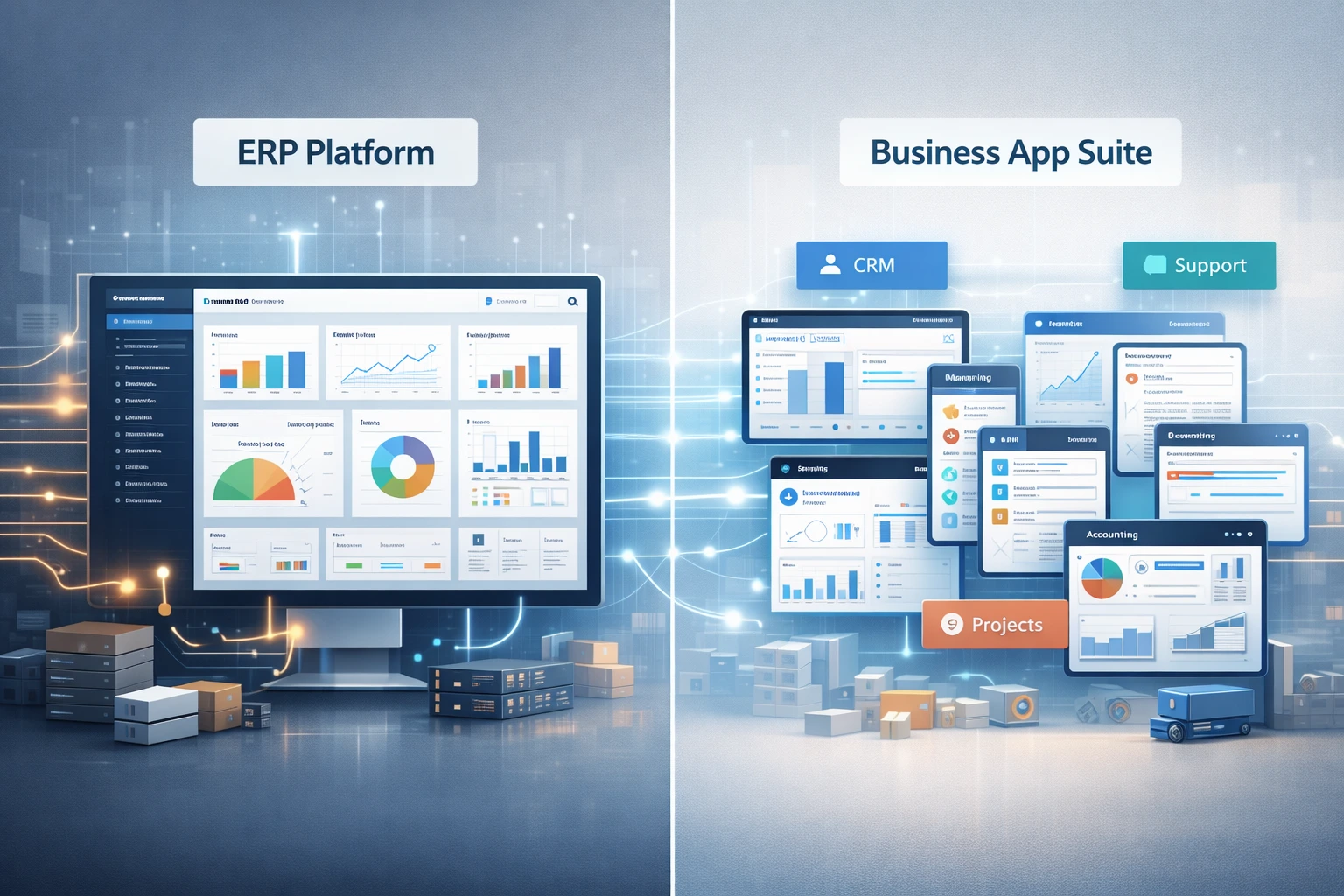
Zoho ERP and Zoho One serve different business maturity levels and operational complexity.
Zoho One provides a bundle of multiple business applications ideal for small to mid-sized businesses seeking flexibility and fast deployment. Departments can operate semi-independently with lighter integration requirements.
Zoho ERP is designed for organizations that require tightly integrated workflows, standardized controls, and enterprise-grade reporting across departments. It prioritizes operational depth, compliance, and scalability over flexibility.
Businesses transitioning from rapid growth into operational maturity often evaluate migration from Zoho One to Zoho ERP to support complex enterprise needs.
Implementation, Migration, and Adoption Considerations
Implementing an ERP platform requires strategic planning and organizational alignment. Key considerations include:
Business Process Mapping
Organizations should document existing workflows and identify areas for optimization before configuration.
Data Migration Strategy
Accurate migration of master data, transactional history, and financial records is critical for operational continuity.
Integration Requirements
Enterprises may require integration with external platforms such as CRM systems, ecommerce platforms, logistics providers, or BI tools, making seamless Zoho ERP software integrations critical for maintaining operational continuity and data consistency.
Change Management
User adoption depends on structured training, communication, and stakeholder involvement.
Customization and Scalability
Configuration should support current operations while remaining flexible for future growth.Partnering with an experienced ERP consulting team ensures smoother deployment, risk mitigation, and faster ROI realization.
Why Choose Elsner for Zoho ERP Consulting and Implementation
Successful ERP adoption requires more than software installation. It requires strategic alignment, technical expertise, and ongoing optimization.
Elsner brings extensive experience in enterprise digital transformation, system integration, and scalable platform implementations. Our consultants help organizations:
- Design optimized business workflows
- Execute secure data migration
- Configure enterprise-grade governance
- Integrate third-party systems
- Train users and stakeholders
- Provide long-term optimization and support
By aligning technology with business strategy, Elsner enables enterprises to maximize value from their Zoho ERP investment while ensuring operational resilience and scalability.
Frequently Asked Questions
What industries can use Zoho ERP?
Zoho ERP is suitable for manufacturing, trading, distribution, EPC, multi-entity organizations, and high-growth enterprises requiring centralized operations and compliance.
Is Zoho ERP cloud-based?
Yes, Zoho ERP is a cloud-based platform offering scalability, security, and remote accessibility.
Can businesses migrate from Zoho One to Zoho ERP?
Yes. Many growing businesses migrate from Zoho One to Zoho ERP when operational complexity increases and standardized workflows become necessary.
How long does Zoho ERP implementation take?
Implementation timelines vary depending on business complexity, data volume, integrations, and customization requirements.
Does Zoho ERP support compliance and audit controls?
Yes. Zoho ERP provides built-in approvals, audit trails, access controls, and reporting frameworks to support regulatory compliance.
Final Thoughts
The official launch of Zoho ERP marks a significant milestone in enterprise digital transformation. By offering a unified, scalable, and process-driven platform, Zoho ERP empowers organizations to move beyond fragmented systems and operate with clarity, control, and confidence.
Enterprises seeking operational efficiency, data-driven decision-making, and long-term scalability can leverage Zoho ERP as a foundation for sustainable growth. With the right implementation strategy and consulting partner, businesses can unlock the full potential of this next-generation ERP platform.
If your organization is evaluating ERP adoption, migration, or enterprise process optimization, partnering with an experienced consulting team ensures smoother execution and measurable business outcomes. Contact us to discuss your business requirements and explore how Zoho ERP can accelerate your digital transformation journey.