- What is Hybrid App Development?
- Why Choose Hybrid App Development in 2026?
- Top Hybrid App Development Companies in the USA (2026)
- 1. Elsner Technologies
- Partner with Elsner Technologies for Your Next App
- 2. WillowTree
- 3. Fueled
- 4. ArcTouch
- More Top Hybrid App Development Companies in the USA
- Utility:
- Blue Label Labs:
- TechAhead:
- Konstant Infosolutions:
- Cheesecake Labs:
- OpenXcell:
- RipenApps:
- Intellectsoft:
- Zco Corporation:
- Appinventiv:
- MindInventory:
- Net Solutions:
- How to Choose the Right Hybrid App Development Company?
- See what they have actually shipped.
- Spend time on real client reviews.
- Ask them to walk you through a framework recommendation.
- Pin down exactly what the price covers.
- Watch how they communicate before the project starts.
- Ready to Build Your Hybrid Mobile App?
- Cost of Hybrid App Development in the USA
- Variables that move the final number:
- Benefits of Hiring a Hybrid App Development Company
- Faster route to market
- Lower total project cost
- Maintenance that stays manageable
- Clean scalability
- Why Choose Elsner?
- 20+ Years of Proven Delivery.
- 9,500+ Delivered Projects Across Key Industries.
- A Team of 250+ Specialists.
- True Ownership Through the Full Build Cycle.
- Cost-Effective Without Sacrificing Quality.
- Cross-Industry Versatility.
- Elsner at a Glance
- Final Thoughts
- Frequently Asked Questions (FAQs)
- 1. How much does hybrid app development cost in the USA?
- 2. How long does it take to build a hybrid app?
- 3. What is the best framework for hybrid app development in 2026?
- 4. How do I hire hybrid app developers in the USA?
- 5. What is the difference between hybrid and native apps?
- 6. Which industries benefit most from hybrid app development?
There is a moment almost every founder or product manager hits at some point. You have a clear product idea, a working budget, and a timeline you need to meet. What you do not have is a confident answer on which development company to actually trust with the build. You read through five agency websites and they all say the same things. Fast delivery. Transparent process. Great communication. Yet the stories of blown budgets and missed launches keep coming from people who were told the same things.
Every month, a product sits in development or gets rebuilt because of a poor foundation is time and money handed directly to competitors who moved faster and chose better.
Cost is where most conversations begin, and for good reason. Running two native builds, one for iOS and one for Android, means paying for two separate engineering teams, two QA cycles, and two ongoing maintenance tracks. Hybrid app development removes that duplication entirely. One codebase covers both platforms. On most projects, that single decision alone reduces development spend by 30 to 40 percent. For a business working within real budget constraints, that is not a marginal saving. It fundamentally changes what you can afford to build.
Speed follows directly from the same principle. When a single team works from one codebase rather than two parallel ones, decisions move faster and releases come sooner. Therefore, for founders trying to validate an idea quickly or businesses watching a competitor gain ground a shorter development window becomes a genuine strategic advantage.
Scalability is the third piece, and it is the one that tends to matter most after launch. A hybrid mobile app built on a solid framework does not require a full rebuild when your user base grows or your feature list expands. You simply add to what exists. That is a very different situation from hitting a technical ceiling eighteen months post-launch and starting over from scratch. Read on to learn further.
What is Hybrid App Development?
One codebase runs on both iOS and Android. The app sits inside a native container, so device hardware stays fully accessible. Users interact with it like any other app on their phone. The only real difference is on the development side: one project instead of two.
Three frameworks lead this space heading into 2026:
|
Framework |
Backed by | How it works |
Best for |
|
React Native |
Meta | Compiles to native UI components |
Teams that need performance and a wide talent pool |
|
Flutter |
Own rendering engine |
Products where visual consistency is non-negotiable |
|
|
Ionic |
Community | HTML, CSS, JavaScript | Web teams expanding to mobile without changing their stack |
The operational advantage of all three frameworks comes from the single codebase. One repository to update. One testing cycle. One deployment that reaches both platforms simultaneously. This way, your team stays focused on building features rather than duplicating effort across two separate builds. Release cycles stay tight. Maintenance stays manageable as the product matures.
Why Choose Hybrid App Development in 2026?
Four business pressures make hybrid mobile app development the practical choice in 2026.
- Reduced cost: One codebase means one team, one QA cycle, one release pipeline. The savings do not just appear at kickoff they accumulate across the entire project.
- Shorter development window: Hybrid builds tend to ship 30–40% faster than comparable native projects. In tight markets, that time difference is often what separates the team that ships first from the one still building.
- Full platform reach from day one: iOS and Android users get access at the same time. With some frameworks, web is included as well. Your entire potential audience is reachable from the first release, without staged rollouts or platform favouritism.
- Built-in room to grow: Apps built on React Native or Flutter scale without requiring a rebuild. New features, higher user loads, and additional platforms all come without discarding the existing foundation.
What the data is showing: Companies that moved to hybrid frameworks in 2023 and 2024 are consistently reporting faster release cycles and lower ongoing maintenance costs as they move through 2026. The performance gap between hybrid and native is marginal for most business use cases. The cost and speed gap is not. That is the recalibration businesses are acting on.
Top Hybrid App Development Companies in the USA (2026)
Here are the top hybrid app developers in the USA. The first three are covered in detail. After that you will find a focused shortlist of 12 more companies worth putting through your own evaluation.
1. Elsner Technologies
Elsner Technologies is a full-service hybrid app development company with over 19 years of experience and more than 9,500 delivered projects. Headquartered in the USA with a global delivery team of 250-plus developers, Elsner has built cross-platform mobile products for clients across healthcare, retail, fintech, and e-commerce. Their approach combines deep technical capability with genuine accountability they take ownership of the build from day one and stay invested in the outcome well beyond the launch window.
What distinguishes Elsner from most agencies is how they handle complexity mid-project. When complications arise, they work through them rather than escalating the problem back to the client. That operating posture comes from nearly two decades of navigating real-world builds across industries where the stakes are high and the requirements rarely stay static. Likewise, their team is structured to stay responsive across time zones, and their delivery process is designed around keeping projects on schedule even when requirements evolve.
Key Services:
- Hybrid and cross-platform mobile app development (React Native, Flutter)
- Custom mobile app development for iOS and Android
- UI/UX design and product strategy
- Post-launch support, maintenance, and iterative development
Tech Stack:
React Native, Flutter, Ionic, Swift, Kotlin
Location:
USA (Global Delivery)
Why Choose Them:
Elsner is the right choice for businesses that need a proven, experienced partner capable of delivering complex hybrid apps on schedule. With nearly two decades of delivery experience, a team of 250-plus developers, and a track record spanning 9,500-plus projects, Elsner brings the depth and accountability that demanding builds require.
Partner with Elsner Technologies for Your Next App
With 20+ years of experience and 9,500+ successful projects, Elsner delivers scalable, high-performance hybrid apps tailored to your business goals.
Let’s turn your idea into a reliable product that performs from day one.
2. WillowTree
WillowTree is a digital product agency out of Charlottesville, Virginia. Their client list leans heavily Fortune 500 healthcare, media, retail. They do research before any design or development starts. The goal is to understand who is actually using the product and what they need from it.
Products shaped by that kind of upfront work tend to land very differently than products shaped by a brief alone. The other thing worth noting about WillowTree is how design and engineering are structured. They work together from day one rather than in sequential handoffs. Most agencies keep those teams separate, and the translation gap between a design handoff and a development build shows up in the final product. At WillowTree, that gap is structurally closed.
Key Services:
- Cross-platform mobile app development
- UX/UI design and product strategy
- Quality engineering and test automation
- Digital transformation consulting
Tech Stack:
React Native, Flutter, Swift, Kotlin
Location:
Charlottesville, VA, USA
Why Choose Them:
WillowTree suits enterprise-scale projects where design quality and technical performance both need to hold up under real conditions. They are not the cheapest option in the market. What they return for that investment is a product that performs well and feels complete when users actually use it.
3. Fueled
Fueled is a New York City agency built around startups and growth-stage companies. Fintech, health, and consumer apps make up the core of their work. Their team is sized to stay responsive on focused engagements while still handling complexity as products grow. What sets them apart from most agencies at this end of the market is how seriously they take the front end of a project.
Before development starts, Fueled runs a structured discovery process. The goal is to surface misalignments early between what the client wants to build, what users actually need, and what the market will support. Finding that misalignment in week two costs very little. Finding it in week eight costs significantly more. Hereby, for early-stage founders who have never built a product before, having a partner who asks those questions upfront is worth a great deal.
Key Services:
- Hybrid and native mobile app development
- Product discovery and MVP development
- App store optimization
- Post-launch support and iterative development
Tech Stack:
React Native, Flutter, Ionic, Swift, Kotlin
Location:
New York City, NY, USA
Why Choose Them:
Fueled is the right fit for founders and product managers who need a partner that thinks about product fit as carefully as it thinks about code quality. If you are building your first app and want someone who will question the brief before running with it, Fueled belongs on your shortlist.
4. ArcTouch
ArcTouch has been in mobile development since 2009. That covers every major platform shift from early iOS and Android through everything that followed. They are based in San Francisco and work with mid-market and enterprise clients. The projects tend to be longer, with more stakeholders and moving parts than most agencies deal with. Their portfolio runs across automotive, banking, and connected device applications.
Where ArcTouch consistently stands out is on projects with structural complexity. Regulated industries, products with multiple back-end system dependencies, roadmaps planned across years rather than months. Teams that have worked through those conditions across many different client projects develop a working sense of where things typically go wrong. That kind of accumulated experience protects clients from problems they would not have anticipated on their own.
Key Services:
- Cross-platform and native app development
- IoT and connected device app development
- Enterprise mobile strategy and road mapping
- App modernization and platform migration
Tech Stack:
React Native, Flutter, Swift, Kotlin, Xamarin
Location:
San Francisco, CA, USA
Why Choose Them:
ArcTouch is the right choice when your project carries built-in complexity. Compliance requirements, multiple integration points, or a product intended to evolve over years are exactly the conditions where their experience becomes an asset.
More Top Hybrid App Development Companies in the USA
Here are 12 more best cross-platform app development companies in the USA worth adding to your evaluation list:
Utility:
A Chicago-based studio with a focused process. Well suited to consumer-facing products where clean execution matters more than agency size or overhead.
Blue Label Labs:
A New York agency with a strong product instinct. Their code is well documented and their handoffs hold up after delivery day.
TechAhead:
Covers hybrid mobile app development for startups and SMBs across North America. Consistent record in health and on-demand app categories.
Konstant Infosolutions:
Honest about scope and consistent on timelines. A reliable choice for teams that need cost predictability built into the engagement from the start.
Cheesecake Labs:
Brazil-founded with a serious US client base. Known for fintech and health builds that hold up under real user pressure rather than controlled testing conditions.
OpenXcell:
Large development bench with genuine cross-platform depth. Pricing that works for US clients who want solid output without top-tier agency billing attached to every hour.
RipenApps:
Builds in React Native and Flutter. They have a reputation for keeping things simple if a straightforward solution works, they will not complicate it.
Intellectsoft:
Focuses on enterprise clients in finance and healthcare. Both sectors treat compliance as a foundation, not an afterthought, and Intellectsoft has enough history in both to build around that from day one.
Zco Corporation:
One of the oldest app development firms in the country. A broad cross-sector portfolio and a delivery process built across many years of real client work.
Appinventiv:
UAE-founded with a growing and active US client base. Reliable delivery on mid-market and enterprise projects for clients who need pace without sacrificing quality.
MindInventory:
A dependable choice for product teams that need Flutter app development at a cost that fits inside a real budget without the output suffering for it.
Net Solutions:
A Canada-US studio with strong UX depth. Their consulting approach helps clients make sharper product decisions before development begins rather than after.
How to Choose the Right Hybrid App Development Company?
Picking a hybrid app development company in the USA is genuinely one of the harder decisions in the early stages of a product. The agency you go with shapes the timeline, the budget, and the quality of what ships. Getting it wrong is expensive. Getting it right changes everything. Here are five things that separate a good pick from a regrettable one.
See what they have actually shipped.
Go past the case studies and ask for app store links. Download the apps they claim to have built. Use them. A company that has shipped ten relevant products in your sector and kept them updated over time is telling you something real about how they work. Impressive logo collections on a homepage, on the other hand, tell you almost nothing about the experience of being their client.
Spend time on real client reviews.
Platforms like Clutch publish verified feedback from actual project clients. Do not skim the summary. Read full reviews from start to finish. When you see the same observation repeated across three or four different clients, that is the agency’s true operating character showing through. Good patterns are reassuring. Recurring complaints about timelines or communication are not something to explain away.
Ask them to walk you through a framework recommendation.
Put a simple scenario in front of them and ask which framework they would choose and why. An agency that immediately defaults to whichever tool they know best is solving for their own workflow, not your product. The best hybrid app development companies will ask follow-up questions before giving an answer. They will weigh your user base, your timeline, your design requirements, and your team setup. That kind of thinking before recommending is a meaningful signal.
Pin down exactly what the price covers.
A headline project cost without a breakdown is almost never useful. Ask for a line-by-line breakdown of what is included and what is not. Fixed-price contracts make sense when scope is clearly defined from the start and unlikely to shift. Time-and-material works better when the product will evolve as development moves forward. Both structures can work well. What consistently creates problems is leaving scope or billing ambiguity unresolved before a contract is signed.
Watch how they communicate before the project starts.
The way an agency responds during the sales process is usually a preview of how they respond when you are mid-project and need a fast answer. How quickly do they respond? Do their answers actually address your questions? And do they follow through on what they promise? Time zone gaps, slow response patterns, and vague answers during the evaluation stage do not improve once work begins. Pay attention to those signals early.
Ready to Build Your Hybrid Mobile App?
Whether you’re validating an idea or scaling an existing product, the right development partner makes all the difference.
Let’s build a high-performance app that launches faster, costs less, and scales with your business.
Cost of Hybrid App Development in the USA
Understanding what hybrid app development services in the USA actually cost starts with knowing what you are building. The ranges below reflect realistic 2026 pricing across three broad tiers. They give you a working frame of reference before you open conversations with any agency.
- Basic apps ($30,000 to $50,000): A focused feature set, standard interface patterns, and one or two external integrations. The right range for MVPs and first-version builds where getting to market quickly matters more than comprehensive functionality.
- Mid-range apps ($50,000 to $150,000): Custom UI design, several third-party integrations, user authentication, and analytics. The band where most commercial business apps fall.
- Advanced apps ($150,000 and above): Complex business logic, real-time features, high concurrent user loads, enterprise-grade security, and managed post-launch support. Appropriate for products that need to perform reliably at scale from the first day they are live.
Variables that move the final number:
- Total feature count and number of screens in scope
- Depth of backend architecture and how many APIs need to connect
- Whether UI design is built from scratch or adapted from a template
- Experience level and geographic location of the team
- Timeline pressure, since compressed schedules almost always add to total cost
- Scope of post-launch maintenance, updates, and ongoing support
For businesses looking to hire hybrid app developers in the USA, senior developer rates at established agencies typically sit between $100 and $200 per hour. Offshore teams come in at lower rates. Worth factoring in, though: the time you personally spend managing timezone friction and bridging communication gaps is a real cost even when it does not appear as a line item on any invoice.
Also Read:
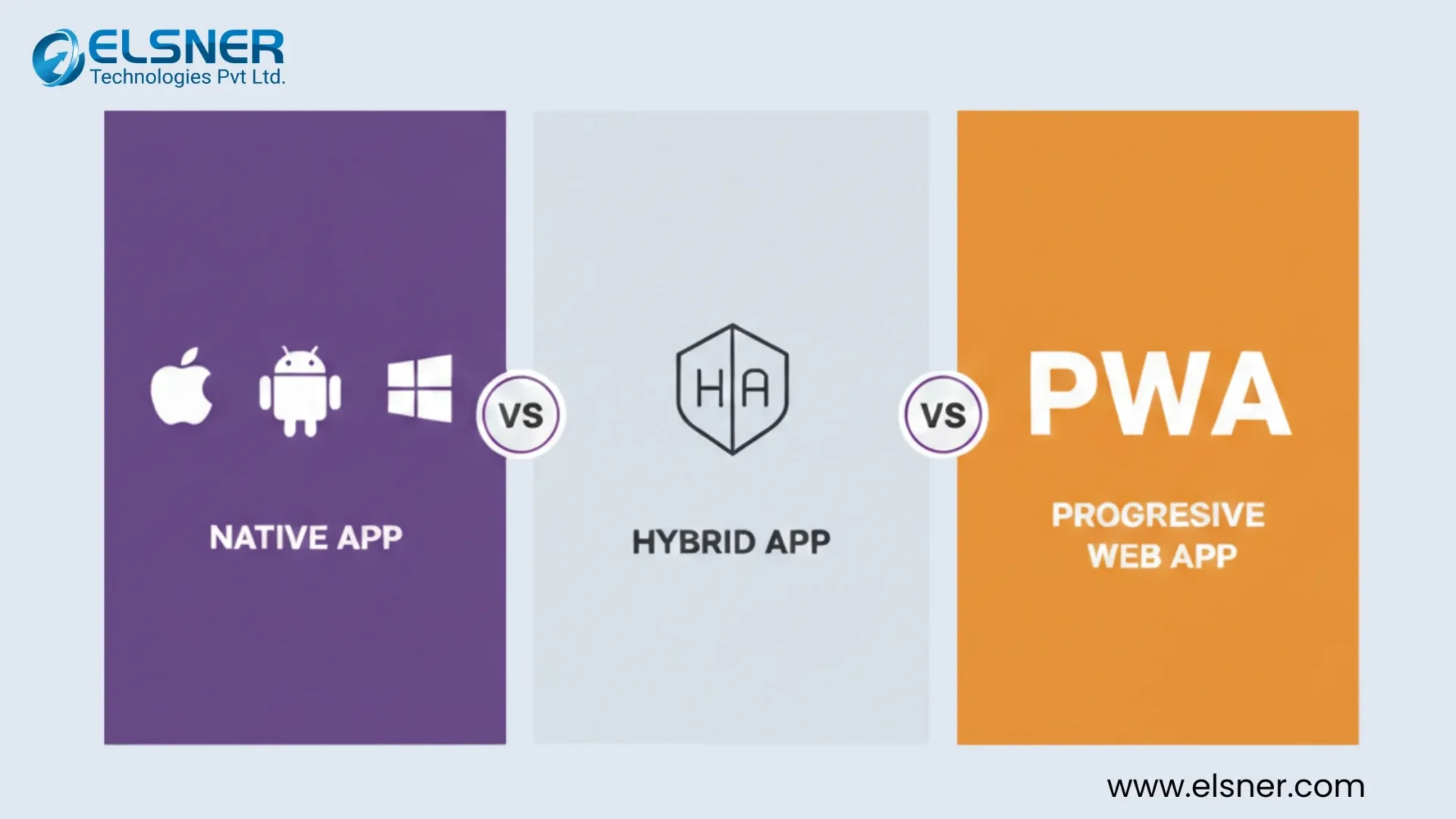
Still unsure which app approach is right for your business? Understand the real difference between hybrid, native, and PWA apps, including cost, performance, and scalability before you decide.
Benefits of Hiring a Hybrid App Development Company
The shift toward hybrid in 2026 goes well beyond cost savings. The approach changes how product delivery works at every stage, from the first sprint through long-term maintenance.
Faster route to market
A single shared codebase means the team is not divided across two parallel builds. Products ship sooner. In markets where launch timing shapes who gets remembered and who catches up, that head start carries real weight.
Lower total project cost
One team, one testing cycle, one deployment operation. Post-launch updates cost less as well because one push reaches both platforms at the same time. The financial benefit compounds across the life of the product.
Maintenance that stays manageable
Bug fixes and new features apply to all platforms in a single operation. As the product grows in complexity and user volume, one codebase is meaningfully easier to manage than two diverging ones.
Clean scalability
React Native and Flutter apps are built to expand. More users, more features, more platform targets. None of it requires discarding what already works and rebuilding from the beginning.
Why Choose Elsner?
Choosing the right development partner is one of the most consequential decisions a product team makes. The company you select shapes the timeline, the architecture, the quality of what ships, and ultimately whether the product holds up in production. Here is why Elsner consistently stands out for businesses that need more than a vendor they need a partner that takes ownership.
20+ Years of Proven Delivery.
Elsner has been building digital products since 2005. That is nearly two decades of navigating platform shifts, evolving frameworks, and client requirements that change mid-project. The experience is not theoretical it is operational. They know where projects go wrong before they do. Therefore, they build their delivery process around preventing those outcomes rather than reacting to them.
9,500+ Delivered Projects Across Key Industries.
The portfolio covers healthcare, retail, fintech, and e-commerce at meaningful scale. These are not showcase projects built for awards. They are production applications used by real customers, maintained over time, and updated as products mature. That body of work is evidence of delivery depth that most agencies simply cannot match.
A Team of 250+ Specialists.
Elsner’s development bench covers the full stack required for complex hybrid builds React Native engineers, Flutter specialists, backend architects, QA leads, and UX designers. That breadth means projects do not stall when a specialization gap appears. The right expertise is already on the team, ready to step in.
True Ownership Through the Full Build Cycle.
Most agencies deliver a build and hand it back. Elsner’s model is different. They take responsibility for the outcome, not just the output. When complications arise mid-project scope shifts, integration issues, performance problems they work through them. This way, the product that ships is one that holds up in production rather than requiring expensive rework within months of launch.
Cost-Effective Without Sacrificing Quality.
Elsner offers competitive pricing for a team of their depth and track record. For businesses that need enterprise-grade delivery without enterprise-agency billing, that combination is rare. The value is not in finding the cheapest build it is in getting a product that performs reliably and does not require costly remediation after launch.
Cross-Industry Versatility.
Whether you are building a patient-facing healthcare app, a retail platform with complex inventory logic, a fintech product with strict compliance requirements, or an e-commerce experience designed to perform at scale, Elsner has delivered comparable projects before. That cross-sector experience means fewer first-time mistakes and a development team that already understands the constraints your industry operates under.
Elsner at a Glance
| Attribute | Detail |
| Years in Business | 20+ years (since 2005) |
| Projects Delivered | 9,500+ |
| Team Size | 250+ developers |
| Core Tech Stack | React Native, Flutter, Ionic, Swift, Kotlin |
| Industries Served | Healthcare, Retail, Fintech, E-commerce |
| Location | USA (Global Delivery) |
Final Thoughts
The hybrid app development companies covered in this list represent the real range of what the US market offers in 2026. Some are built for long, complex enterprise engagements. Others are structured specifically for founders who need speed and cost control above everything else. The right match depends on your product stage, your budget, and the level of complexity you are walking into.
What every company on this list shares is a track record with the core problem: building a product that works reliably across every major platform without doubling the budget or the timeline. Getting that right takes sound framework decisions early on, the right architectural choices before a line of code is written, and enough project history to know where things go sideways before they do.
At Elsner, that experience is the foundation of every project we take on. Over 19 years and more than 9,500 delivered projects across healthcare, retail, fintech, and e-commerce, our team of 250-plus developers has built cross-platform products that hold up in production well beyond the launch window. We take ownership of the build from day one. When complications arise mid-project, we work through them. We do not hand the problem back.
Browse our hybrid app development services to see how we approach cross-platform builds from the ground up. Our mobile app development portfolio covers full delivery cycles across product stages and industries. If you are ready to build something that ships on schedule and holds up after launch, the right place to start that conversation is with Elsner.
Frequently Asked Questions (FAQs)
1. How much does hybrid app development cost in the USA?
The range runs from around $30,000 for a basic build to $150,000 or more for advanced products. Feature scope, design requirements, backend complexity, and agency experience level all move that number. Arriving at a first conversation with a well-defined scope brief will always produce a more useful quote than an open-ended discussion about possibilities.
2. How long does it take to build a hybrid app?
A straightforward hybrid mobile app typically ships in three to four months from kickoff. More complex builds with custom features, multiple integrations, and enterprise security requirements tend to run six to twelve months. A clear scope and a team with directly relevant experience are the two things that keep that estimate honest throughout the project.
3. What is the best framework for hybrid app development in 2026?
React Native app development suits products that need broad ecosystem support and teams already comfortable working in JavaScript. Flutter is the stronger pick when consistent visual output across every device is a firm requirement. Ionic suits web-first teams who want to extend to mobile without changing their entire technology foundation. The best framework is always the one matched to your specific product requirements rather than to whatever is generating the most coverage at a given moment.
4. How do I hire hybrid app developers in the USA?
Start with a defined scope and a realistic budget ceiling. From there, evaluate agencies on the quality of their live portfolio, the substance of verified client reviews, and how confidently they discuss multiple frameworks. A discovery call and a request for case studies from your specific sector will tell you far more than any agency website. Clutch and GoodFirms are good starting points for building a verified shortlist of hybrid app development companies in the USA before you begin direct conversations.
5. What is the difference between hybrid and native apps?
Native apps are built separately for each platform. Swift handles iOS, Kotlin handles Android. That means two codebases, two teams, and two ongoing maintenance tracks. Hybrid apps run on a single codebase across both. Native development holds a clear performance edge in graphics-intensive scenarios like gaming and augmented reality. For the wide majority of business applications, the performance difference is small enough to be irrelevant. The cost difference and timeline difference are anything but small.
6. Which industries benefit most from hybrid app development?
Healthcare, retail, fintech, education, and logistics get consistent returns from hybrid app development. These sectors share a common set of requirements: wide device coverage, frequent iteration, and predictable costs. Beyond those five, any organization that needs a serious mobile presence on both major platforms without the budget to fund parallel native builds is a natural fit for the hybrid approach.