
- What is Snowflake?
- Storage and compute work independently.
- Multi-cloud by design.
- Handles any data type.
- How Snowflake Works?
- Storage Layer
- Compute Layer
- Cloud Services Layer
- Key Features That Make Snowflake Stand Out
- Multi-Cloud Support
- Automatic Performance Optimization
- Secure Data Sharing
- Time Travel and Data Recovery
- AI-Ready Architecture
- How Snowflake Is Revolutionizing Data Management?
- True Cloud-Native Design
- Modern Collaboration
- One Platform for Everything
- Built-In AI and ML
- Getting Started with Snowflake
- Sign Up for an Account
- Learn the Interface
- Create a Virtual Warehouse
- Build Database Structure
- Load Data
- Start Querying
- Scale Your Business with Snowflake
- Cost Optimization and Best Practices
- Right-Size Warehouses
- Enable Auto-Suspend and Auto-Resume
- Avoid Unnecessary Data Copies
- Control Access Properly
- FAQs
- Is Snowflake a database, warehouse, or platform?
- What does separating storage and compute actually mean?
- How long does implementation typically take?
- What about getting locked into Snowflake?
Businesses today are drowning in data. Internal operations generate logs. Marketing campaigns produce metrics. Sales systems track conversions. Product teams monitor user behavior.
The volume is staggering. And it keeps growing.
Most companies struggle with basic questions: Where should all this data live? How can teams access it quickly? Traditional systems lock storage and computing together. Need more disk space? Better upgrade your processors, too, even if processing power isn’t the issue. This bundling creates waste and limits flexibility.
Performance slows down. Costs spiral. Teams wait hours for queries to finish. That’s where Snowflake becomes useful.
What is Snowflake?
Snowflake represents a cloud data platform. It’s built for modern enterprises. You don’t need to maintain servers, invest in hardware, or deal with complicated infrastructure. Snowflake handles all of that for you.
Companies load their data into Snowflake and start analyzing immediately. The Snowflake platform handles the technical complexity behind the scenes. Here’s what makes it different:
Storage and compute work independently.
Most traditional databases lock these together. Snowflake separates them. This means unlimited data storage while controlling processing costs. Need more power for a big analysis? Scale up. Finished with the task? Scale back down.
Multi-cloud by design.
Snowflake runs on AWS, Google Cloud, and Microsoft Azure. Organizations pick their preferred provider. Some even use multiple clouds simultaneously.
Handles any data type.
Structured tables from databases. Semi-structured formats like JSON or Parquet. Even unstructured content. Snowflake processes it all.
The platform charges only for what gets used. No wasted capacity. No paying for idle resources.
How Snowflake Works?
The architecture relies on three distinct layers.
Storage Layer
All data lives here in a compressed, optimized format. Snowflake automatically handles the organization. You don’t need to handle indexing, manage partitions, or schedule maintenance windows. Snowflake takes care of it automatically.
Load the data. Snowflake takes care of everything else.
Compute Layer
This is where the work happens. Snowflake uses “virtual warehouses” to process queries and run workloads. Each warehouse functions as an independent compute engine.
Multiple teams can run separate warehouses simultaneously. One team’s heavy analysis won’t slow down another team’s dashboard. Resources scale independently based on actual needs.
Cloud Services Layer
The brain of the operation. This layer manages authentication, security, metadata, and query optimization. It coordinates everything to keep the platform running smoothly.
Users see a clean interface. Snowflake handles the complexity underneath.
Key Features That Make Snowflake Stand Out
Multi-Cloud Support
One platform, three major clouds. Run everything on AWS, Azure, or Google Cloud. Switch between them if business needs change. The experience stays consistent.
Automatic Performance Optimization
Forget about manual tuning. Snowflake handles indexing, caching, and query optimization automatically. Database administrators don’t spend weeks tweaking configurations.
Secure Data Sharing
Share live data without copying files or exporting datasets. Partners see real-time information. Everyone works with the same accurate data. No version control headaches.
Time Travel and Data Recovery
Made a mistake? Snowflake keeps historical versions of data. Roll back tables or entire databases. This feature proves invaluable for audits, troubleshooting, and development testing.
AI-Ready Architecture
Snowflake Cortex brings AI capabilities directly into the platform. Run natural language queries. Build embeddings. Host models. Generate insights. Everything stays inside Snowflake’s secure environment.
No need to export data to external ML platforms.
How Snowflake Is Revolutionizing Data Management?
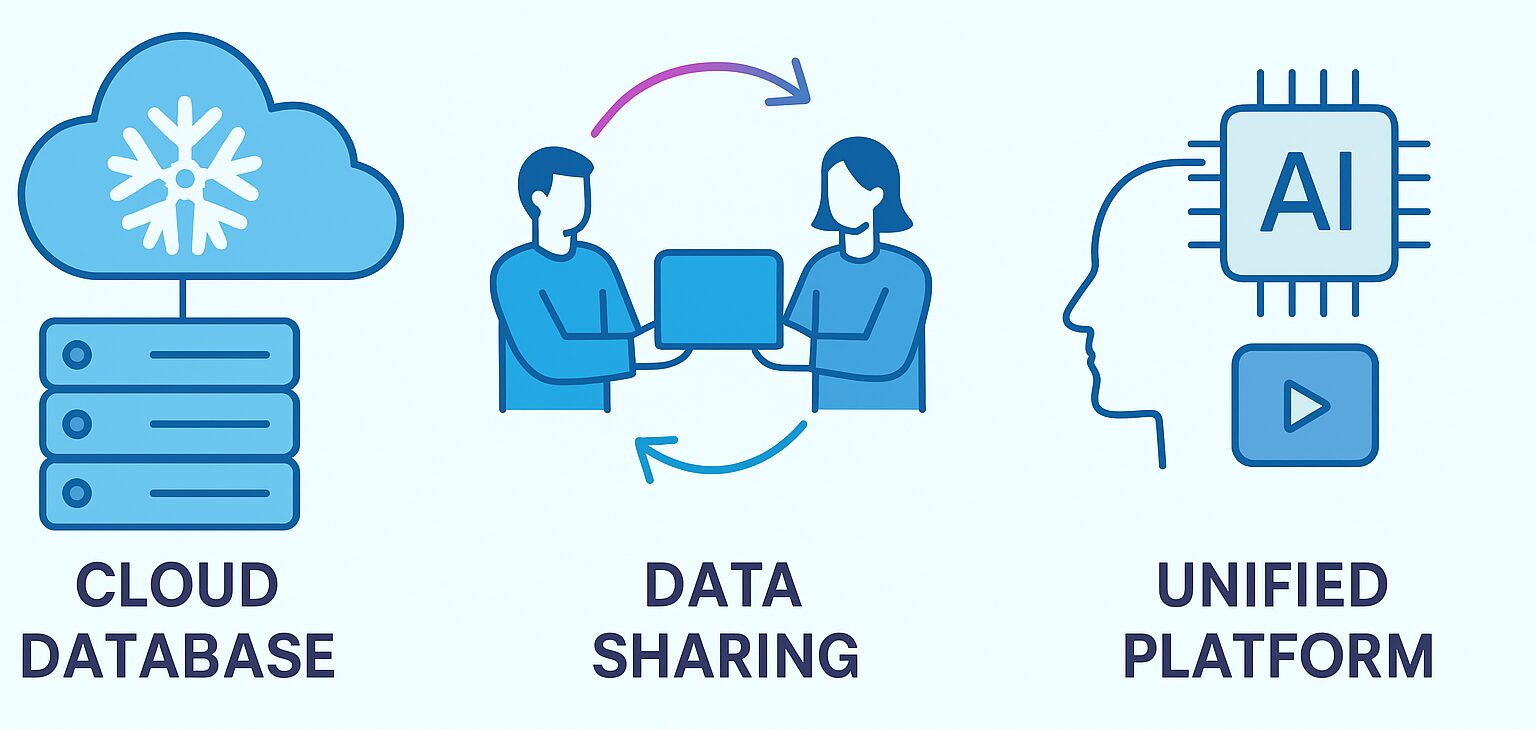
True Cloud-Native Design
Snowflake is built for the cloud from day one — not a legacy database patched with cloud features. Its architecture lets storage and compute scale automatically as data increases. No hardware upgrades. No capacity planning headaches. As your business grows, Snowflake grows effortlessly with it.
Modern Collaboration
Teams today need to move faster, and Snowflake enables that. Instead of emailing outdated CSV files or managing multiple versions of the same document, teams share live, real-time data instantly.
Everyone works on the same dataset — helping businesses, especially ecommerce brands using platforms like Shopify, Magento, and WooCommerce make faster, data-backed decisions.
One Platform for Everything
Snowflake supports structured databases, semi-structured formats such as JSON, and even streaming data — all within one platform.
This unified ecosystem breaks down data silos and helps companies finally achieve the “single source of truth” they’ve always wanted.
For ecommerce stores on Shopify, Magento, or WooCommerce, this means inventory analytics, sales reports, customer behavior insights, and marketing KPIs all stay in sync.
Built-In AI and ML
With Snowflake Cortex, businesses no longer need separate infrastructure for AI and machine learning. Models run directly where the data lives, enabling real-time recommendations, forecasting, and intelligent automation.
For online stores, this can mean AI-driven personalization, smart product recommendations, and predictive sales insights — all integrated seamlessly with platforms like Shopify, Magento, and WooCommerce.
Getting Started with Snowflake
The onboarding process is surprisingly straightforward. Even teams new to cloud data systems can get productive quickly.
Sign Up for an Account
Start with a free trial on the Snowflake website. Choose AWS, Azure, or Google Cloud during registration. The setup takes minutes.
Learn the Interface
The interface is clean and intuitive. Three main areas handle most work:
- Worksheets for running SQL queries
- Data section for managing databases and tables
- Admin panel for roles, users, and warehouse configuration
Create a Virtual Warehouse
This is the compute engine. Set one up with a few clicks. Pick a size based on workload needs. Scale anytime. Snowflake only charges when the warehouse actively runs queries.
Build Database Structure
Create databases and organize them with schemas. This structure helps manage tables, views, and other objects logically.
Load Data
Multiple loading options exist:
- Upload local files directly
- Connect to cloud storage (S3, Azure Blob, GCS)
- Use staging areas for bulk imports
Snowflake accepts CSV, JSON, Parquet, and many other formats. Minimal configuration required.
Start Querying
Once the data loads, start analyzing immediately. Write SQL queries and get results. Snowflake optimizes everything automatically in the background.
Scale Your Business with Snowflake
Take your business to the next level with a Snowflake data platform designed for speed, security, and growth. Our team builds scalable solutions tailored to your needs.
Cost Optimization and Best Practices
Smart practices keep Snowflake efficient and budget-friendly.
Right-Size Warehouses
Match warehouse size to actual workload requirements. Start small. Scale up only when performance demands it. Many teams waste money running oversized warehouses for simple tasks.
Enable Auto-Suspend and Auto-Resume
Critical for cost control. Warehouses stop running during idle periods. They restart automatically when queries arrive. This prevents paying for unused compute time.
Avoid Unnecessary Data Copies
Use zero-copy cloning and data sharing features. These eliminate duplicate datasets while giving teams the access they need. Less storage means lower costs.
Control Access Properly
Grant minimum necessary permissions. This prevents accidental resource waste from users running unoptimized queries or spinning up large warehouses unnecessarily.
FAQs
Is Snowflake a database, warehouse, or platform?
Actually, all three. It functions as a relational database engine, serves as a data warehouse, and operates as a unified analytics platform. Built-in support includes SQL, semi-structured data, and data sharing capabilities.
What does separating storage and compute actually mean?
Storage holds all the data. Compute (virtual warehouses) processes queries. These scales scale independently. Store terabytes of data while running a small warehouse for light queries. Or scale compute up massively for a big analysis without changing storage.
Pay only for what gets used. Multiple teams query simultaneously without performance interference.
How long does implementation typically take?
Small projects can launch in a few days. Enterprise migrations with complex data pipelines might need several months. The platform itself sets up quickly—data migration takes time.
What about getting locked into Snowflake?
Data exports easily. Standard SQL means queries work elsewhere with minimal changes. Some features, like zero-copy cloning, are proprietary, though.