- Understanding Your Three Main Options: Hybrid Vs Native Vs PWA
- Native App Development
- Hybrid App Development
- Progressive Web App Development
- Hybrid vs Native vs PWA: What Actually Matters?
- Performance
- User Experience
- Development Cost and Timeline
- Access to Device Features
- Working Offline
- Security
- 3 Mobile App Development Approaches: Hybrid vs Native vs PWA Comparison 2026
- Breaking Down Real Pros and Cons
- Native Apps
- Hybrid Apps
- PWAs
- Matching the Right Approach to Your Business
- Startups and MVPs
- Ecommerce and Retail
- Enterprise and Financial Services
- Content Platforms and Media
- Graphics-Heavy Apps or Hardware Integration
- What You’ll Actually Spend in 2026?
- Native Development Costs
- Hybrid Development Costs
- PWA Development Costs
- What Drives Costs Up or Down
- Cost Of Mobile App Development 2026
- Decision Factors That Actually Matter
- Budget Reality Check
- Timeline Pressure
- Performance Requirements
- Your Audience’s Devices
- Offline Functionality
- Growth Plans
- Team Capabilities
- Why Hybrid Development Keeps Winning in 2026?
- Users Expect Cross-Platform Consistency
- Speed Beats Perfection
- Economics Make Sense
- Frameworks Matured
- Scaling Gets Easier
- Making Your Decision
- FAQs
- Which app development approach is best in 2026?
- Is hybrid app development suitable for startups?
- What is the cost difference between native and hybrid apps in 2026?
- PWA vs Native for ecommerce: What’s good for ecommerce businesses?
- Can hybrid apps deliver native-level performance?
- How long does it take to build a hybrid app?
- Do PWAs work offline?
- When should businesses choose native app development?
- Is PWA better than mobile apps in 2026?
Building a mobile app in 2026 isn’t what it used to be. Users expect AI features, seamless cross-device experiences, and instant loading. Zero patience for lag.
Pick the wrong mobile app development approach, and it’ll cost you not just money. Time to market suffers. Scaling becomes a nightmare. Maintenance drains resources better spent on features.
But there’s good news. Three solid options exist, each with distinct strengths:
- Native apps deliver maximum performance
- Hybrid app development builds once, deploys everywhere
- PWAs work across platforms without app stores
This guide breaks down hybrid vs native vs PWA in practical terms. What each mobile app development approach costs in 2026, where they excel, and how to choose for your situation.
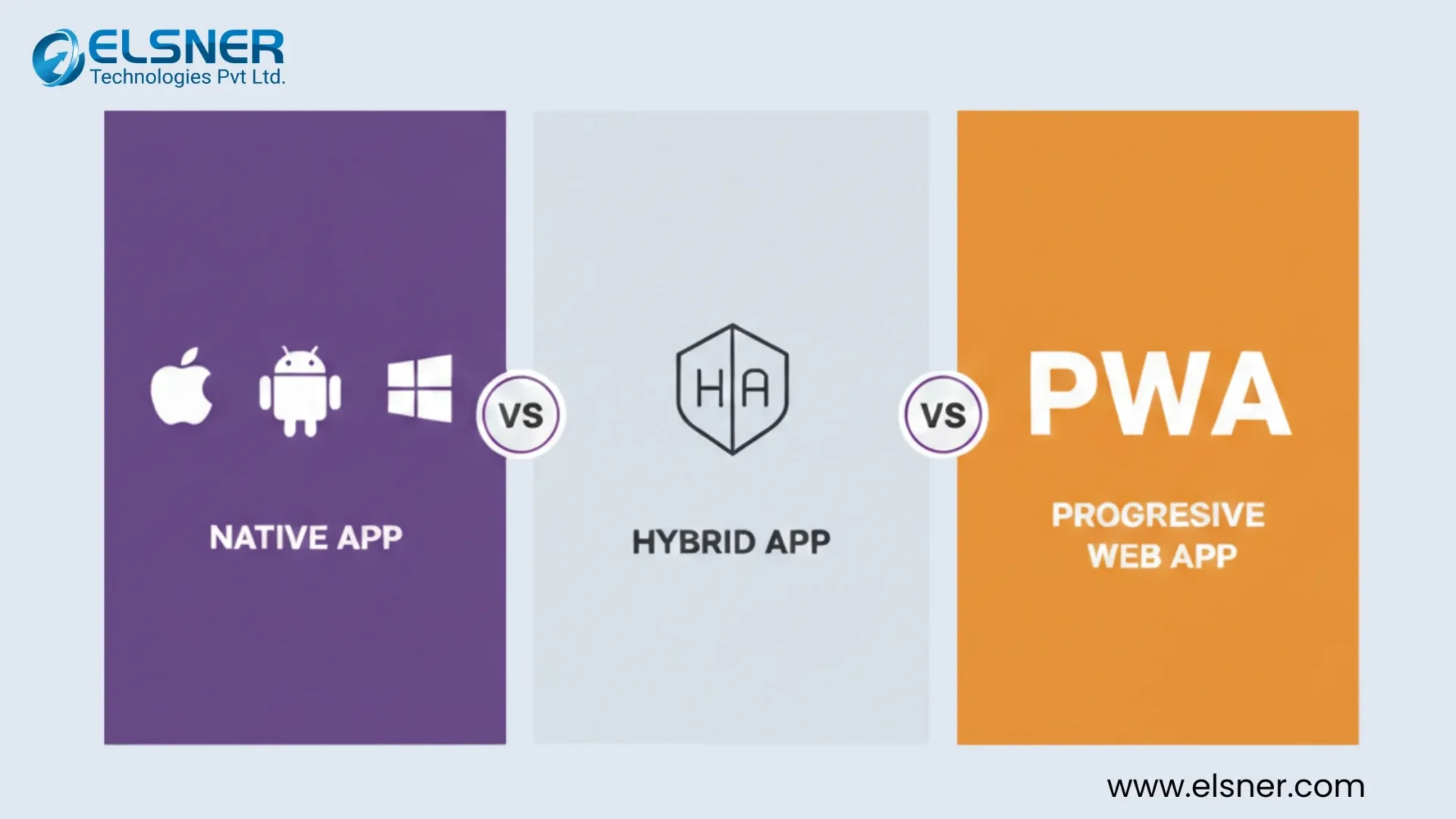
Understanding Your Three Main Options: Hybrid Vs Native Vs PWA
Native App Development
Native apps are platform-specific. One version for iOS, another for Android. Completely separate.
iOS apps use Swift. Android apps use Kotlin. Each leverages platform-specific tools and frameworks. That’s why they feel so smooth they’re designed for the exact hardware and OS they run on.
Businesses that prioritize performance, security, and seamless Apple ecosystem integration often invest in dedicated iOS app development services to ensure their applications meet platform-specific standards and user expectations.
Full device access comes standard. Camera, GPS, fingerprint sensors, and AR features. If the phone can do it, native apps can tap into it immediately.
The cost? Building two apps. Two codebases. Often two teams. Updates happen twice. Development costs and timelines roughly double.
Hybrid App Development
You need to write the code only once. And then you can deploy everywhere. That’s what hybrid app development services support.
Frameworks like React Native, Flutter, and Ionic power hybrid development. Modern hybrid frameworks have matured significantly. Flutter compiles to native code. React Native uses actual native components.
For most business apps, users can’t tell the difference.
Performance lags in edge cases complex 3D graphics, heavy real-time processing, intricate animations. But typical business applications? Hybrid apps perform beautifully while cutting development time in half.
Progressive Web App Development
PWAs blur the line between websites and apps. They look and feel like apps, installed on home screens, but they’re advanced websites.
Service workers and caching enable offline functionality. Fast loading. Push notifications. The experience rivals traditional apps without requiring app store downloads.
Major companies use PWAs. Twitter Lite. Starbucks ordering. Pinterest. They update automatically, work across every platform with one codebase, and use minimal device storage.
The limitation? Hardware access. Less than native or hybrid apps. Particularly noticeable on iOS, where Apple restricts PWA capabilities more than Android. Deep sensor integration or background processing? PWAs might not cut it.
Hybrid vs Native vs PWA: What Actually Matters?
Let’s cut through the marketing speak.
Performance
Native wins on raw speed. No contest. Code executes directly on hardware with zero intermediate layers.
That said, hybrid apps have closed this gap dramatically. Unless building a gaming app or graphics-intensive software, most users won’t notice performance differences. React Native and Flutter render fast enough for business applications, productivity tools, and most consumer apps.
PWAs depend on browser performance and network speed. They’re improving, but still trail in complex operations or heavy data processing.
User Experience
Native apps feel most polished. They follow platform design guidelines perfectly. iOS apps look like iOS apps. Android apps match Android patterns. Instant familiarity.
Hybrid apps can achieve excellent UX with extra work. Customizing interfaces for each platform delivers that native feel. Default cross-platform components often feel slightly off on both platforms.
PWAs provide consistent experiences everywhere. Actually, an advantage for brand consistency. The downside? Less integration with the OS. Users may trust them less without an official app store presence.
Development Cost and Timeline
Money talks.
Native development costs the most because it’s two separate apps. Different languages, tools, and often different teams. Everything happens twice.
Hybrid services typically cost 40-60% less than going native for both platforms. One codebase means faster iterations and easier maintenance. Updates roll out everywhere at once.
PWAs usually require the smallest upfront investment. Building a website with app-like features using familiar web skills. No app store submissions. No platform-specific builds.
Access to Device Features
Native apps
Everything. Camera, microphone, Bluetooth, NFC, biometric sensors, AR frameworks, and background processing. New capabilities from Apple or Google? Immediate access.
Hybrid apps
Most device features through plugins. Mature ecosystems cover geolocation, camera, and local storage. Bleeding-edge features might require custom native modules, but that’s rare now.
PWAs
Most constrained. Android PWAs handle quite a bit. iOS PWAs hit Apple’s restrictions hard. Limited push notifications. No background sync. Restricted sensors. Deep hardware integration? PWAs won’t work.
Working Offline
Native and hybrid apps excel offline. Store data locally, let users work without internet, sync when connectivity returns.
PWAs can work offline via service workers. But implementing robust offline functionality for data-heavy apps gets complex. The experience might not match native apps, especially with frequent data updates.
Security
Custom mobile app development benefits from platform-specific security features and app store review. Banks and healthcare often mandate native development for these controls.
Hybrid apps can be equally secure when built properly. The abstraction layer requires careful attention to data movement between native containers and hybrid code. Plenty of secure hybrid apps serve millions of users.
PWAs inherit browser security models quite strong for many use cases. Apps requiring hardware-level security or handling extremely sensitive data might need native’s additional controls.
3 Mobile App Development Approaches: Hybrid vs Native vs PWA Comparison 2026
|
Criteria |
Native | Hybrid |
PWA |
|
Performance |
Excellent | Very good |
Good |
|
Development Cost |
High | Medium |
Low |
|
Time to Market |
Slower | Faster |
Fastest |
|
User Experience |
Platform native | Near native |
App like web |
|
Device Features |
Full access | Good via plugins |
Limited |
|
Maintenance |
Complex | Easier |
Easiest |
|
Offline Capability |
Excellent | Excellent |
Good |
|
App Store |
Required | Required |
Not required |
|
Scalability |
Platform specific | Cross platform |
Universal |
|
Best For |
Performance heavy apps, gaming, AR | Business apps, startups, SaaS | Content platforms, ecommerce |
Breaking Down Real Pros and Cons
Native Apps
Strengths:
- Unmatched speed and smooth animations
- Full device feature control with custom mobile app development, including new capabilities immediately
- Perfect platform-native UX following design patterns exactly
- Most robust security for financial, healthcare, and enterprise apps
Weaknesses:
- Costs add up fast with separate iOS and Android codebases
- Need different developers with Swift and Kotlin expertise
- Extended time to market, building two apps
Hybrid Apps
Strengths:
- One codebase deploys everywhere cuts development and maintenance significantly
- Faster development with changes applying across platforms automatically
- Budget drops roughly 50% versus separate native apps
- Updates and fixes roll out simultaneously to all users
Weaknesses:
- Slight performance lag for complex animations or heavy computation
- Dependency on framework quality and plugin ecosystem
- Platform-specific customization still needed for a polished UX
PWAs
Strengths:
- Skip app store approval instant updates, no review delays
- Search engines index content, driving organic traffic
- Low development costs using standard web technologies
- Identical experiences across all devices
Weaknesses:
- Limited device feature access, especially advanced sensors
- iOS restrictions cut functionality more than Android
- Users may perceive them as less trustworthy without an app store presence
Matching the Right Approach to Your Business
Theory is fine. What should you actually pick?
Startups and MVPs
Go with: Hybrid or PWA
Speed matters when validating ideas. Hybrid app development services get you to market faster with less cash burn. It is the best app development approach for startups to test concepts, gather feedback, and iterate quickly without dual codebases.
PWAs work better if you don’t need deep device integration. Launch fast, update instantly, spend budget on features rather than app store compliance.
Ecommerce and Retail
Go with: PWA or Hybrid
Ecommerce thrives with PWAs. Google indexes products. Users discover through search. Install without leaving the browser. Instant updates to pricing or inventory without app approval.
Need loyalty programs or offline browsing? Cross-platform app development provides those capabilities at a reasonable cost.
Enterprise and Financial Services
Go with: Native
Applications like banking apps, healthcare portals, and other regulated platforms are a core part of enterprise mobile app development and usually need native builds. Security requirements demand it. Performance expectations are high. Compliance often mandates platform-specific protections like biometric authentication and hardware encryption.
Higher investment pays off in user trust and regulatory compliance.
Content Platforms and Media
Go with: PWA
News sites, blogs, educational platforms, and media companies benefit hugely from PWAs. Content becomes discoverable through search, driving organic traffic. App-like reading experience without app store downloads.Publishers update content instantly, reaching readers across every device with minimal overhead.
Graphics-Heavy Apps or Hardware Integration
Go with: Native
Gaming? AR experiences? Professional creative tools? Native. Period.Performance requirements and hardware access demands leave no alternative. Gaming, augmented reality, advanced image processing, and intensive 3D graphics all require native’s raw power.At Elsner, we provide PWA, native and hybrid mobile app development services.
What You’ll Actually Spend in 2026?
Real numbers for budget planning.
Native Development Costs
Building for both iOS and Android:
- Simple app: $80,000 – $150,000
- Medium complexity: $150,000 – $300,000
- Complex enterprise: $300,000 – $500,000+
Hybrid Development Costs
Single codebase across platforms:
- Simple app: $40,000 – $80,000
- Medium complexity: $80,000 – $150,000
- Complex enterprise: $150,000 – $250,000
PWA Development Costs
Web-based approach:
- Simple PWA: $25,000 – $50,000
- Medium complexity: $50,000 – $100,000
- Complex PWA: $100,000 – $180,000
What Drives Costs Up or Down
Several variables affect final costs:
- App complexity: More screens, features, workflows = more development hours
- Integrations: Payment processors, analytics, CRM systems, and custom APIs add complexity
- AI features: ML, personalization, intelligent automation require specialized expertise
- Security needs: End-to-end encryption, compliance certifications increase effort
- Ongoing support: Plan 15-20% of initial costs annually for updates and compatibility.
Cost Of Mobile App Development 2026
|
App Type |
Simple | Medium |
Complex |
|
Native |
80k to 150k | 150k to 300k |
300k plus |
|
Hybrid |
40k to 80k | 80k to 150k |
150k to 250k |
|
PWA |
25k to 50k | 50k to 100k | 100k to 180k |
Decision Factors That Actually Matter
Budget Reality Check
What can you afford upfront and ongoing? Don’t just think about initial development. Factor in maintenance, updates, and scaling costs over 2-3 years when considering hybrid vs. PWA vs native apps.
Hybrid and PWA offer substantial savings if budget constraints force feature compromises with native.
Timeline Pressure
How quickly must you reach users? Sometimes being first matters more than perfect performance. Hybrid mobile apps cut timelines 30-50% versus separate native apps.
Performance Requirements
Be honest about actual needs. Most business applications don’t require maximum performance. Productivity tools, ecommerce, and content delivery hybrid frameworks deliver acceptable speed.
Save native for situations where performance genuinely matters. Gaming. Real-time data processing.
Your Audience’s Devices
Know where users actually are. 80% on iOS? Maybe build native for iPhone and PWA for others. Even split? Hybrid makes sense.
Don’t guess. Check analytics or run surveys.
Offline Functionality
Will users need the app with poor connectivity? Field service, travel tools, and productivity software often require robust offline capabilities. Native and hybrid handle this better than PWAs, especially for complex data sync.
Growth Plans
Think beyond current needs. Planning to add a web version later? Tablets? Desktop? Hybrid makes future platform additions easier and cheaper.
Native requires significant investment for each new platform.
Team Capabilities
What skills does your team have? Can you hire native iOS and Android developers? Do you already have JavaScript expertise that can translate into React Native development?
If you are planning to offer Android App Development Services, your team’s existing experience in Java, Kotlin, or cross-platform frameworks will play a key role. Strong in-house capabilities can influence whether you go fully native or choose a hybrid approach.
Your internal expertise and hiring bandwidth may naturally push you toward one approach, especially if timelines or budget constraints are tight.
Why Hybrid Development Keeps Winning in 2026?
Walk into most development shops today, and hybrid is the default recommendation. Here’s why.
Users Expect Cross-Platform Consistency
People switch devices constantly. Start on the phone during the commute. Continue on the tablet at home. Finish on the laptop at work.
Hybrid development makes delivering seamless experiences realistic without massive budgets.
Speed Beats Perfection
Markets move fast. Waiting six extra months to build separate native apps can mean losing first-mover advantage.
Hybrid gets you to market while the window is open. Validate ideas, capture users, and generate revenue while competitors are still building.
Economics Make Sense
Cutting costs by 40-60% frees budget for other priorities. Marketing. Customer acquisition. Features. Better design.
For most apps, the performance difference doesn’t justify doubling the budget.
Frameworks Matured
React Native and Flutter aren’t experimental. Facebook runs Instagram on React Native. Google uses Flutter for Google Ads. Alibaba built its app with it.
Production-proven platforms handling hundreds of millions of users.
Scaling Gets Easier
Start with mobile. Add web later. Maybe a desktop eventually. With a hybrid architecture, each expansion requires far less work than rebuilding from scratch.
Shared codebase compounds development efficiency over time.
Making Your Decision
There’s no universal answer to hybrid vs native vs PWA. Each excels in specific situations.
Native app development delivers maximum performance and complete device access. Choose when those factors genuinely matter. Banking needs that security. Gaming needs that speed. A complex enterprise needs that hardware integration.
Hybrid app development hits a sweet spot for many businesses. Good performance, reasonable costs, fast time to market. Frameworks have matured where most users can’t tell the difference from native. When to choose a hybrid app? For typical business apps, startups testing ideas, companies with budget constraints hybrid makes sense.
Progressive web app development offers the lowest barrier. Skip app stores. Get search visibility. Deploy updates instantly. Perfect for content platforms and ecommerce where discoverability matters more than deep device integration.
The decision requires honest assessment. What’s your real budget? What timeline can you hit? How much performance do you genuinely need? Where are your users and what devices do they prefer?
FAQs
Which app development approach is best in 2026?
Depends entirely on your situation. Hybrid works well for most businesses, balancing cost and functionality. Native makes sense for maximum performance or complex hardware features. PWAs excel for content delivery and ecommerce where search visibility matters.
Is hybrid app development suitable for startups?
Absolutely. Hybrid reduces costs 40-60% and gets you to market 30-50% faster. For startups testing product-market fit, efficiency matters more than marginal performance differences.
What is the cost difference between native and hybrid apps in 2026?
Native typically runs 1.5-2x more expensive. A medium complexity native app for both platforms might cost $150,000-$300,000, while an equivalent hybrid runs $80,000-$150,000. Savings come from one codebase instead of two, plus simpler maintenance.
PWA vs Native for ecommerce: What’s good for ecommerce businesses?
PWAs work great for ecommerce in many cases. Search engines index products. Users install without app store friction. Instant updates to prices and inventory. For advanced features like robust offline shopping or complex loyalty programs, hybrid/native might serve better.
Can hybrid apps deliver native-level performance?
For most business apps, yes. React Native and Flutter perform well enough that users can’t tell the difference. Gaps appear mainly in edge cases heavy 3D graphics, complex animations, intensive real-time processing.
How long does it take to build a hybrid app?
Simple hybrid apps: 2-3 months. Medium complexity: 3-6 months. Complex enterprise: 6-9 months. These timelines beat native by 30-50% because shared codebase eliminates duplicate work.
Do PWAs work offline?
Yes, through service workers and caching. But implementing robust offline for data-heavy apps gets complex. Native and hybrid generally handle offline scenarios more smoothly, especially with frequent data sync.
When should businesses choose native app development?
When your app demands maximum performance, complete hardware access, or platform-specific features hybrid can’t reach. Financial services often require it for security. Games need graphics performance. AR applications require hardware integration.
Is PWA better than mobile apps in 2026?
They serve different needs rather than competing directly. PWAs excel at content delivery, instant accessibility, and search visibility. Native and hybrid provide better performance, deeper hardware integration, and richer offline capabilities. Choose based on specific needs.