- What Are AI Marketing Tools?
- Why Marketers Should Care About AI in 2026?
- What Are the Top Categories of AI Marketing Tools?
- Content Creation & Copywriting
- SEO & Search Optimization
- Social Media & Video Tools
- Automation & Workflow Tools
- Analytics & Performance Marketing
- Design & Creative Tools
- Advertising & Sales AI Tools
- Practical Application: AI Tools for Marketers
- Best AI Marketing Tools for 2026
- 1. HubSpot AI
- 2. Jasper
- 3. Surfer SEO
- 4. Canva AI
- 5. Hootsuite AI
- 6. ChatGPT (Marketing Use)
- 7. Mailchimp AI
- 8. AdCreative.ai
- 9. Pictory
- 10. Zapier AI
- AI Marketing Tools Comparison Table (2026)
- How to Choose the Right AI Tools for Your Business?
- Be clear on what you want to automate.
- Balance budget with real value
- Check how well tools connect to your stack.
- Factor in ease of use, not just features
- Think about growth early
- Future of AI in Marketing
- Conclusion: Stay Ahead with the Right AI Marketing Tools
- FAQs
- Are AI marketing tools suitable for small businesses?
- What’s the difference between AI marketing software and AI marketing platforms?
- Can free AI tools for marketing actually deliver results?
- How does AI help with marketing automation?
- What is marketing automation artificial intelligence, and how does it help businesses?
- What are the best AI marketing tools for small business growth?
- Which is the best LLM AI for business including marketing use cases?
- What are the best AI tools for customer engagement in 2026?
AI in marketing didn’t arrive overnight but 2026 is when it stops being optional.
Campaigns are faster. Content demands are relentless. Audiences expect personalization without feeling watched. And marketers? They’re juggling more channels, data, and tools than ever before. This is where AI marketing automation steps in. Automation isn’t a replacement for creativity, but as a multiplier.
The right AI tools for marketing don’t just save time. They remove friction. They surface insights you’d miss. They let small teams compete with much larger ones.
This guide will highlight:
- The best AI marketing tools for 2026,
- What can these AI marketing tools do for you?
- How to choose what fits your workflow?
This blog can provide the right information if you’re a freelancer, agency, business owner, or just getting started.
What Are AI Marketing Tools?
Marketers can use AI marketing tools to plan and execute marketing campaigns more efficiently. Advanced tools lets you analyze, and optimize campaigns also.
Instead of doing everything manually, these tools:
- Automate repetitive tasks
- Analyze large datasets quickly
- Generate content and creatives
- Optimize ads and campaigns in real time
Modern AI marketing software now covers almost every function—content creation, SEO, social media, email, paid ads, analytics, customer engagement, and even sales.
That’s why AI for marketing automation isn’t about “using more tools.” It’s about using fewer tools that do more work for you.
Why Marketers Should Care About AI in 2026?
Marketing in 2026 isn’t slower. It’s noisier.
Audiences are flooded with content. Algorithms change faster than strategies. And personalization is now expected. This is where AI marketing platforms quietly change the game.
Here’s what artificial intelligence marketing software solves:
- Content overload without burning out teams
- Scaling campaigns across platforms
- Smarter audience targeting and personalization
- Faster decision-making backed by data
For small businesses, AI marketing tools for small business level the playing field. For agencies, they improve margins. For creators, they free up time to focus on ideas instead of execution.
categories helps marketers build a cleaner, more effective AI stack.
What Are the Top Categories of AI Marketing Tools?
AI marketing works best when it supports how marketers already think and work. Not everything needs automation. Not everything needs AI. The goal is to apply intelligence where it reduces friction, not where it adds complexity.
That’s why most AI tools for marketing fall into a few practical categories.
Content Creation & Copywriting
This is where many marketers first experience real value from AI content marketing tools. These tools help generate ideas, drafts, and variations without replacing human judgment.
- Blog posts, emails, ad copy, and landing pages
- Brand-aligned messaging at scale
- The best AI tools for content creation delivers faster content turnaround for small teams
SEO & Search Optimization
SEO-focused AI marketing software helps marketers understand what search engines and users are responding to—before publishing, not after.
- Keyword and SERP analysis
- On-page optimization suggestions
- Search intent alignment for long-term traffic.
Social Media & Video Tools
Staying consistent across platforms is harder than creating content once. These marketing AI tools reduce daily posting pressure.
- Caption writing and scheduling
- Short-form video creation and repurposing
- Performance tracking across channels
Automation & Workflow Tools
This category powers the backbone of AI marketing automation. It’s less visible, but often the most impactful.
- Email campaigns and lead nurturing
- CRM updates and task automation
- Cross-platform workflow connections
Analytics & Performance Marketing
In AI performance marketing, data matters only if it’s usable. These tools focus on insight, not dashboards.
- Campaign performance analysis
- Predictive trends and optimization signals
- Conversion and ROI tracking
Design & Creative Tools
Design-focused AI marketing platforms help non-designers create polished assets. These tools help to speed up campaigns.
- Visuals for ads, social, and presentations
- Brand consistency at scale
- Faster creative testing
Advertising & Sales AI Tools
These tools help campaigns adjust in real time rather than relying on manual tweaks.
- Ad creative testing
- Conversion optimization
- Smarter targeting and bidding
Not every business needs tools from every category. The smartest stacks usually start small and expand only when automation clearly adds value.
Practical Application: AI Tools for Marketers
|
Category |
Purpose |
AI tools for marketers |
|
Content Creation & Copywriting |
Create and scale written content |
Jasper, ChatGPT |
|
SEO & Search Optimization |
Improve rankings and search visibility |
Surfer SEO |
|
Social Media & Video Tools |
Manage content and engagement |
Hootsuite AI, Pictory |
|
Automation & Workflow |
Power AI marketing automation |
HubSpot AI, Zapier AI |
|
Analytics & Performance Marketing |
Optimize campaigns using data |
HubSpot AI, AdCreative.ai |
|
Design & Creative Tools |
Produce visuals quickly |
Canva AI |
|
Advertising & Sales AI Tools |
Improve ad and sales performance | AdCreative.ai, Mailchimp AI |
Best AI Marketing Tools for 2026
Below are 10 AI tools for marketers that stand out for their usability.
1. HubSpot AI
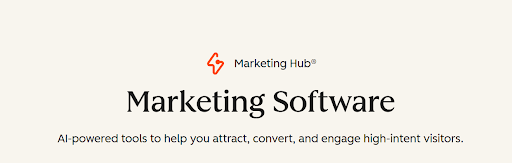
AI-Powered Marketing Software that Multiplies Results | HubSpot
What it does:
It’s an AI marketing platform that blends automation, CRM, and analytics. Its strength lies in connecting data across the funnel, not just running campaigns.
Key features:
- AI email writing and optimization
- Predictive lead scoring
- Campaign performance insights
Best for:
Marketing teams, agencies, growing businesses
Pros:
Powerful ecosystem
Limitations:
Can feel heavy for solo users
2. Jasper
What it does:
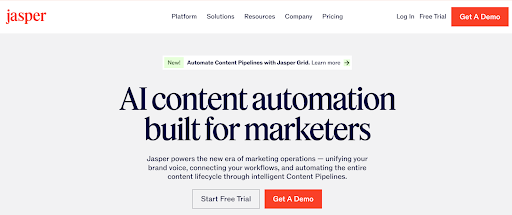
One of the most refined AI content marketing tools available. Jasper works best when content volume is high and brand consistency matters.
Key features:
- Brand voice training
- Long-form content generation
- Campaign-level workflows
Best for:
Content teams, agencies, freelancers
Pros:
Strong writing quality
Limitations:
Requires editing for nuance
3. Surfer SEO
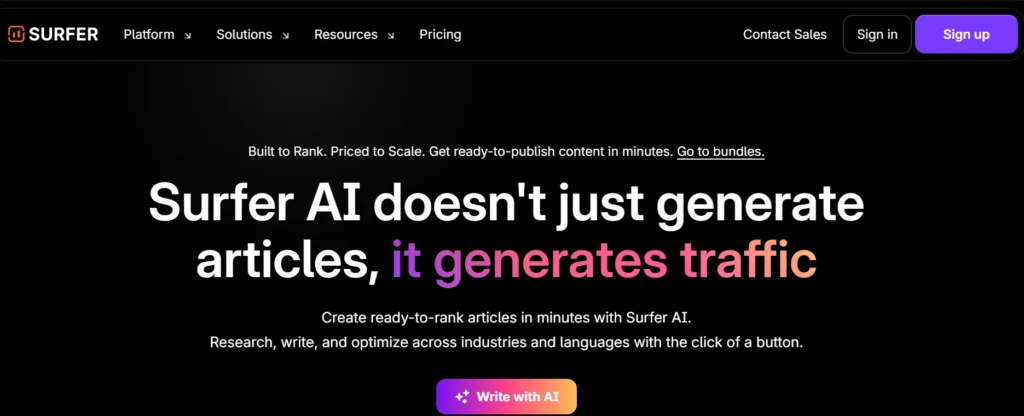
Surfer AI: Click. Edit. Get Traffic.
What it does:
Focused, opinionated, and effective. Surfer doesn’t try to be everything. It helps content rank by aligning with real SERP data.
Key features:
- SERP analysis
- Content scoring
- NLP keyword suggestions
Best for:
SEO specialists, bloggers, agencies
Pros:
Clear SEO direction
Limitations:
Not a full SEO suite
4. Canva AI
Canva AI: Your all-in-one AI assistant
What it does:
Design without friction. Canva’s AI features help non-designers move fast while staying visually consistent.
Key features:
- AI image generation
- Magic Resize
- Presentation and social templates
Best for:
Small businesses, content creators
Pros:
Extremely easy to use
Limitations:
Limited customization for advanced designers
5. Hootsuite AI
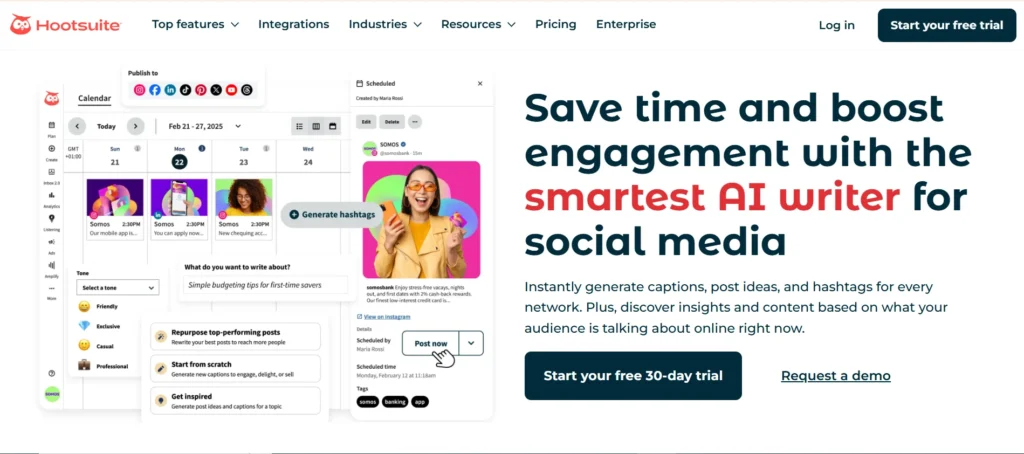
OwlyWriter AI Social Media AI Writer & Content Ideas Tool
What it does:
Built for scale. From scheduling to performance insights, it supports social media teams managing multiple accounts and platforms.
Key features:
- Caption suggestions
- Best-time posting
- Social performance analytics
Best for:
Social media managers, agencies
Pros:
Saves hours weekly
Limitations:
Pricing for small teams
6. ChatGPT (Marketing Use)
Introducing ChatGPT | OpenAI
What it does:
A flexible assistant rather than a fixed tool. When used properly, it supports ideation, messaging, planning, and experimentation. You can even create GPTs and connect other AI tools for custom AI automation workflows.
Key features:
- Content ideation
- Funnel copy drafts
- Customer messaging
Best for:
Everyone—from students to agencies
Pros:
Flexible and fast
Limitations:
Needs human direction
7. Mailchimp AI
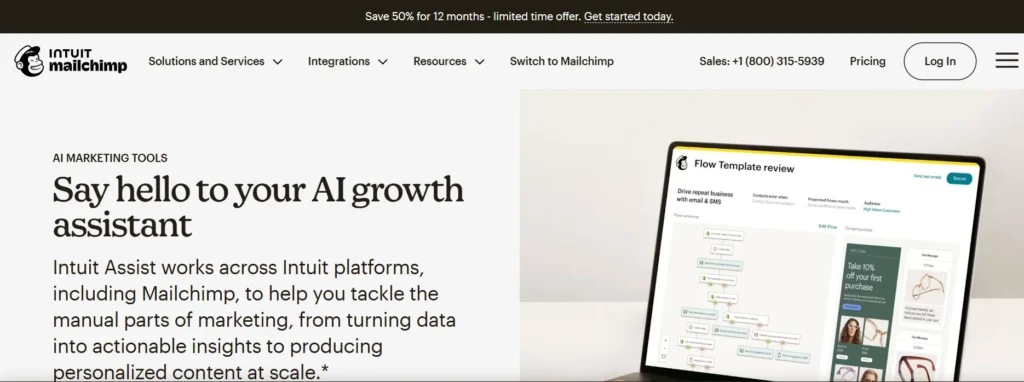
AI Marketing Tools | Mailchimp
What it does:
Email remains a powerful marketing tool even in 2026. Mailchimp’s AI focuses on timing, personalization, and engagement.
Key features:
- Predictive send times
- Subject line optimization
- Audience segmentation
Best for:
Small businesses, ecommerce brands
Pros:
Easy onboarding
Limitations:
Limited advanced workflows
8. AdCreative.ai
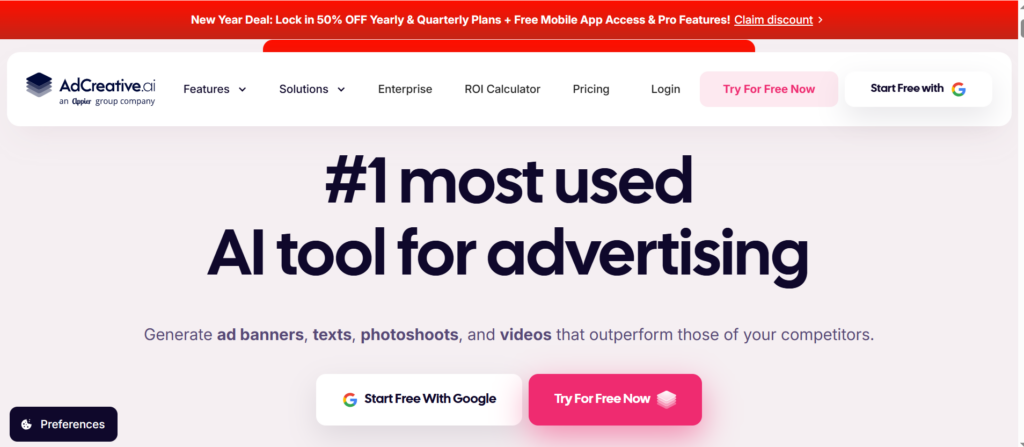
What it does:
Purpose-built for AI performance marketing. It helps teams test ad creatives faster without waiting on design cycles.
Key features:
- Ad visuals and copy
- Conversion-focused designs
- Performance prediction
Best for:
Paid ads teams, performance marketers
Pros:
Fast ad testing
Limitations:
Creative variety can feel repetitive
9. Pictory
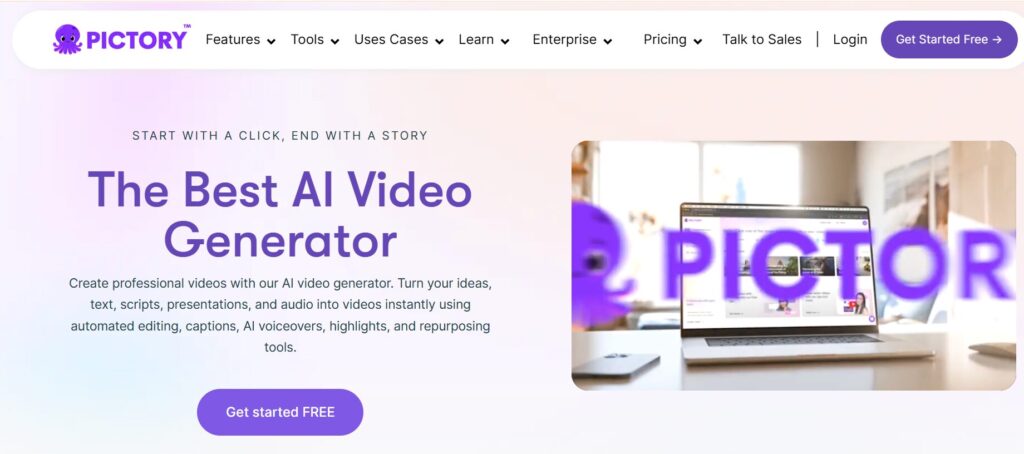
What it does:
This tool turns text into short-form videos. Ideal for creating videos at scale. Especially useful when blogs, webinars, or long content need repurposing.
Key features:
- Blog-to-video conversion
- Auto captions
- Social-ready formats
Best for:
Content creators, video-first brands
Pros:
Great for repurposing
Limitations:
Not for complex video edits
10. Zapier AI
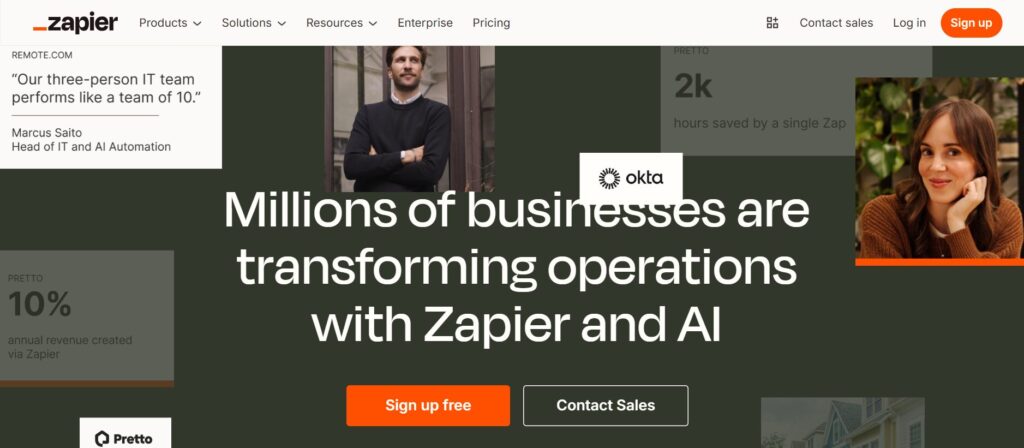
What it does:
This tool is the supportive framework of many marketing stacks. It connects tools and automates workflows that usually drain time.
Key features:
- App-to-app automation
- AI-powered workflow suggestions
- Task orchestration
Best for:
Teams managing multiple tools
Pros:
Huge integration library
Limitations:
Complex setups need planning
AI Marketing Tools Comparison Table (2026)
| Tool | AI Focus | Category | Best For | Free Plan |
| HubSpot AI | Automation & Insights | CRM & Marketing Automation | Teams & Agencies | ❌ |
| Jasper | Content Generation | AI Content Marketing | Content Teams | ❌ |
| Surfer SEO | SEO Optimization | Search & Content | SEO Marketers | ❌ |
| Canva AI | Creative AI | Design & Visuals | Small Businesses | ✅ |
| Hootsuite AI | Social Intelligence | Social Media Management | Agencies | ❌ |
| ChatGPT | General AI Assistant | Multi-purpose | Everyone | ✅ |
| Mailchimp AI | Email Optimization | Email Marketing | SMBs | ✅ |
| AdCreative.ai | Ad Performance | Paid Advertising | Performance Marketers | ❌ |
| Pictory | Video Automation | Video & Social | Creators | ❌ |
| Zapier AI | Workflow Automation | Automation & Ops | Growing Teams | ✅ |
How to Choose the Right AI Tools for Your Business?
Different AI tools for marketing serve different purposes. You need to find tools that fit how your business actually works. Start with the problem, not the tool.
Be clear on what you want to automate.
Some businesses need AI marketing automation for emails and workflows. Others need AI content marketing tools to keep up with publishing demands. A few need AI performance marketing platforms to improve ad ROI. Trying to solve everything at once usually leads to tool overload.
Balance budget with real value
Many free marketing tools and free AI tools for marketing are good enough to test workflows before committing. Paid AI marketing software makes sense when it saves measurable time or improves conversions—not just because it’s “advanced.”
Check how well tools connect to your stack.
The best AI marketing platforms don’t operate in isolation. They integrate with CRMs, ad accounts, analytics tools, and email platforms. If an AI tool creates more manual work, it’s not automation—it’s friction.
Factor in ease of use, not just features
Powerful marketing AI tools are useless if your team avoids them. Tools with gentle learning curves tend to deliver better long-term ROI than complex platforms that never get fully adopted.
Think about growth early
What works for a solo marketer may break for a team of ten. Choose AI marketing automation tools that scale without forcing a full rebuild later.
In short, the right tools don’t replace strategy. They support you quietly in the background.
Future of AI in Marketing
The best AI for marketing won’t replace marketers. It will replace inefficient processes.
Over the next few years, expect:
- Deeper personalization at scale
- Predictive campaign planning
- Smarter audience segmentation
- Better customer engagement using sales AI tools
The brands that win won’t use more AI, they’ll use it more intentionally.
Conclusion: Stay Ahead with the Right AI Marketing Tools
AI marketing tools aren’t shortcuts. They’re leverage.
Used well, they help marketers:
- Work faster
- Think clearer
- Scale smarter
And in case you are preparing for 2026, then you need to start experimenting. Start with some of the free marketing tools.
Optimize your stack, and create workflows that are actually serving your objectives. Be ahead in 2026 by implementing the appropriate AI-based marketing services.
For businesses looking to apply AI-driven marketing more effectively, working with an experienced marketing team can help align strategy with execution.
FAQs
Are AI marketing tools suitable for small businesses?
Yes. Many AI marketing tools for small business offer free or affordable plans . These tools can handle content creation, email marketing, and basic automation without requiring technical expertise.
What’s the difference between AI marketing software and AI marketing platforms?
The marketing AI software supports a specialized function like SEO or email. AI marketing systems integrate various features in a single system. There are automation, analytics, CRM, and performance tracking, as some of their typical features. A reputed AI marketing agency uses both these tools to deliver best results.
Can free AI tools for marketing actually deliver results?
Absolutely. Many free AI marketing tools are strong enough for:
- testing ideas,
- improving productivity, and
- validating workflows before investing in paid solutions.
How does AI help with marketing automation?
AI for marketing automation helps to
- trigger personalized emails,
- create marketing copies,
- score leads in the sales funnel,
- optimize ad delivery, and
- manage various marketing workflows automatically.
They reduce manual work while improving consistency.
What is marketing automation artificial intelligence, and how does it help businesses?
Marketing automation artificial intelligence uses AI to streamline campaigns, analyze behavior, and optimize performance. Marketers don’t need to put constant manual input.
What are the best AI marketing tools for small business growth?
The best AI marketing tools for small business include HubSpot AI, Canva AI, and free AI marketing tools that support automation without heavy costs.
Which is the best LLM AI for business including marketing use cases?
The best LLM AI for business including marketing depends on scale, but tools integrating GPT-based models currently lead in personalization and content workflows.
What are the best AI tools for customer engagement in 2026?
Chatbots, personalization engines, and AI-driven CRM platforms remain the best AI tools for customer engagement.