





- What Is a Minimum Viable Product?
- Why MVP Is Important for Your Business
- Faster Time to Market
- Significant Cost Savings
- Real Market Validation
- Don’t Waste Months Building the Wrong Product
- MVP vs Full Product: A Quick Comparison
- Key Features of a Good MVP
- Core Functionality Only
- A User-Focused Design
- A Scalable Technical Base
- Steps to Build an MVP
- Validate Your Idea
- Select the Right Features
- Design and Develop
- Test and Launch
- Common MVP Mistakes to Avoid
- Loading It with Too Many Features
- Skipping the Validation Step
- Ignoring User Feedback After Launch
- MVP Feature Checklist
- The Role of MVP Development Services
- Have an Idea but Not Sure Where to Start?
- Conclusion
- FAQs
Most startups do not fail because the idea was bad. They fail because the team built too much, too fast – before finding out whether anyone actually wanted it. Founders pour months into a product, then launch to silence. That is a painful and expensive lesson.
The smarter path is MVP software development. Instead of building everything at once, you build the smallest version of your product that solves a real problem. You put it in front of real people. You watch what happens. That is the whole idea behind a minimum viable product, and it is the same approach that Airbnb, Dropbox, and Uber used when they were just getting started.
At Elsner, we have helped businesses across the USA go from idea to launch using this exact method. This guide is for you – whether you are a startup founder, a product manager, or a business owner planning your next digital product. Read on, and we will walk you through everything you need to know.
What Is a Minimum Viable Product?
A minimum viable product is the earliest working version of your product that delivers real value – built with only the features that are absolutely necessary. It is not a rough prototype with fake buttons. It is a real, functional product – just stripped down to its core.
Think of it this way. If your idea is a car, the MVP is not four wheels and a metal frame. The MVP is a bicycle. It gets people from point A to point B. It solves the core problem. Later, you add the engine, the doors, and the air conditioning – but only once users tell you they need those things.
The purpose is straightforward. You want to test your assumptions before spending serious money. Real feedback from real users is worth far more than guesses made in a meeting room. That way, every product decision you make after launch is guided by evidence – not hope.
Why MVP Is Important for Your Business
Skipping the MVP stage feels tempting – especially when you are excited about your idea and want to go all in. That said, rushing to build a complete product from day one is one of the most expensive mistakes a startup can make. Here is why the MVP approach makes far more business sense.
Faster Time to Market
When you focus only on core features, you get to market faster. Being early gives you a real edge over competitors who are still stuck in lengthy build cycles. Not only that, but early users become your first community – your most honest critics and your strongest supporters. A lean, focused launch beats a delayed, polished one every time.
Significant Cost Savings
Building a full product demands time, money, and a large team. Building an MVP cuts that investment down dramatically. You spend only what is needed for right now. That way, if the product direction needs to change – and it often does – you have not burned through your entire budget on features nobody asked for.
Real Market Validation
This is the big one. An MVP tells you whether your product actually works in the real world – before you scale. When that validation happens, having a solid SaaS development foundation already in place means you can grow without rebuilding from scratch. Dropbox tested their idea with a simple explainer video before writing a single line of code. That video generated thousands of sign-ups overnight. Therefore, real-world validation is always worth more than internal confidence.
Don’t Waste Months Building the Wrong Product
Launch faster, reduce development costs, and validate your idea with real users before you scale. A smart MVP approach saves time, money, and costly mistakes.
Talk to our experts and get a clear roadmap to build your MVP the right way.
MVP vs Full Product: A Quick Comparison
Key Features of a Good MVP
Not every MVP is built well. Some are too bare – they do not actually solve the problem. Others are too loaded – they defeat the purpose entirely. A well-built MVP sits right in the middle. Here is what it needs to have.
Core Functionality Only
Your MVP should do one thing really well. Find the single problem your product solves and put all your focus there. Strip out anything that does not directly serve that goal. Resist the urge to add “nice to have” features – save those for version two, once you have proof that version one works.
A User-Focused Design
Your early users are forming their very first impression of your product. The interface does not need to be elaborate – but it does need to be clear and easy to use. Confusing navigation or a clunky flow will push users away before they even see the value. Design with the user in mind from the very start.
A Scalable Technical Base
Your MVP should be built on a foundation that can grow. That way, when you are ready to add features, you are not rebuilding from scratch. At Elsner, we always recommend using agile development practices during the MVP stage – short build cycles, regular testing, and room to adjust based on what users tell you.
Steps to Build an MVP
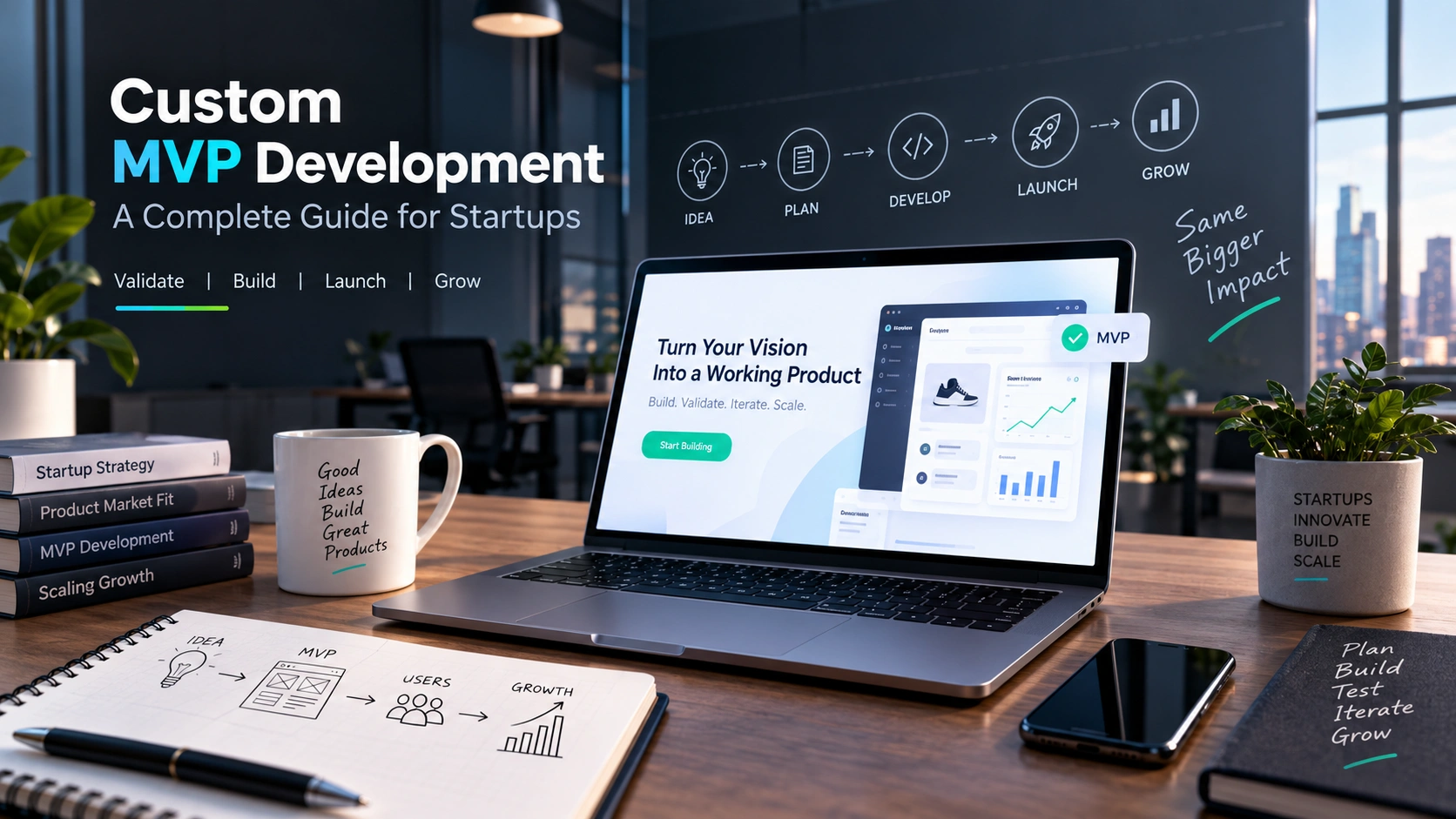
Building an MVP is not just about writing code quickly. It is a structured process where each step feeds into the next.Here is the roadmap Elsner follows when working with clients on their product development journey.
Step 1
Validate Your Idea
Before touching any design or code, you need to confirm that your idea addresses a real, existing problem. Talk to potential users. Run surveys. Study your competition. Ask hard questions – who has this problem, how are they solving it today, and why would they switch to your solution?
Validation does not have to be expensive. A simple landing page, a short video, or a handful of one-on-one interviews can tell you a lot. Spend a few days here – it could save you months of building in the wrong direction.
Step 2
Select the Right Features
List every feature you can imagine for your product. Then cut it down ruthlessly. Ask yourself – which features are absolutely necessary for someone to get real value from this product on day one? Those are your MVP features. Everything else goes on the backlog for later.
A useful approach is to map features against the user journey. This way, you can see exactly what a user needs to do from sign-up to their first moment of value – and build only that path.
Step 3
Design and Develop
Keep the design simple and functional. Your goal at this stage is clarity – not visual perfection. Work with your development team to set realistic timelines. At Elsner, we break every build into short sprints using agile development so you see real progress every week, not every six months.
Choose a technology stack that is proven, well-supported, and built to scale. Likewise, make sure the code is clean and well-documented from day one. Messy foundations early on become major, costly problems later.
Step 4
Test and Launch
Before going live, test with a small group of real users. Watch how they use the product. Note where they get confused or drop off. Fix the critical issues. Then launch to a focused group of early adopters who match your ideal user profile.
A soft startup product launch like this gives you real data without the pressure of a full public release. That way, you learn fast and iterate without every eye in your market watching.
Common MVP Mistakes to Avoid
Even experienced teams get this wrong. Here are the mistakes that most often derail an MVP – and how to avoid them.
Loading It with Too Many Features
This is the most common mistake. Founders get attached to their vision and want to include everything from day one. The result is a product that takes too long to build, costs too much, and ends up confusing users. Stay disciplined. At this stage, less is genuinely more.
Skipping the Validation Step
Jumping straight into development without validating the idea is like building a house without checking if anyone wants to live there. You might build something technically impressive that nobody needs. Therefore, never skip validation – no matter how confident you feel about the idea.
Ignoring User Feedback After Launch
Launching is just the beginning. What happens after launch is what shapes the product long-term. Collect feedback actively – through in-app surveys, support conversations, user interviews, and usage data. Act on that feedback quickly. The whole point of the MVP is to learn and keep improving.
MVP Feature Checklist
The Role of MVP Development Services
Building an MVP on your own – especially if you are non-technical – is genuinely challenging. From picking the right technology stack to managing build timelines and handling user testing, there is a lot that can go sideways. That is where professional MVP development services make a real difference.
A good partner does not just write code. They help you shape the product strategy, define the right scope, and build something that can actually scale. At Elsner, our MVP development services cover the full journey – from initial idea workshops and feature scoping, right through to design, development, testing, and post-launch support.
We have spent 19+ years working with startups and growing businesses across the globe. Our team of 250+ developers knows what works – and what does not. Not only that, but we bring a straight-talking, no-fluff approach to every project. We tell you what your product actually needs, not just what you want to hear.
Hereby, if you are serious about launching your product the right way, partnering with a team that has done this before is one of the smartest decisions you can make early on.
Have an Idea but Not Sure Where to Start?
Stop guessing and start building the right way. Our MVP development experts help you validate your idea, define the right features, and launch faster without wasting time or budget.
Conclusion
Building a great product does not start with a big budget or a full team. It starts with a clear problem, a focused solution, and the discipline to build only what matters right now. That is what MVP software development gives you – a structured, low-risk way to launch without betting everything on untested assumptions.
The companies that got it right – Airbnb, Spotify, Instagram – all started small, learned fast, and grew from there. You can follow the same path. If you want to know what to watch out for along the way, our guide on the biggest MVP mistakes that cause startup failure is worth a read before you launch.
At Elsner, we are here to help you build your minimum viable product the right way – lean, fast, and ready to scale. Reach out to our team today, and let us get your product off the ground.
FAQs
Why should you build an MVP instead of a full product?
Building a full product from day one is risky and expensive. An MVP lets you test your idea with real users before committing your full budget. That way, you reduce risk, save money, and confirm you are building something people actually want.
How long does it take to build an MVP?
It depends on the complexity of your idea. A simple MVP can take anywhere from four to twelve weeks. More complex products may take three to six months. At Elsner, we work with you to define a realistic scope so you can launch without unnecessary delays.
What features should an MVP have?
Your MVP should include only the features a user needs to go from signing up to experiencing real value. Focus on the single core problem you are solving and build just enough to solve it well. Anything beyond that goes into the backlog.
Is MVP development suitable for startups?
Absolutely. In fact, it is the most practical approach for startups. Resources are limited and timelines matter. An MVP lets you launch fast, gather real feedback, and grow in the right direction without burning through your runway on features that may never be used.
How much does it cost to build an MVP?
The cost of building an MVP depends on the complexity, features, and technology used. A simple MVP can cost significantly less compared to a full product since it focuses only on core functionality. The goal is to minimize investment while validating your idea effectively.
Can an MVP be scaled into a full product later?
Yes, a well-built MVP is designed with scalability in mind. Once you validate your idea and gather user feedback, you can gradually add new features and improve the product without rebuilding everything from scratch.
Do you need a development team to build an MVP?
While it is possible to build a simple MVP using no-code tools, having an experienced development team ensures better scalability, performance, and long-term success. A professional team can also help you avoid costly technical mistakes early on.