
- What Is WooCommerce Product SEO?
- Why WooCommerce Product SEO Matters More Than Ever
- How Google Ranks WooCommerce Product Pages
- Step 1: Keyword Research for WooCommerce Products
- Focus on Buyer Intent
- How to Find High-Converting Product Keywords
- Step 2: Optimize WooCommerce Product URLs
- Bad URL Example
- SEO-Friendly URL Example
- URL Best Practices
- Step 3: Optimize Product Titles (H1)
- High-Performing Product Title Formula
- Product Title Best Practices
- Step 4: Write Product Descriptions That Rank and Convert
- Why Unique Descriptions Matter
- Ideal Product Description Structure
- Recommended Content Length
- Step 5: Optimize Product Images for SEO
- Image SEO Best Practices
- Step 6: Use Product Schema Markup
- Important Product Schema Elements
- Step 7: Leverage Reviews for SEO and Trust
- Why Reviews Help SEO
- Review Optimization Tips
- Step 8: Internal Linking for WooCommerce Products
- Effective Internal Linking Ideas
- Step 9: Improve WooCommerce Page Speed
- Page Speed Optimization Checklist
- Step 10: Mobile Optimization Is Non-Negotiable
- Mobile SEO Best Practices
- Step 11: Fix Duplicate Content Issues in WooCommerce
- How to Handle Duplicate Content
- Step 12: Build Backlinks to Product Pages
- Effective Backlink Strategies
- Rank Better. Sell More.
- Common WooCommerce Product SEO Mistakes
- WooCommerce Product SEO Checklist (Yoast / RankMath Friendly)
- Final Thoughts
- Frequently Asked Questions (FAQs)
- 1. What is WooCommerce product SEO?
- 2. Why are my WooCommerce product pages not ranking on Google?
- 3. How do I write SEO-friendly product titles for WooCommerce?
- 4. Do product descriptions really help with WooCommerce SEO?
- 5. What are the most important WooCommerce SEO factors?
WooCommerce is one of the most flexible eCommerce platforms available today, but flexibility alone does not bring traffic or sales. Thousands of WooCommerce stores fail to generate organic revenue because their product pages are poorly optimized for search engines and real buyers.
Product SEO is not just about adding keywords. A WooCommerce product page must satisfy search intent, usability, trust, and performance requirements at the same time. This guide explains, in detail, how to optimize WooCommerce product pages so they rank consistently on Google and convert visitors into customers.
This is a practical, execution-focused guide, written for store owners, SEO professionals, and agencies.
What Is WooCommerce Product SEO?
WooCommerce product SEO is the process of optimizing individual product pages so search engines can clearly understand:
- What the product is
- Who it is for
- Why it is better than competing products
At the same time, the page must convince users to trust your store and complete the purchase.
Unlike blog SEO, product SEO focuses on commercial and transactional intent, not just information.
Why WooCommerce Product SEO Matters More Than Ever
Paid ads are becoming more expensive every year. Organic traffic, on the other hand, compounds over time.
Properly optimized WooCommerce product pages:
- Attract high-intent buyers
- Convert better than social traffic
- Reduce dependency on ads
- Build long-term brand authority
If your product pages rank, your store can generate sales even when ads are turned off.
How Google Ranks WooCommerce Product Pages
Google uses multiple signals to rank product pages. Keywords alone are not enough.
Key ranking factors include:
- Search intent relevance
- Content depth and originality
- Page speed and Core Web Vitals
- Mobile usability
- Internal linking structure
- Reviews and trust signals
- Backlinks and brand authority
Your job is to align your product pages with all of these signals, not just one.
Step 1: Keyword Research for WooCommerce Products
Keyword research is the foundation of successful product SEO.
Focus on Buyer Intent
Avoid purely informational keywords like:
- “What is Bluetooth”
- “How headphones work”
Instead, target transactional and commercial keywords, such as:
- wireless bluetooth headphones
- buy bluetooth headphones online
- noise cancelling bluetooth headphones
These keywords indicate purchase readiness.
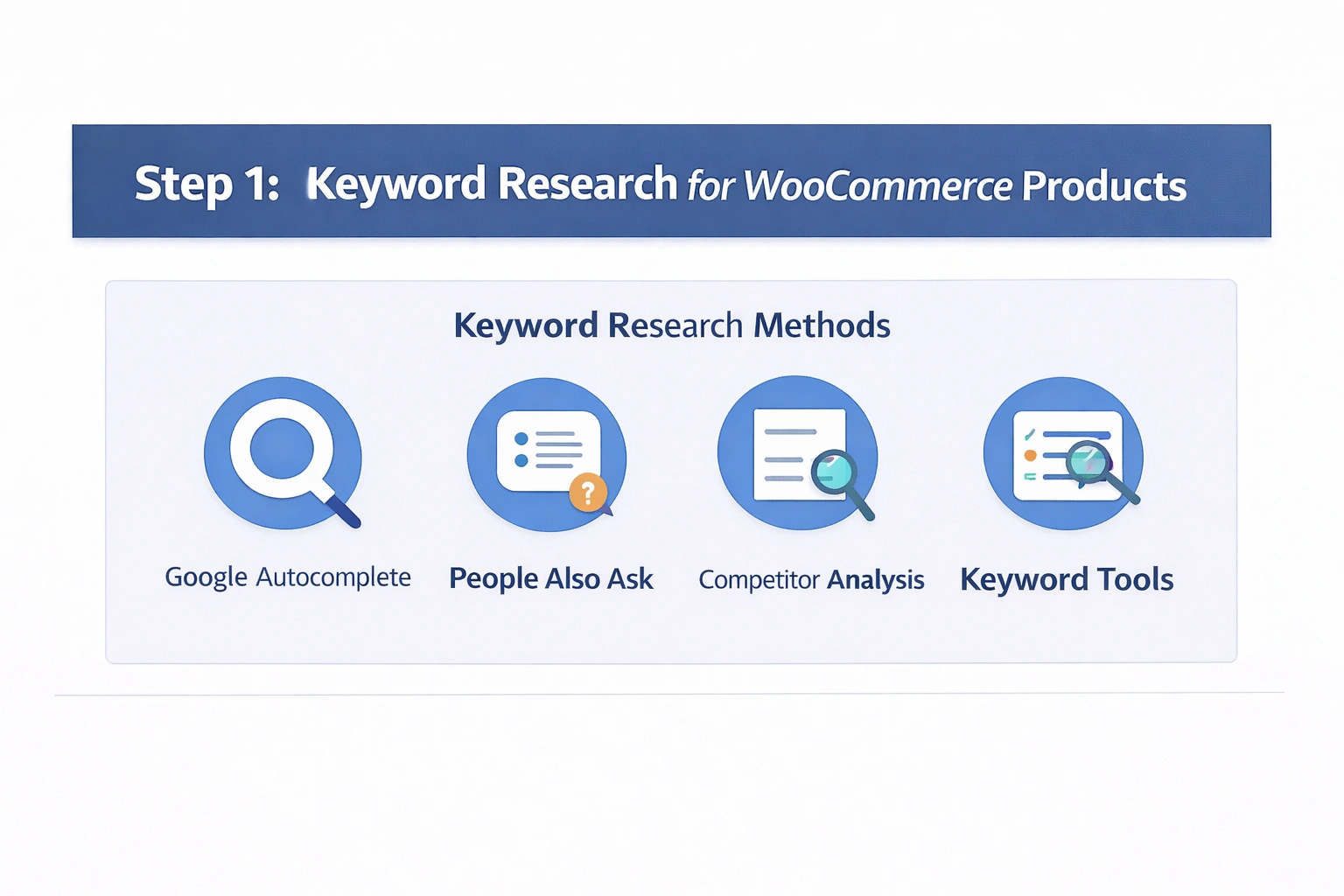
How to Find High-Converting Product Keywords
- Google Autocomplete suggestions
- “People Also Ask” questions
- Competitor product titles
- Category pages ranking on page one
- SEO tools like Ahrefs or SEMrush
Each product page should target:
- 1 primary keyword
- 3–5 closely related secondary keywords
Never try to rank one product for multiple unrelated keywords.
Step 2: Optimize WooCommerce Product URLs
URLs help both users and search engines understand the page.
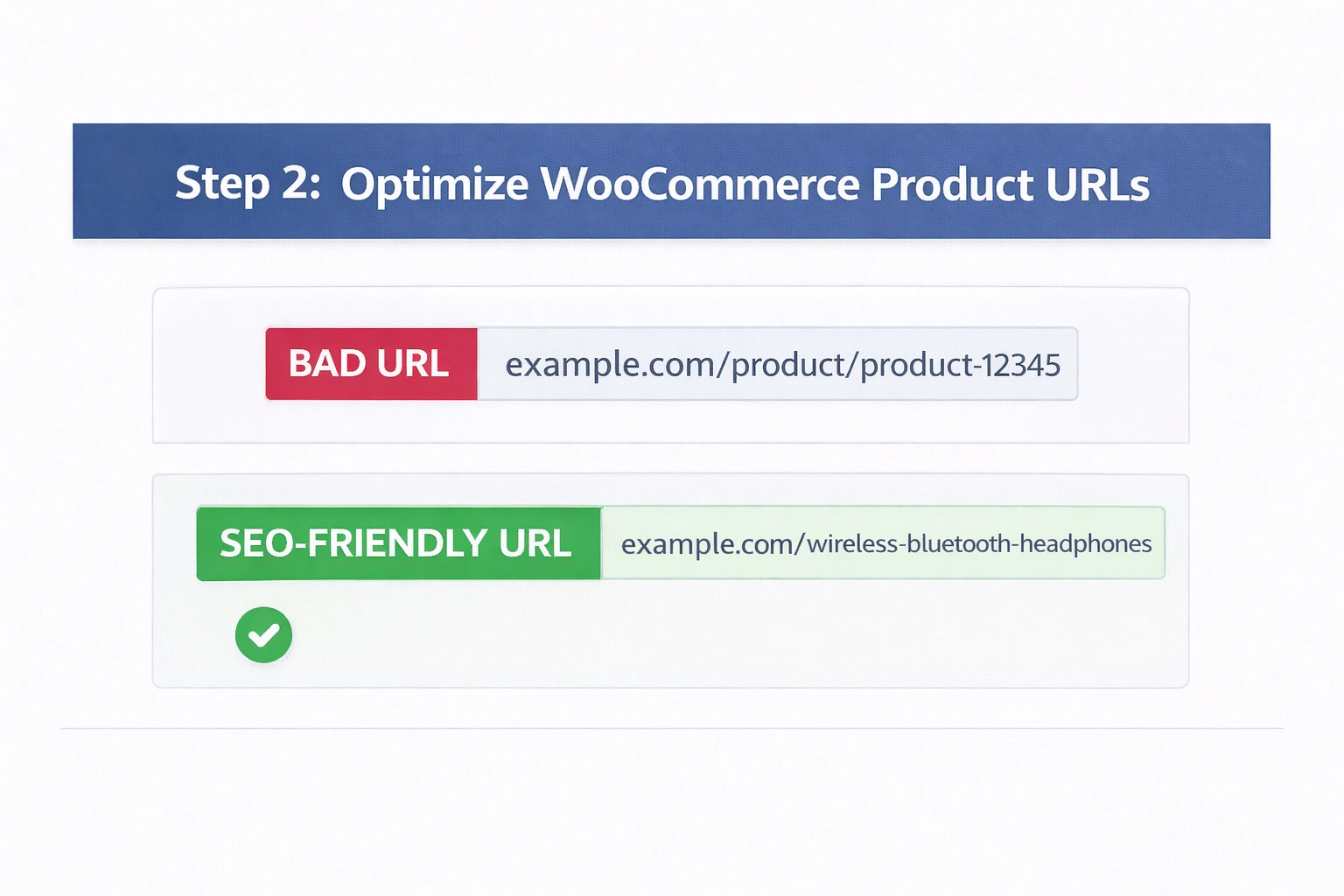
Bad URL Example
example.com/product/product-12345
SEO-Friendly URL Example
example.com/wireless-bluetooth-headphones
URL Best Practices
- Include the primary keyword
- Keep URLs short and readable
- Avoid unnecessary numbers or parameters
- Use hyphens instead of underscores
- Use lowercase letters only
Clean URLs improve rankings and click-through rate.
Step 3: Optimize Product Titles (H1)
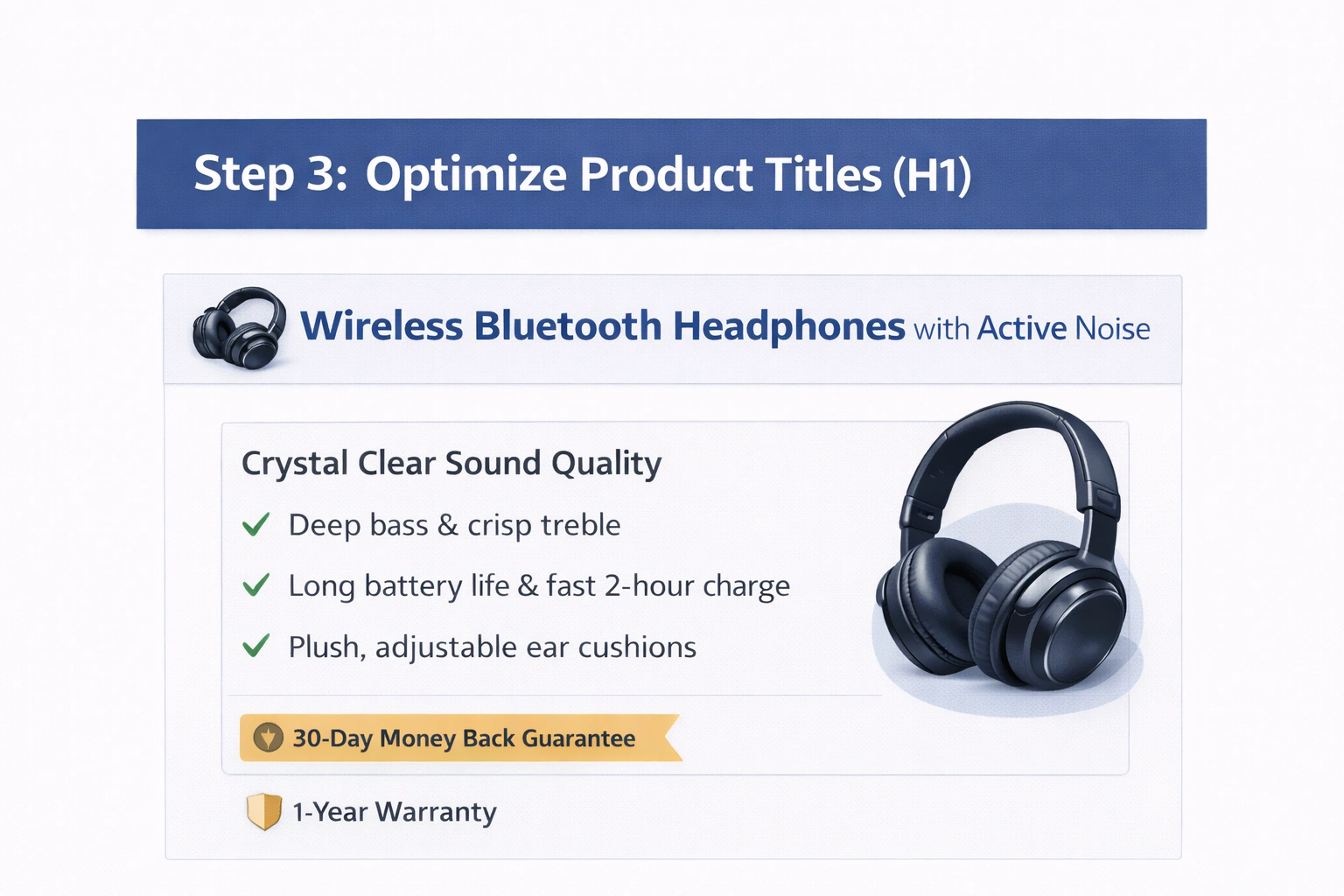
The product title is one of the strongest on-page ranking factors.
High-Performing Product Title Formula
Primary Keyword + Core Feature or BenefitExample:
Wireless Bluetooth Headphones with Active Noise Cancellation
Product Title Best Practices
- Use only one H1 tag
- Place the main keyword naturally
- Avoid keyword stuffing
- Keep it user-friendly, not SEO-forced
A good title improves both rankings and clicks.
Step 4: Write Product Descriptions That Rank and Convert
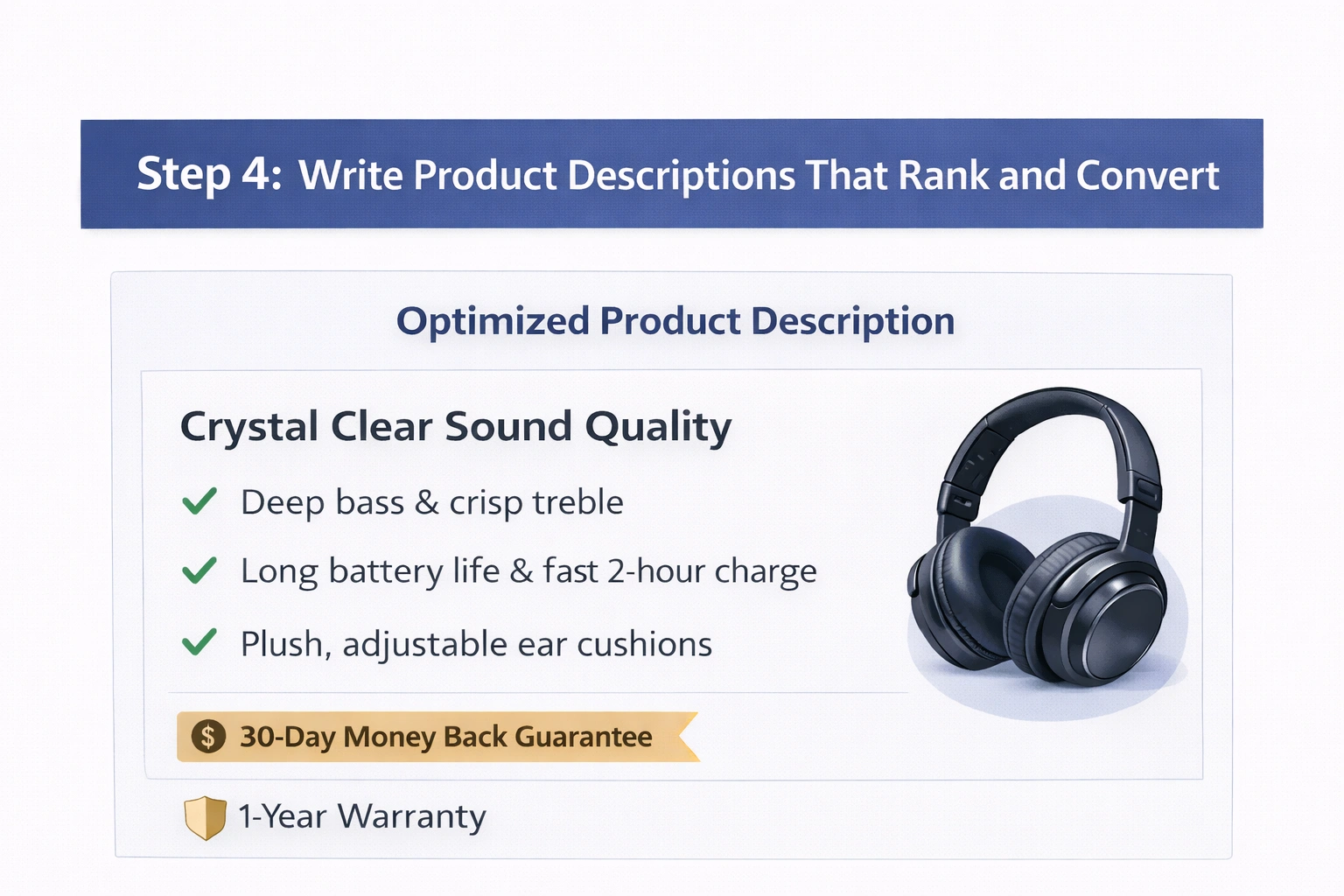
Using manufacturer descriptions is one of the biggest WooCommerce SEO mistakes.
Why Unique Descriptions Matter
- Google penalizes duplicate content
- Users trust original, detailed descriptions
- Unique content ranks better for long-tail keywords
Ideal Product Description Structure
1. Introduction (Above the Fold)
- Clearly explain what the product is
- Highlight the main benefit
- Naturally include the primary keyword
This section confirms search intent immediately.
2. In-Depth Description
Cover:
- Key features
- Technical specifications
- Use cases
- Problems the product solves
- Who the product is best suited for
Write naturally, not mechanically.
3. Benefit-Oriented Bullet Points
Bullet points improve readability and scannability.
Example:
- Comfortable design for extended use
- Long battery life for travel and work
- Clear sound with minimal distortion
4. Trust & Confidence Signals
Include:
- Warranty information
- Return and refund policy
- Certifications
- Shipping details
Recommended Content Length
- Low competition: 300–400 words
- Medium competition: 500–700 words
- High competition: 800–1,000+ words
Depth matters more than word count, but thin content rarely ranks.
Step 5: Optimize Product Images for SEO
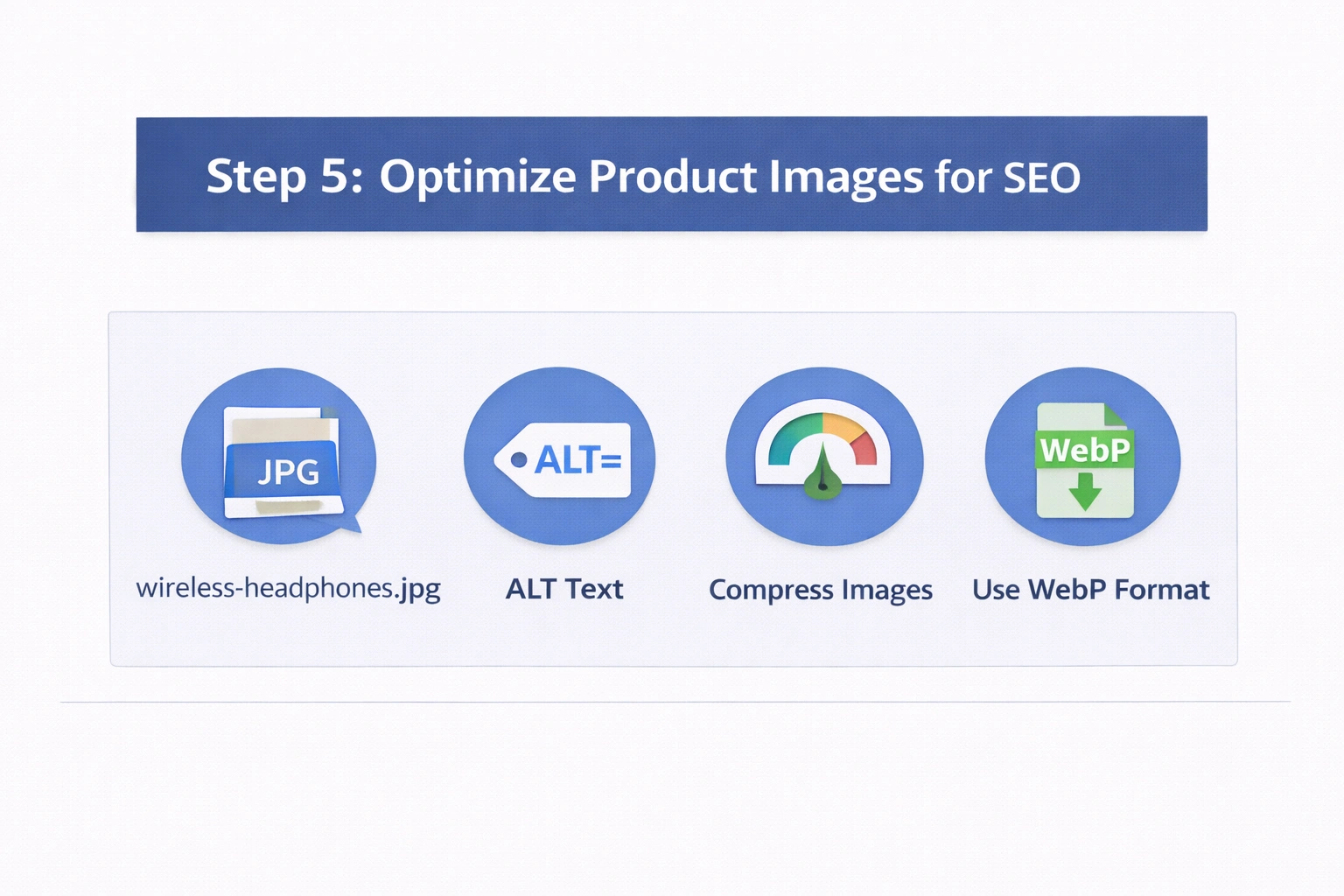
Images are critical for both SEO and conversions.
Image SEO Best Practices
- Use descriptive file names
(wireless-bluetooth-headphones-black.jpg) - Add keyword-relevant ALT text
- Compress images without losing quality
- Use consistent image dimensions
- Prefer modern formats like WebP
Optimized images improve:
- Page speed
- Image search visibility
- User experience
Step 6: Use Product Schema Markup
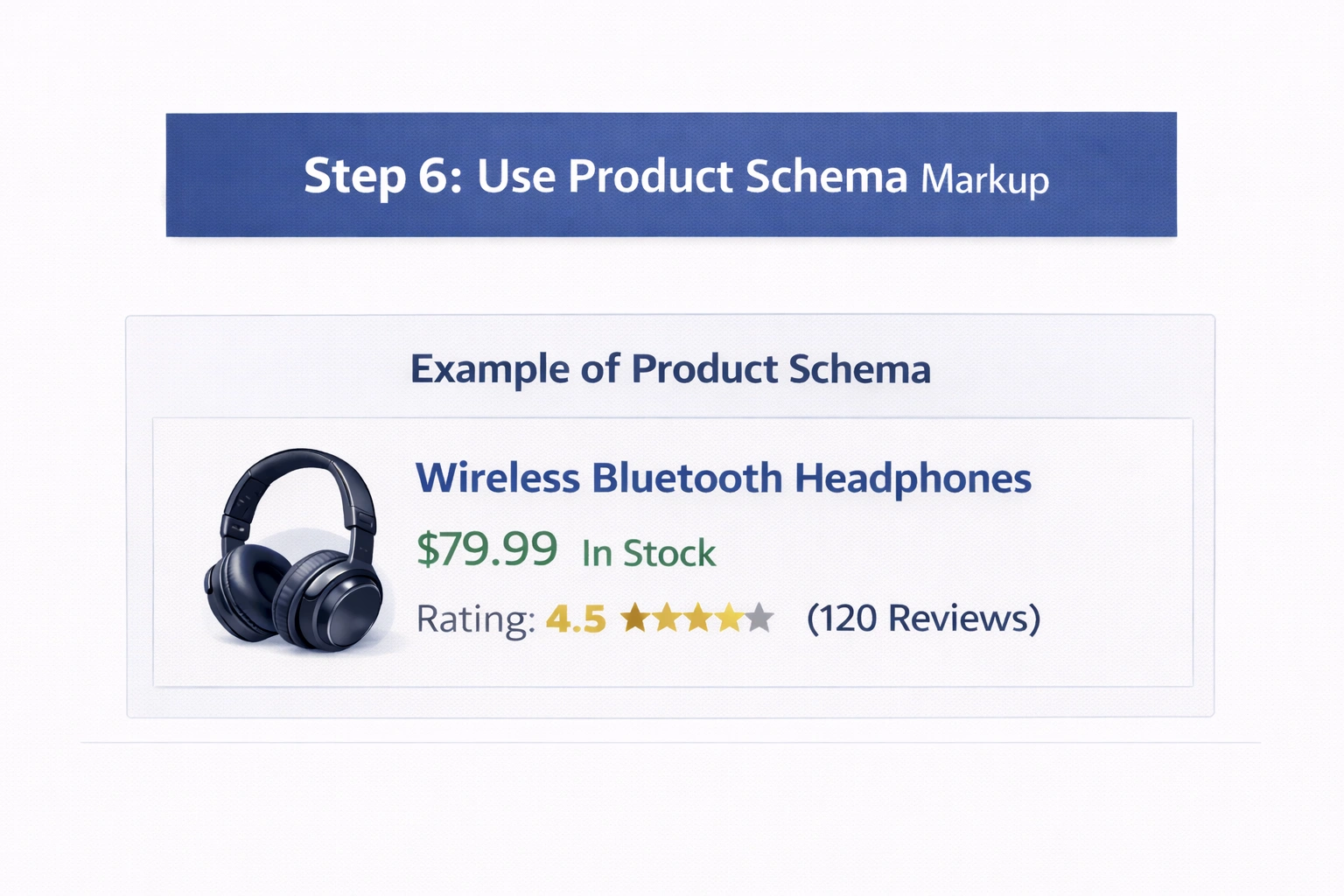
Schema markup helps search engines display rich results.
Important Product Schema Elements
- Product name
- Price
- Availability
- Ratings and reviews
- Brand
Schema improves click-through rate, which indirectly supports rankings.
Most WooCommerce SEO plugins add schema automatically, but it should be verified.
Step 7: Leverage Reviews for SEO and Trust
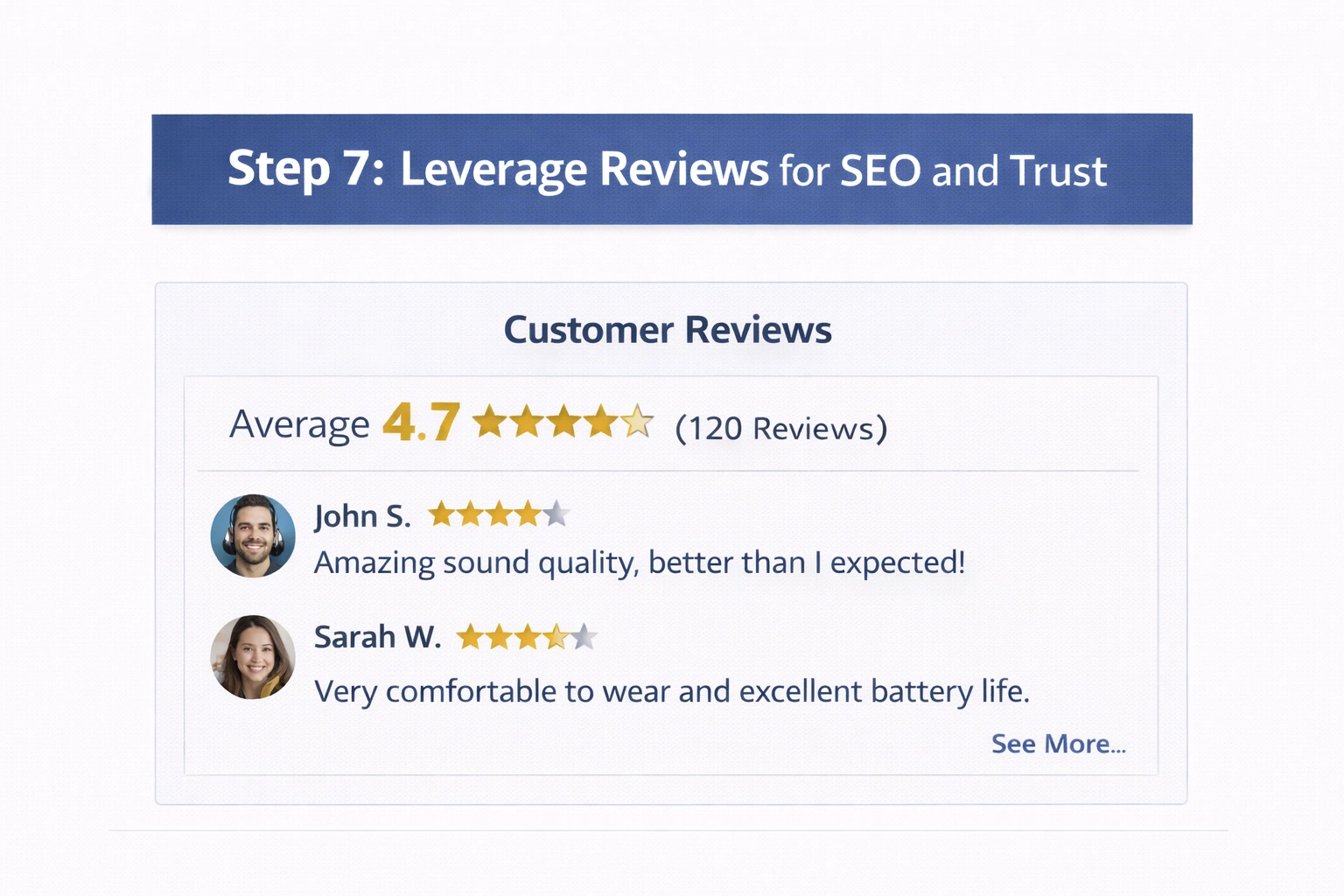
Customer reviews add fresh, user-generated content.
Why Reviews Help SEO
- Increase trust and credibility
- Add natural long-tail keywords
- Improve dwell time
- Enable rich snippets in search results
Review Optimization Tips
- Enable reviews on all products
- Encourage detailed feedback
- Respond to reviews professionally
- Never use fake reviews
Step 8: Internal Linking for WooCommerce Products
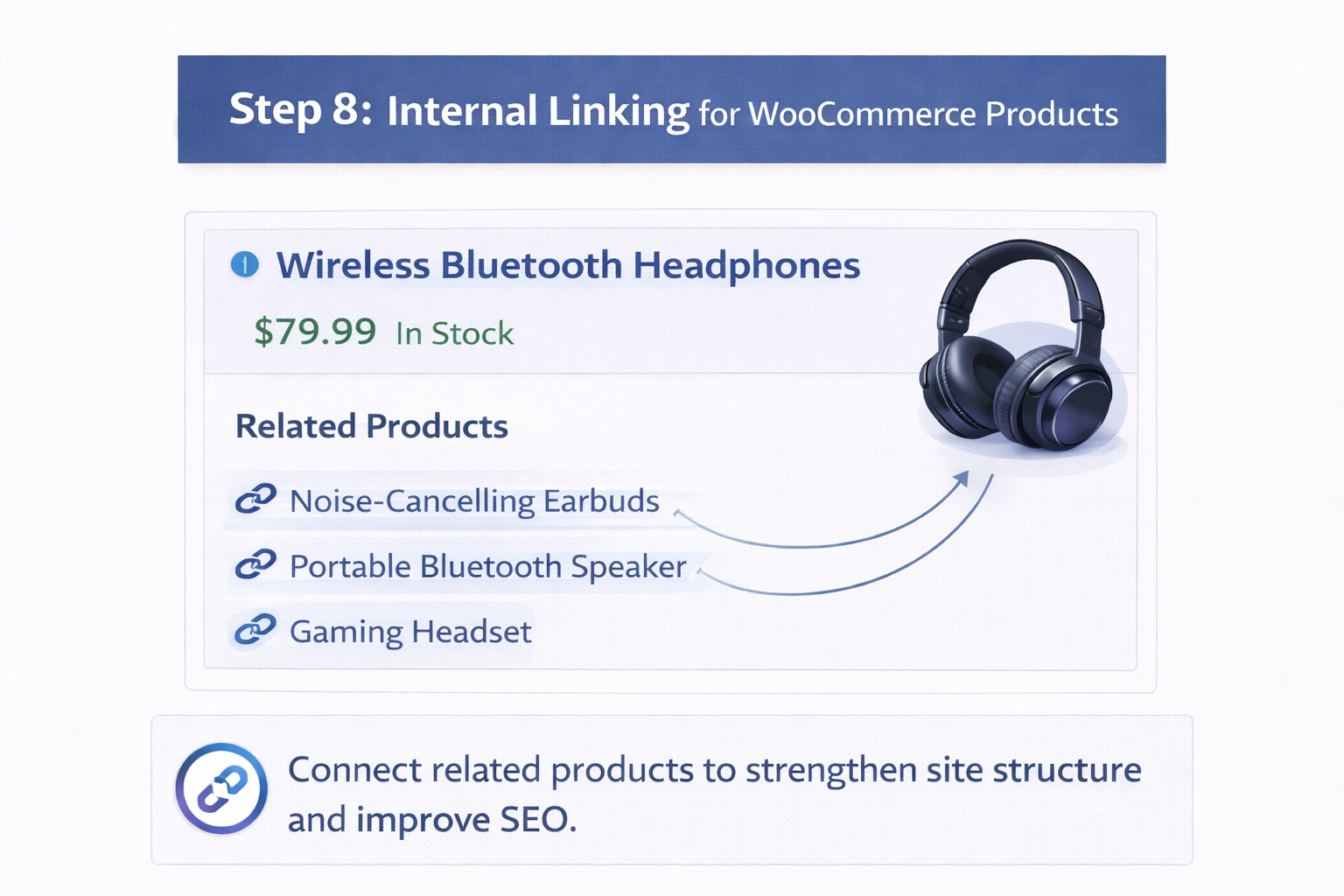
Internal links help Google understand site structure and distribute authority.
Effective Internal Linking Ideas
- Link related products
- Add “Frequently Bought Together”
- Link from blog posts to products
- Use descriptive anchor text
Strong internal linking improves crawlability and rankings.
Step 9: Improve WooCommerce Page Speed
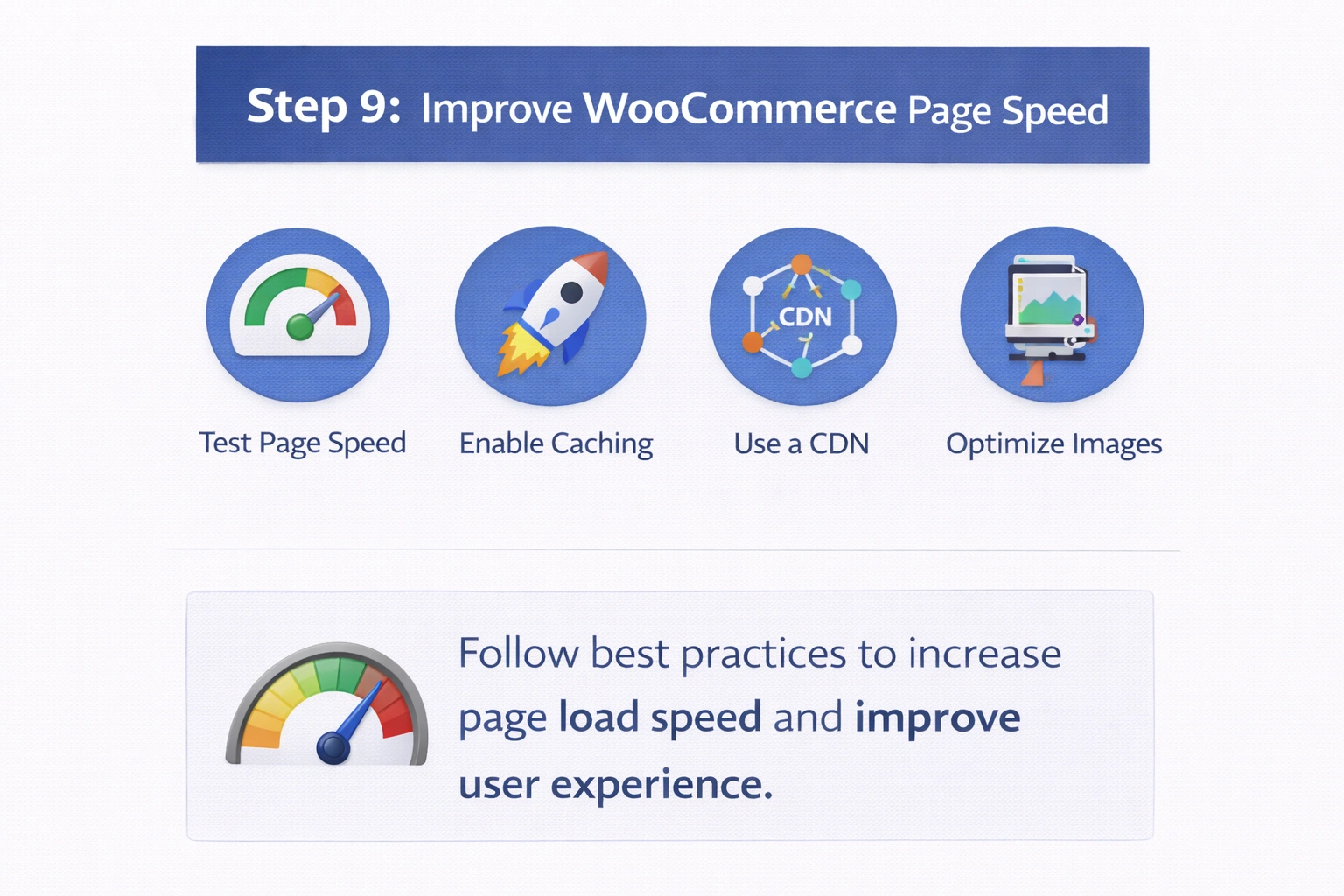
Page speed directly impacts rankings and conversions.
Page Speed Optimization Checklist
- Use a lightweight WooCommerce theme
- Enable caching
- Minify CSS and JavaScript
- Use a CDN
- Remove unused plugins
- Optimize your database regularly
Slow product pages lose traffic and sales.
Step 10: Mobile Optimization Is Non-Negotiable
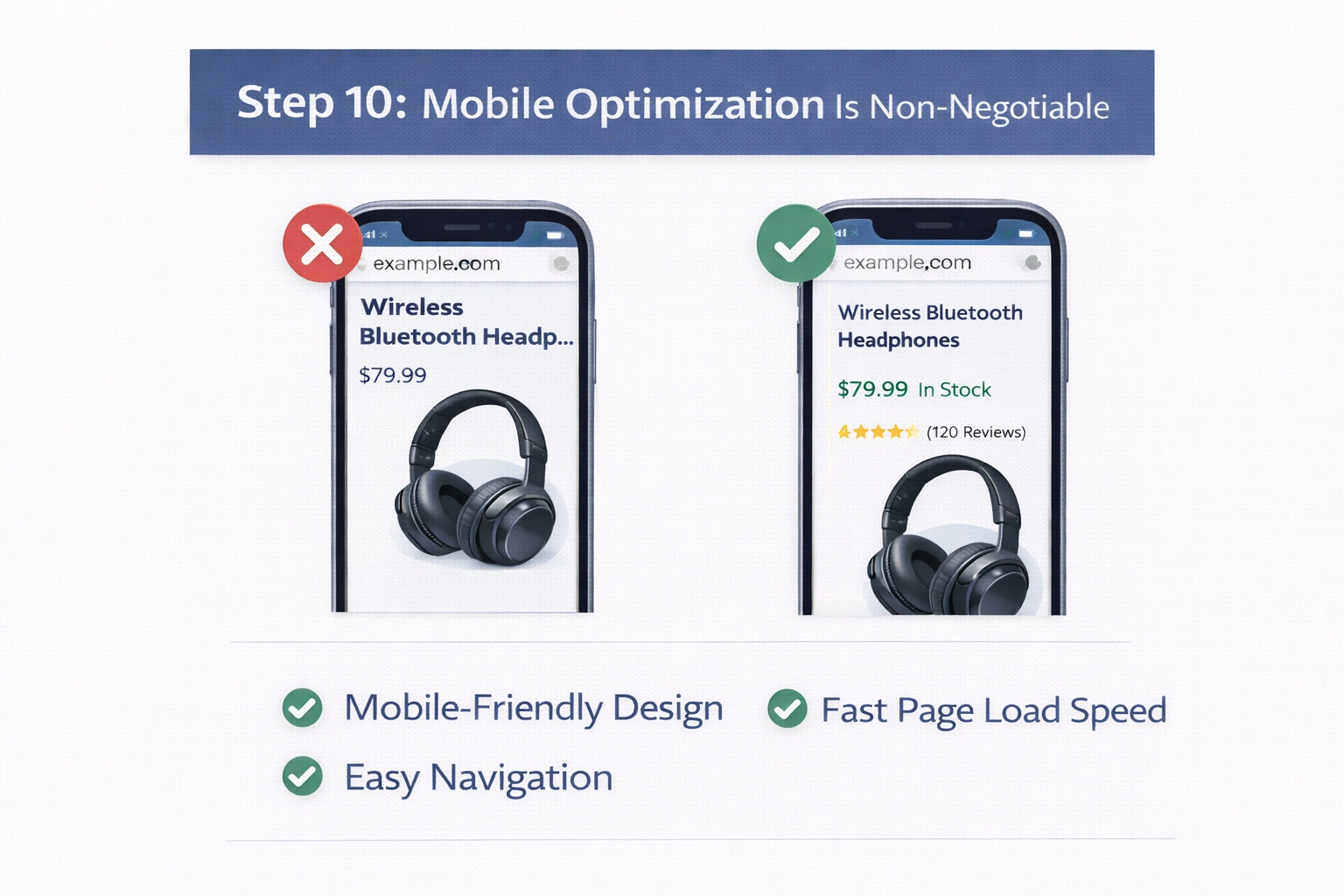
Most WooCommerce traffic comes from mobile devices.
Mobile SEO Best Practices
- Responsive design
- Fast mobile loading
- Clear product images
- Easy-to-tap buttons
- Simple checkout flow
Google uses mobile-first indexing, so mobile issues directly affect rankings.
Step 11: Fix Duplicate Content Issues in WooCommerce
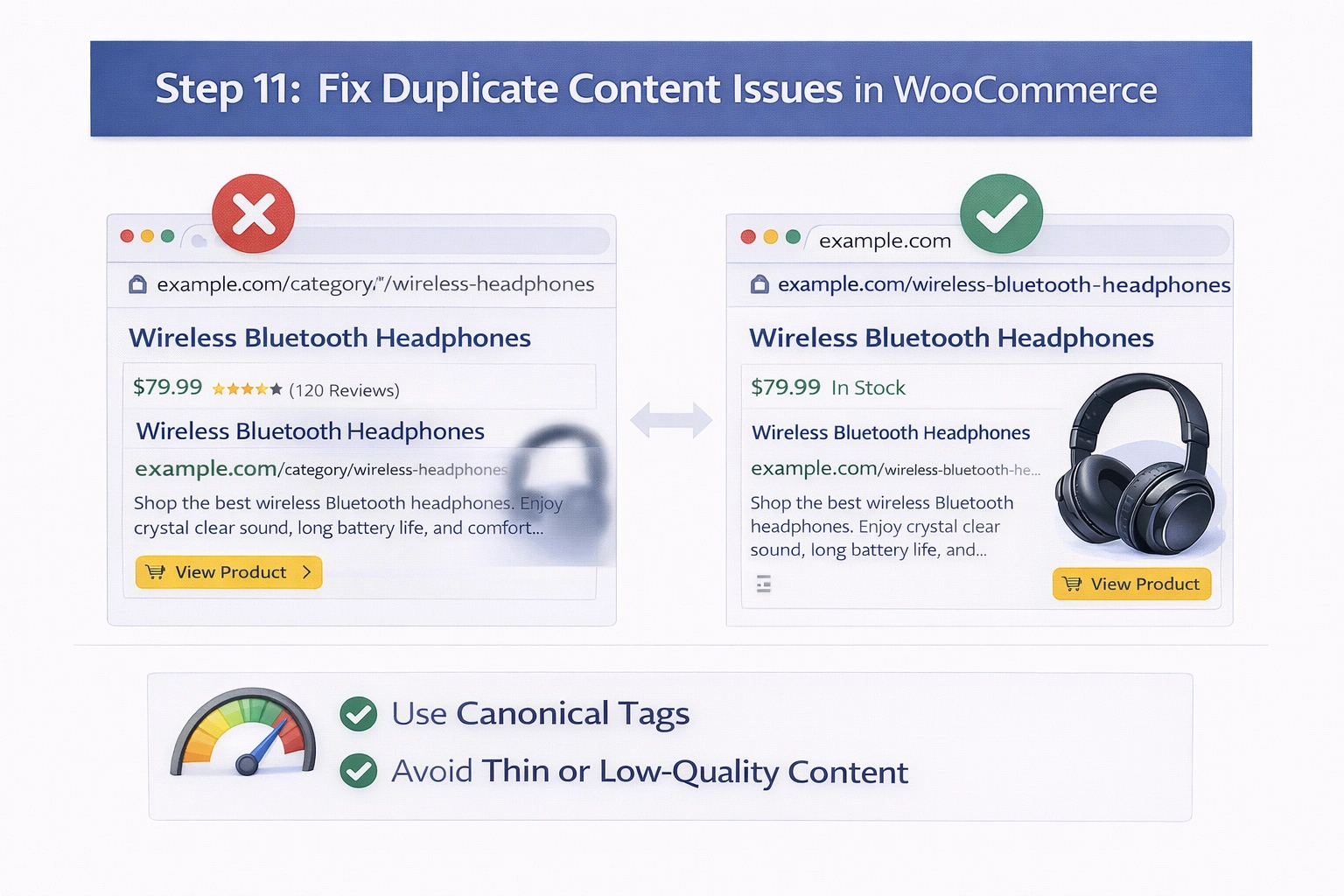
WooCommerce can generate duplicate content through:
- Product variations
- Category and tag pages
- Filtered URLs
How to Handle Duplicate Content
- Use canonical URLs
- Noindex low-value pages
- Write unique variation descriptions
- Avoid repeating category content
Step 12: Build Backlinks to Product Pages
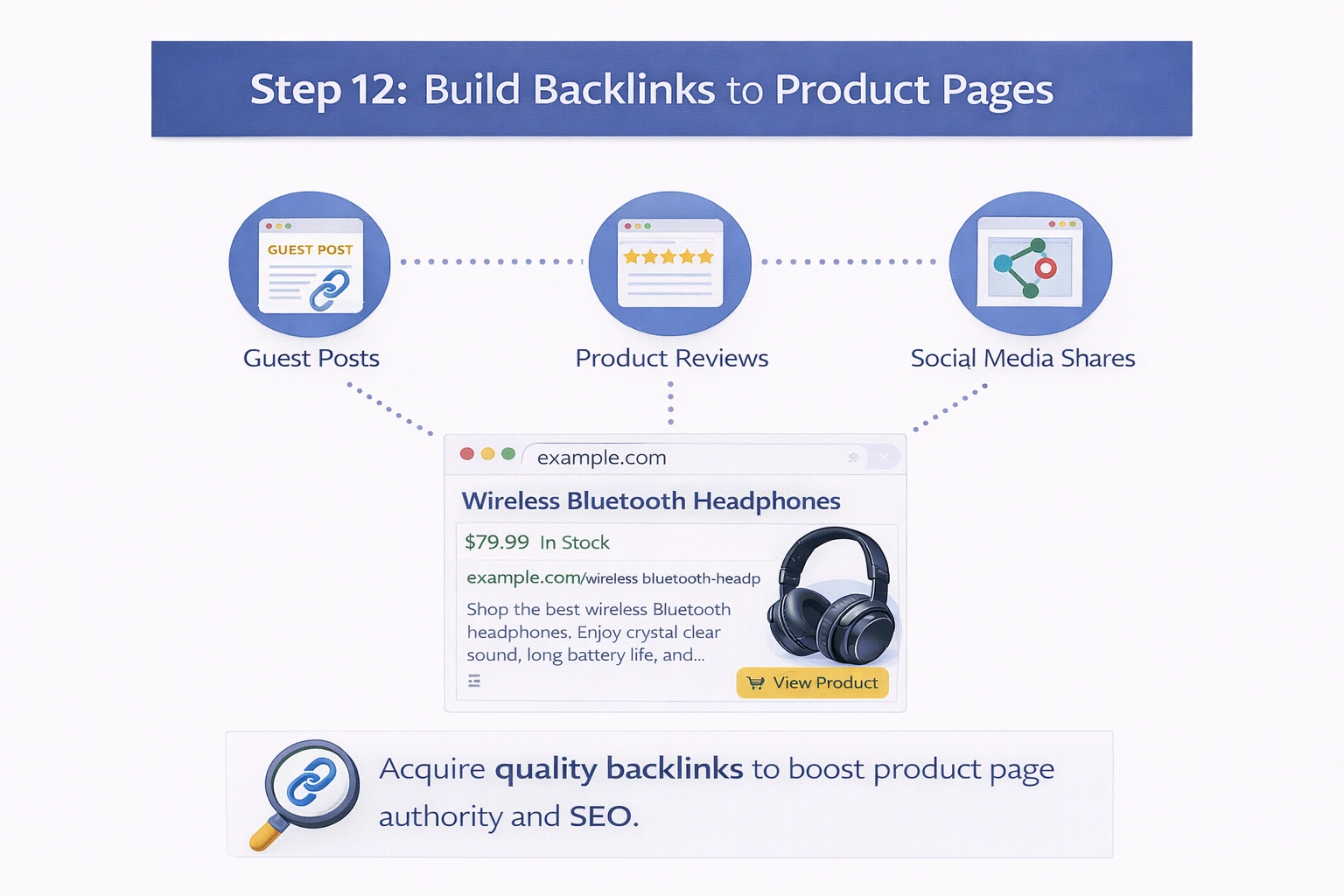
Backlinks remain one of the strongest ranking factors.
Effective Backlink Strategies
- Blogger product reviews
- Influencer collaborations
- Guest posting
- Resource page links
- Digital PR campaigns
Quality matters more than quantity.
Rank Better. Sell More.
Professional WooCommerce product SEO designed for sustainable rankings, improved visibility, and consistent long-term growth.
Common WooCommerce Product SEO Mistakes
- Copying manufacturer descriptions
- Ignoring search intent
- Keyword stuffing
- Slow page speed
- Thin content
- No reviews
- Weak internal linking
Avoiding these mistakes alone gives a competitive edge.
WooCommerce Product SEO Checklist (Yoast / RankMath Friendly)
- Focus keyword defined
- Keyword in URL, title, H1, intro paragraph
- Proper heading structure (H2, H3)
- Internal & external links added
- Images optimized with ALT text
- Product schema enabled
- Reviews active
- Page speed optimized
- Mobile usability verified
- Meta title & description optimized
Final Thoughts
WooCommerce product SEO is not about shortcuts or tricks. It is about building product pages that are genuinely better than your competitors — faster, clearer, more trustworthy, and more useful. For stores that want consistent results at scale, partnering with professional SEO services can help implement these strategies correctly and drive long-term organic growth.
When done correctly, product SEO becomes a long-term growth asset. Ranked product pages can generate consistent, high-intent traffic and sales without continuous ad spend.
SEO takes time, but once it works, it works around the clock.
Frequently Asked Questions (FAQs)
1. What is WooCommerce product SEO?
WooCommerce product SEO is the process of optimizing product pages so they can rank higher in search engines like Google. It focuses on improving product titles, descriptions, URLs, images, page speed, and internal linking to attract more organic traffic and increase conversions.
2. Why are my WooCommerce product pages not ranking on Google?
Most WooCommerce product pages fail to rank because of thin or duplicate content, slow loading speed, poor keyword usage, and lack of internal links. Fixing these issues and creating unique, helpful product content can significantly improve rankings.
3. How do I write SEO-friendly product titles for WooCommerce?
An SEO-friendly product title should clearly describe the product while naturally including the main keyword. Avoid keyword stuffing and keep it readable for users. A good title improves both click-through rate and search visibility.
4. Do product descriptions really help with WooCommerce SEO?
Yes, product descriptions play a major role in WooCommerce SEO. Well-written descriptions help search engines understand your product and give users the information they need to make a buying decision. Unique, detailed descriptions perform much better than copied content.
5. What are the most important WooCommerce SEO factors?
The most important WooCommerce SEO factors include optimized product titles, high-quality descriptions, fast page speed, mobile responsiveness, image optimization, internal linking, and fixing duplicate content issues.